Translated with AI from the Russian original.
Employees of the research center of Rosatom Chemistry (part of Rosatom's Fuel Division) have developed a unique technology for the production of lithium-7 fluoride (highly enriched stable lithium isotope) for use in molten salt reactors, the state corporation's press service reported.
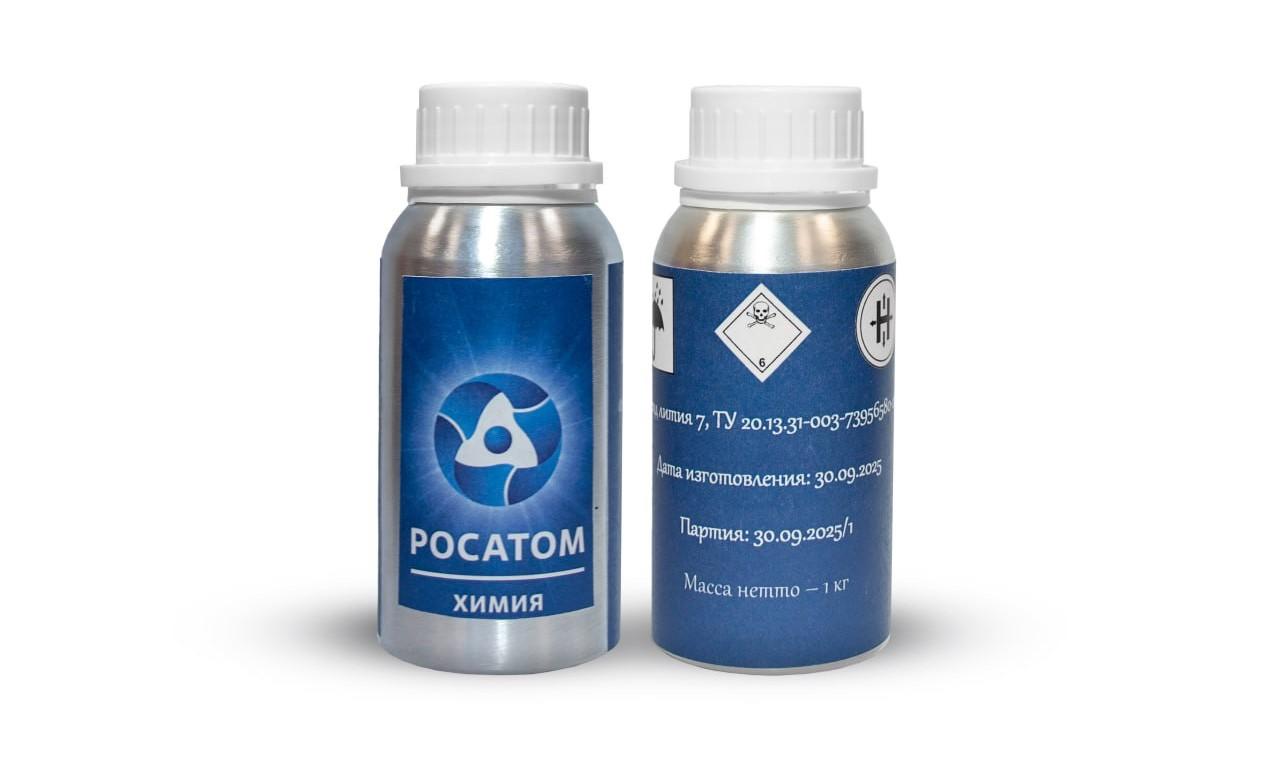
The chemical compound is suitable as a coolant in new generation reactors. It dissolves uranium and thorium fluorides well and is considered effective and safe.
There is currently no industrial production of lithium-7 fluoride in Russia.
The technology from Rosatom Chemistry eliminates lithium losses and reduces the amount of fluorine-containing waste, which makes production environmentally friendly.
This is an important step in solving the ambitious industry task of creating molten salt reactors.
About molten salt reactors
A nuclear fission reactor in which the coolant is based on a mixture of molten salts is called a molten salt reactor. Rosatom specialists completed the first stage of work on the design of such a reactor in 2025. It will be built at the Mining and Chemical Combine in the Krasnoyarsk Territory.
Molten salt reactors are needed to afterburn radioactive components with a long half-life. Scientists believe that this will help reduce the amount of nuclear waste generated.
Read more materials on the topic:
- The installation phase of the peripheral cavity has started at the construction site of the BREST-OD-300 reactor - the first shells of the reactor shaft have been installed
- Construction of the Leningrad NPP-2 continues: a cantilever truss has been installed in the shaft of the third reactor
- Sanctions and delays in the supply of equipment: the launch date of the first reactor of the Akkuyu NPP has been pushed back again
Never miss our newsAdd this site to your preferred sources to see us more oftenAdd on Google