Andrey Rybnikov, Senior Lecturer at the Department of Instrumental and Applied Software of RTU MIREA, said that with the help of artificial intelligence technologies, an assessment of potential threats to the flora and fauna of the Arctic has begun.
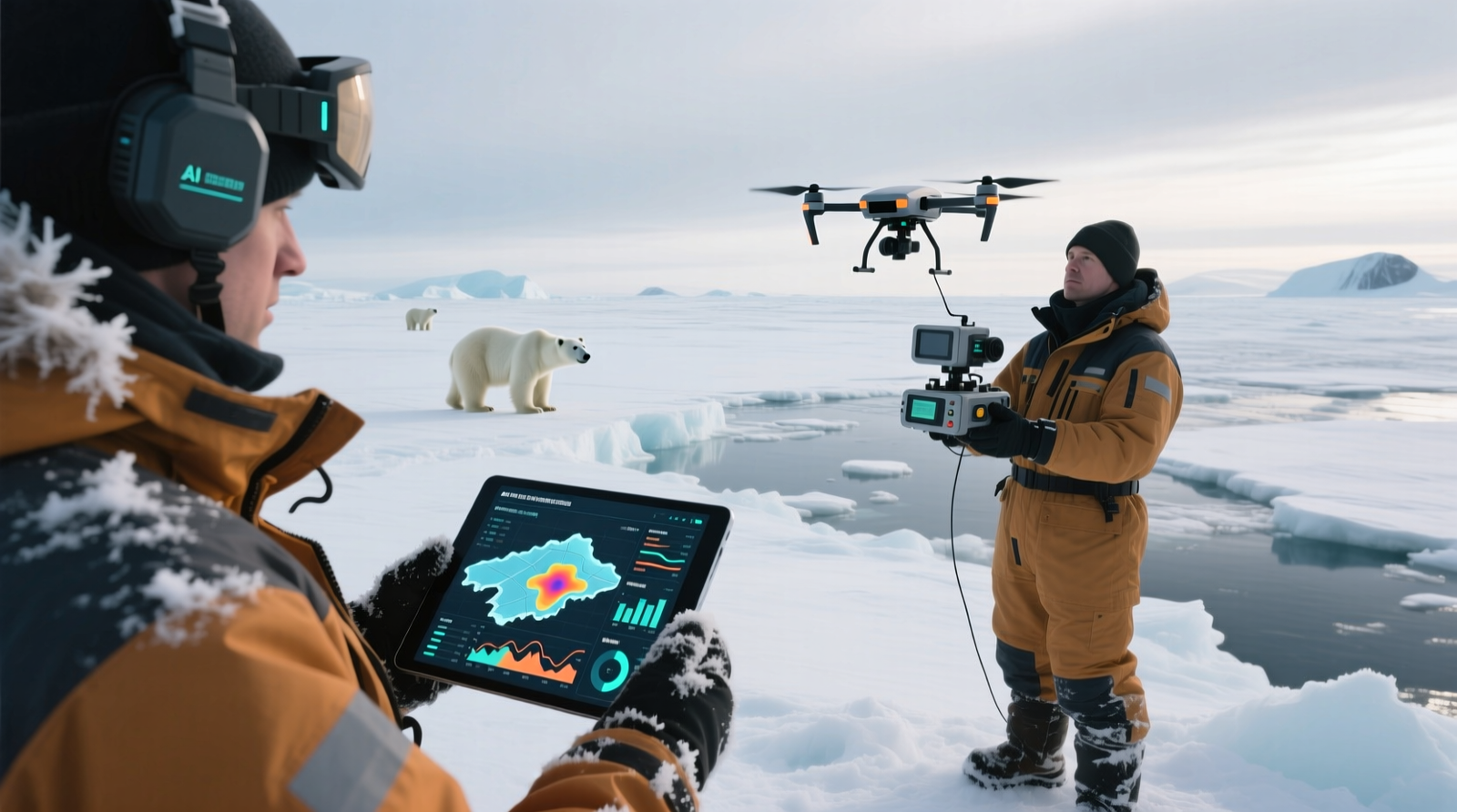
According to him, machine vision algorithms help to identify pollution zones and create maps of environmental risks in real time, analyzing data from satellites and aerial photographs of the Kara and Barents Seas.
Rybnikov also emphasized that there is an actively developing method - predictive ecology. By combining information from satellites, ice buoys and autonomous sensors, AI is able to model the destruction of coastlines, track ice melting processes and assess environmental risks. This gives scientists the opportunity to move from observation to understanding changes in the natural system.
This season, the student expeditionary corps "Arctic Team" plans to use AI to analyze chemical and biological samples and images from drones in the protected areas of the White and Barents Seas, as well as to identify sources of pollution.
Rybnikov noted that AI does not replace humans in Arctic ecology, but helps to see what is hidden in the data. Technologies allow us to move from simple observation to deep understanding and forecasting.
Read more materials on the topic:
- RTU MIREA will select workers for the Arctic using neuroscanning
- A network of satellites for observing the Arctic will be launched in Russia
- Deciphering the genomes of Arctic organisms will begin in Russia
Never miss our newsAdd this site to your preferred sources to see us more oftenAdd on Google

















