The engineering system of remote mining (ISDM) "Farming" is being actively introduced into the Russian army. The complex is capable of creating "intelligent" minefields. The uniqueness of the machine was explained by the Ministry of Defense (MOD) of Russia.
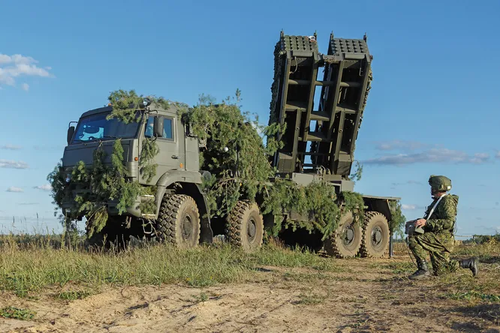
The department said that one ISDM calculation can completely block the routes of enemy movement. The system remotely mines the area with the help of rockets with programmable "smart" ammunition and a self-destruction function, which allows you to flexibly control mine barriers.
This capability makes the remote volley mining complex a valuable tool for defense, allowing you to create reliable barriers in key areas and thereby significantly affect the course of hostilities.
The installation is designed for setting up minefields. The ammunition of the Farming launcher consists of 50 rounds of 122 mm caliber, stuffed with high-explosive anti-tank or anti-personnel mines. The car is made on the basis of a KamAZ truck chassis and is equipped with an armored cabin.
Earlierwww1.ru reported thatguided missiles MLRS "Tornado-S" equipped with upgraded noise-protected GLONASS/GPS-correction modules.
Read more materials:
- "Luch" is back in the rays of glory: a British Major General, following the Germans, accused the Russian group of satellites "Luch-5X" and "Olymp-K2" of espionage in space
- The new Russian fifth-generation 177S aircraft engine for combat aircraft will be shown in Dubai
- Indian scientists will fly to the center of the earth for the first time on a Russian Il-76 aircraft
Never miss our newsAdd this site to your preferred sources to see us more oftenAdd on Google

















