Russian specialists from the SPC "Ushkuynik" (Veliky Novgorod) have modernized and improved the characteristics of their fiber optic FPV drone "Knyaz Vandal Novgorodsky".
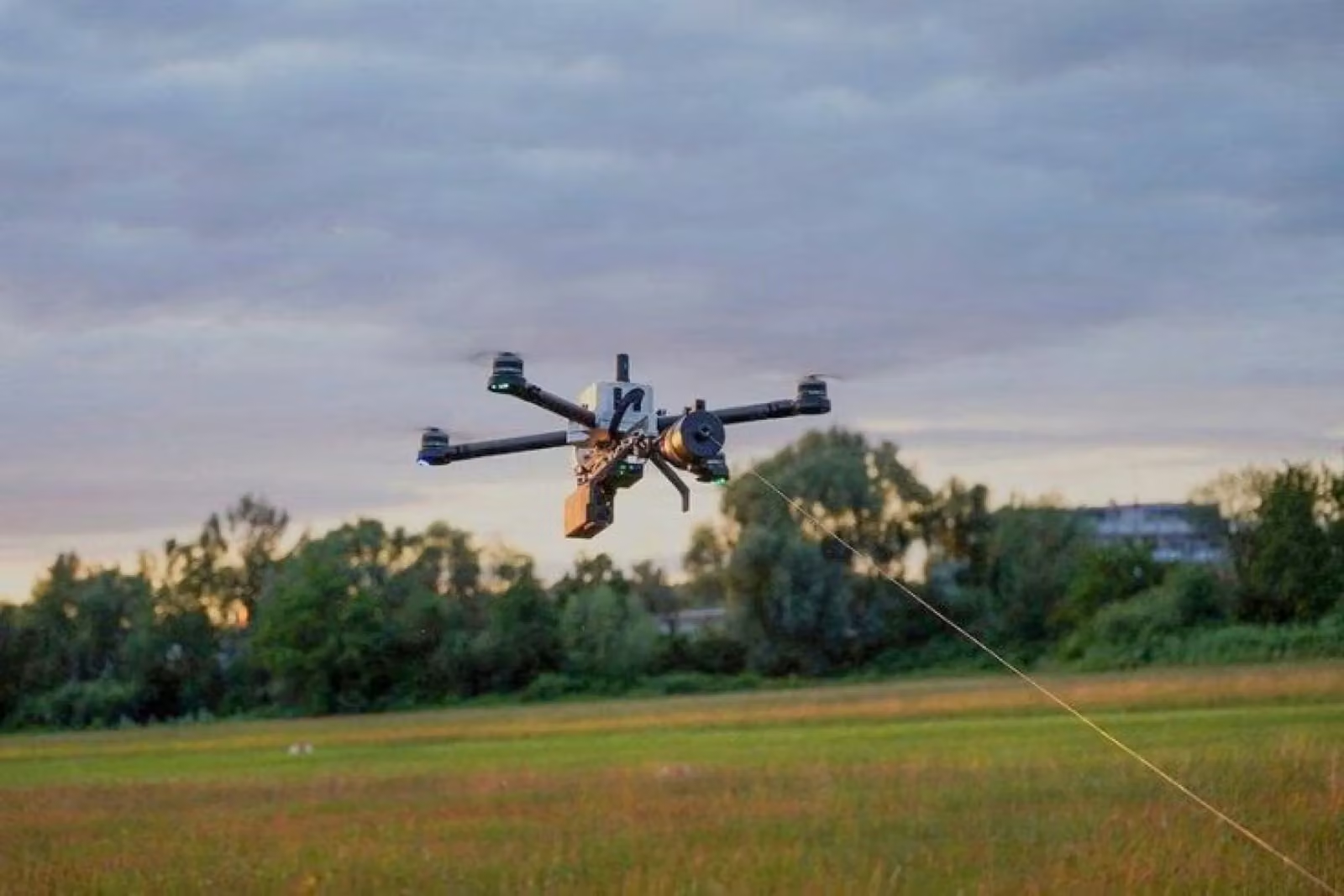
The current modification of the drone demonstrates an increased flight range of up to 25 kilometers, which became possible thanks to an improved data transmission system using fiber optics, previously limited to 15 kilometers.
The main advantage of using fiber optics is considered to be high noise immunity and signal stability, which is especially important in conditions of active suppression of electronic warfare (EW). The developers claim that the drone has successfully passed tests in a difficult environment, demonstrating stable communication and high control accuracy throughout the flight.
"Knyaz Vandal Novgorodsky" is designed to perform reconnaissance and strike missions. Its design allows it to carry a payload of up to 3 kilograms, which allows the installation of various equipment, including high-resolution cameras, thermal imagers, and even small warheads.
Earlier www1.ru reported that a Syrian military official hinted at the possibility of deploying Russian S-400s in Damascus.
Read also:
- For PD-8 and SaM146 engines: a new method of rotary welding was introduced at the UEC-Saturn engine-building enterprise
- UAC will produce more new aircraft in 2025 than in all the years of the post-Soviet period
- How much does Sollers SP7 cost? Dealers revealed the price list for the new Russian minibus
Never miss our newsAdd this site to your preferred sources to see us more oftenAdd on Google

















