About 45% of Russians are not ready to use unmanned transport due to the lack of safety guarantees, according to a study by Russian Field and the II International Symposium "Creating the Future." The greatest level of distrust arises among people over 60 years of age.
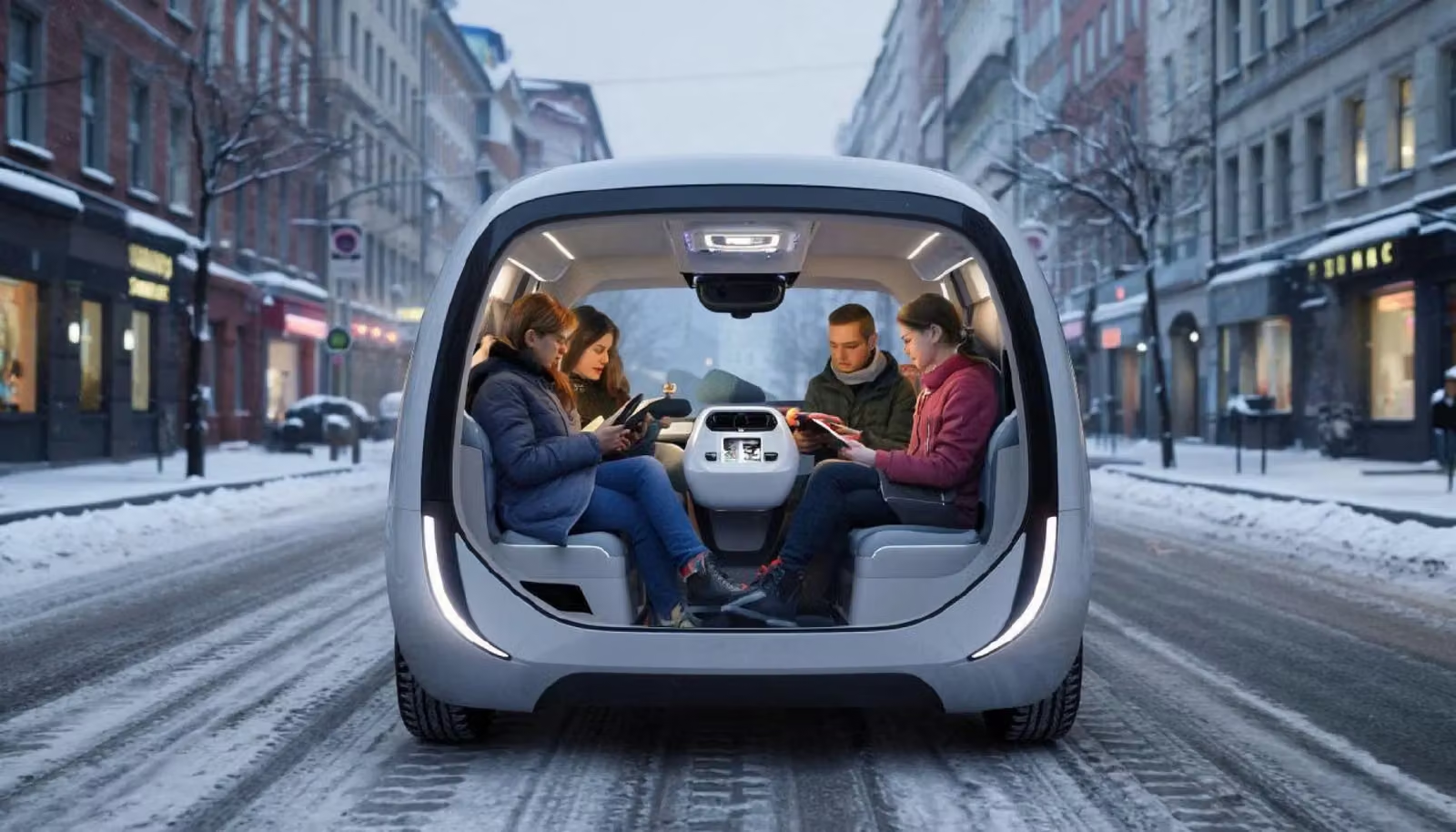
At the same time, a third of Russians surveyed expect the transport of the future to be safe, reliable, and accident-free. And 51% of respondents agree to switch to unmanned transport. Men (57%), young people under 30 (63%), people with higher education (57%), and wealthy citizens (58%) were more likely to express their willingness to get into an unmanned car or bus.
26% of respondents expect comfort and convenience from the transport of the future, as well as high speed (23%) and environmental friendliness (23%). Every fifth respondent is confident that the transport of the future will become accessible and inexpensive.
Unmanned cars, buses, and trains are created for this purpose: to make trips convenient, fast, and accident-free. But along with expectations, doubts inevitably arise.
The study involved 1,600 Russian citizens.
Earlier, www1.ru wrote that Russian Transport Minister Andrei Nikitin confirmed that unmanned vehicles without a driver in the cabin will appear on Russian roads as early as 2027.
Read more materials on the topic:
- A Landmark Day for Transport: The First Unmanned Tram Launched in Moscow
- Unmanned Truck Navio Traveled from St. Petersburg to Kazan for the First Time
- Robot Driver Could Simplify the Transition to Unmanned Transport in Russia
Never miss our newsAdd this site to your preferred sources to see us more oftenAdd on Google

















