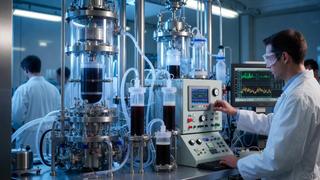
At the Moscow Aviation Institute (MAI), a unique method has been developed for the strength analysis of aircraft parts and other complex technical structures. Engineers have created a technology that combines the classical photoelasticity method, which records changes in the optical properties of a transparent material when loaded, and 3D printing, allowing for faster research.
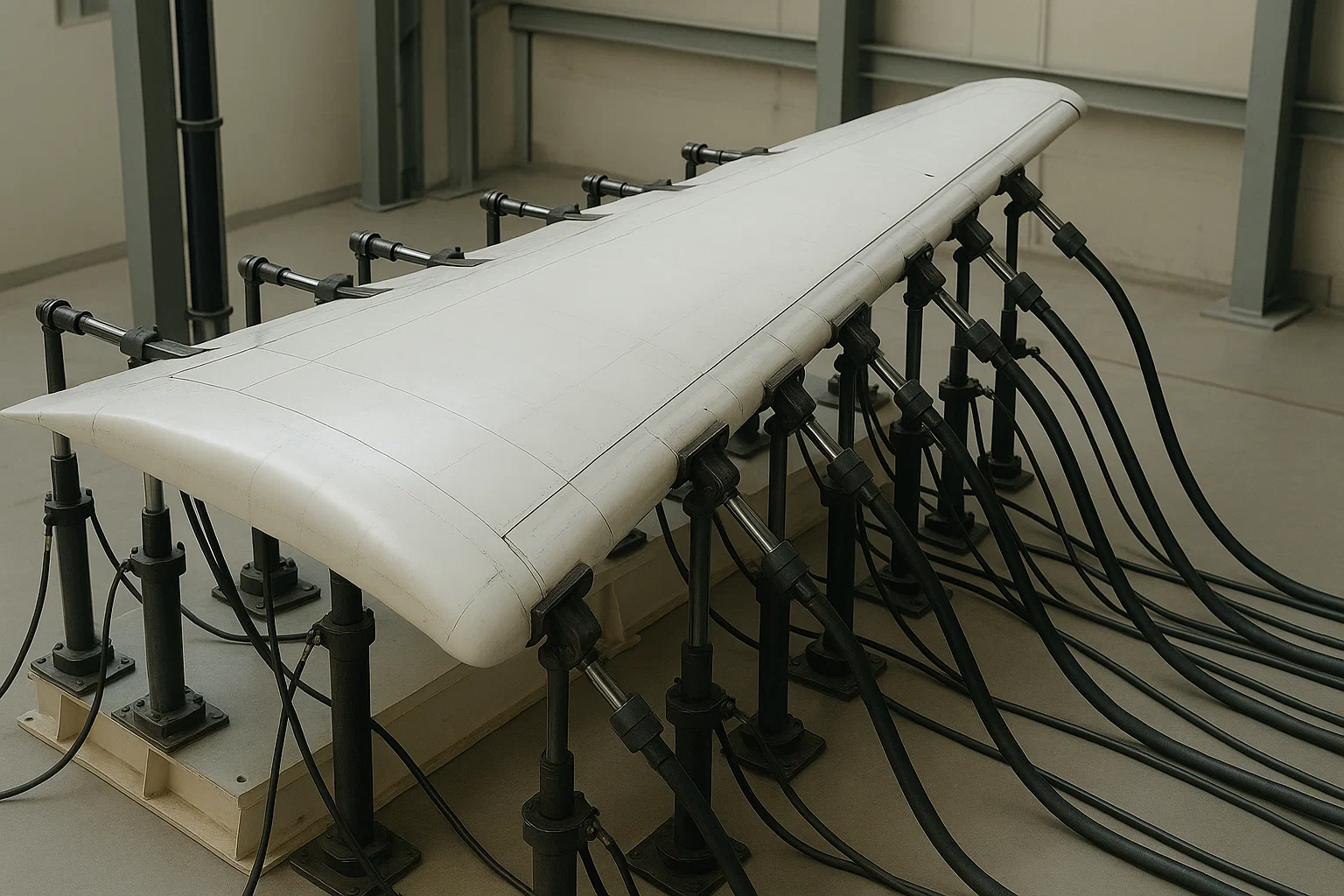
The method, created at departments 203 "Design and Engineering of Engines" and 904 "Engineering Graphics", is designed to calculate permissible loads on aircraft components, such as wings, fuselage, and engine parts, as well as for application in mechanical engineering, shipbuilding, and energy. It uses transparent polymer models made on a 3D printer, which show colored stripes under polarized light, displaying the distribution of internal stresses. This allows identifying vulnerable areas of parts and adjusting their design.
If you shine polarized light through the parts, characteristic colored stripes appear in them, reflecting the picture of internal stresses. A thermal imager works on a similar principle, only we record not temperature, but mechanical loads.
Previously, resin casting was used to create models, which took weeks, and in case of errors, it was necessary to start all over again. The new technology reduces the preparation time of models to several hours, simplifying the testing of complex parts. According to MAI engineer and postgraduate student Roman Sabitov, the method also helps to check the correctness of new Russian programs for strength analysis, which is especially important in conditions of limited access to Western solutions.
Our approach allows for independent experimental verification of the correctness of computational models, thereby providing additional testing of new Russian developments and accelerating their implementation in industry.
The research will be completed in 2026, after which the method will be patented and implemented in industry.
Read more materials on the topic:
Course to Venus: MAI is creating technologies for missions to a distant planet
No expiration date: MAI has created an engine for spacecraft with almost unlimited service life
Never miss our newsAdd this site to your preferred sources to see us more oftenAdd on Google