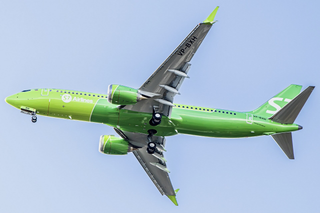
Flight tests of Be-200 amphibious aircraft with Russian PD-8 engines will begin in 2026, said Acting Governor of the Rostov Region, Yuri Slyusar.

According to him, by the end of 2025, the Beriev Taganrog Aviation Scientific and Technical Complex (TANTK) will receive the first two engines. They will equip the existing Be-200 aircraft, and the flight test program will start in mid- or late 2026.
The production of Be-200 has fallen to a technological minimum, the existing reserves are being used. The main driver for the development of TANTK is related to the testing of new PD-8 engines. The aircraft has good prospects, now it is important to carry out the entire complex of development work and launch it into mass production.
The PD-8 engine was developed for a line of domestic aircraft, including the Superjet-100 (SJ-100), Be-200, and Mi-26 transport helicopters. The power unit is expected to enter mass production in 2025.
TANTK named after Beriev was founded in 1934. The plant specializes in the design, manufacture, and maintenance of aircraft and aviation equipment, including amphibious aircraft and seaplanes.
Earlier www1.ru reported that China will not take off without PD-35: it has no other engine for the wide-body C-929.
Read more on the topic:
Millions were given for old aircraft engines of military aircraft AL-21 and AI-25 TL
A millionth ingot of titanium for the construction of MS-21 and SJ-100 was smelted in Russia
Never miss our newsAdd this site to your preferred sources to see us more oftenAdd on Google