Russia must continue to develop its own production of electronic component base for the space industry in order not to lag behind China and the United States. This was stated by Anton Alekseev, CEO of the private aerospace corporation "New Space", in an interview.
Our microelectronics have not yet been fully replaced. For low orbits, civilian components can be used, but for serious solutions, additional in-house production is needed.
Currently, the domestic component base does not allow the creation of all types of satellites and payloads. The Russian space sector has long been under sanctions, which has led to a significant degree of import substitution. However, the limited production of electronic components can become a serious deterrent to the mass production of spacecraft.
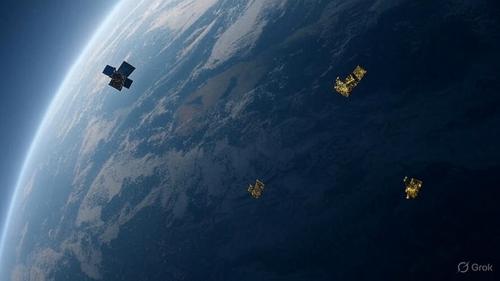
Alekseev noted that satellite groupings in other countries are significantly larger. For example, Russia has about 10-15 devices in orbit for remote sensing of the Earth, while the United States has several hundred. By 2030, the United States and China plan to increase their groupings of all types of satellites to 20-30 thousand devices.
The CEO stressed the need to revise approaches to satellite production. He proposed a transition to serial conveyor production, which will require new approaches to organization and labor efficiency. The "platform" ideology will help to better understand the value chains for each space project. Alekseev also noted that the new national project "Space" could give impetus to the development of this area.
Earlier www1.ru reported that the New Space Corporation named the cost of the Oculus project.
Read materials on the topic:
To create 100 small CubeSat satellites, Roscosmos State Corporation is joining forces with Bauman Moscow State Technical University
Luch satellites will reach a new level: communication is now at an altitude of up to 20,000 km
A domestic 5G satellite communication system was tested for the first time in Russia
Never miss our newsAdd this site to your preferred sources to see us more oftenAdd on Google

















