The company "Reshetnev" (part of Roscosmos) has presented a new thermoregulating coating for spacecraft. It is based on an optical solar reflector, which is already used in modern spacecraft.
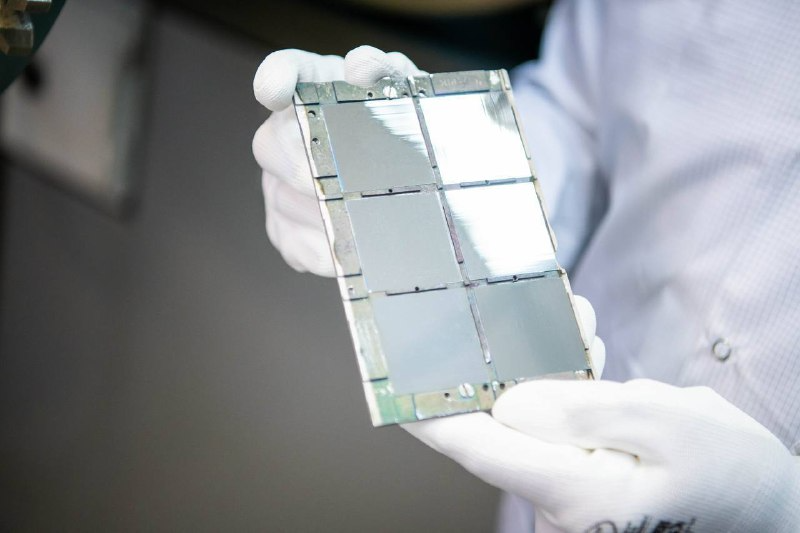
The development is needed to improve the thermal control system of spacecraft. Layers of dielectrics and semiconductors have been introduced into the new coating. Thanks to their optimal combination, the absorption coefficient of solar radiation was almost halved. For scientists, this has become a significant achievement in the field of thermal regulation.
Currently, the new technology has been successfully tested on laboratory samples. The next step will be to conduct comprehensive tests of the thermoregulating coating. After that, it can be introduced into mass production. It is expected that the use of this coating in satellites will increase their active lifespan, as well as reduce the area and mass of radiators by 30-40%.
The development of Russian scientists opens up new horizons for improving the efficiency of spacecraft and their durability. The innovative thermoregulating coating will be an important step in the development of technologies used in the space industry.
Read more on the topic:
The company "RESHETNEV" is creating a digital complex for new generation satellites
Production of waveguides for satellites increased at Roscosmos
Modular platforms for new generation satellites created at Reshetnev Company
Now on home

Start of deliveries scheduled for 2027

Over 51,000 new motorcycles were sold in Russia in 2025

The car will take at least a year to assemble

The application's audience has reached 20 million users

The model will be included in the list of cars for taxis, price - from 2.25 million rubles

All parking lots of the "Administrator of the Moscow Parking Space" are connected to the service

The cars will be supplied to the Moscow Transport Service Directorate

Deliveries to India may begin in 2028

The technology provides automated search for all types of defects in power units

The plane flew 500 km, accelerating to 425 km/h

The plant stated that the information about the termination of purchases for models 6 and 8 is not true

Scientists are using the "Ekran-M" installation