Translated with AI from the Russian original.
An international research team, including specialists from Tomsk State University (TSU), the US Naval Research Laboratory, and Princeton University, has obtained unique data on the Geminid meteor shower. The results will help refine the age of this phenomenon and the origin of its source - asteroid 3200 Phaethon.
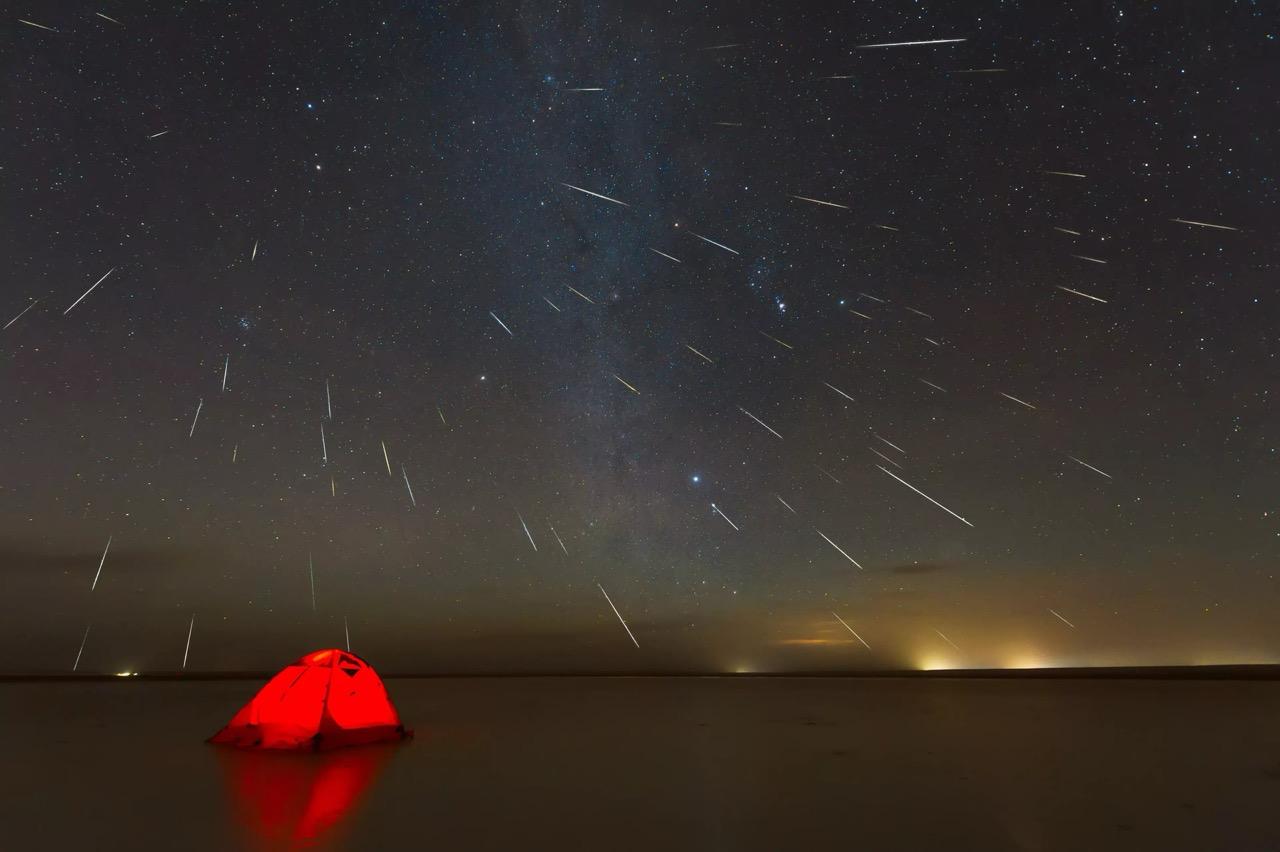
Observations of the asteroid were conducted both from Earth and from space. In 2009, the STEREO space observatory recorded an anomaly: at perihelion (the closest point to the Sun), Phaethon's brightness sharply increased twofold, but only for 48 hours. Later, the Parker Solar Probe, which flew within 6 million km of the solar corona in December 2024, discovered a dense dust trail near the asteroid's orbit. This trail did not coincide with either the trajectory of Phaethon itself or the orbits of meteors observed from Earth.
TSU explained that previous studies of the Geminids were based on models and data collected during Earth's passage through the stream. Information from the probe allowed the structure of the stream to be seen from space for the first time. It turned out that the dust trail is located on the outside of the asteroid's orbit, while models predicted its location inside. This contradiction indicates the need to revise the theories of system formation.
Scientists suggest that Phaethon may have been a comet that lost volatile substances as it approached the Sun. A catastrophic ejection of material shifted the body to a new orbit, turning it into an asteroid. The new data will help reconstruct the original trajectory of the parent object before its transformation.
The study of meteor showers is critical for the safety of space missions. Dust particles moving at high speeds can damage spacecraft. Understanding the structure of the Geminids will allow predicting risks to equipment in near space.
Read materials on the topic:
Lyrids meteor shower will light up the April sky on the night of April 23
Eta Aquarids meteor shower will peak on the night of May 6: what time is best to watch
Lyrids meteor shower 2025: peak activity and where is the best place to watch
Never miss our newsAdd this site to your preferred sources to see us more oftenAdd on Google

















