Researchers from the Russian company Smart Engines have come up with a new way to find errors and check how well the code is transferred to physical media. They use artificial intelligence and computed tomography for this. Everything happens automatically, and this helps to avoid problems between the computer and the person.
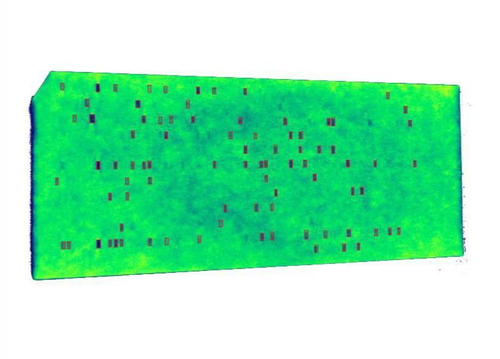
Running a program on punch cards is an expensive process, and specialists try to avoid mistakes. But even the most experienced operators are not immune from programming errors. Therefore, it is very important to check the correctness of the code before running the program on a special computer.
Scientists at Smart Engines have come up with how to check the code. First, a stack of punch cards is fastened and passes through a tomographic measurement, then the data is automatically edited, and a 3D model of the punch cards is created.
I asked my employees to release this technology by April 1st. Despite the fact that the main application of the developed approach is code quality control, this technology can be of significant benefit in studying the quality of multilayer printed circuit boards, synthetic materials in the form of crystalline films, and other objects with a complex layered structure.
The main problem of code quality analysis is the recognition of the punch card. And the Smart Tomo Engine software solution easily copes with the task. The technology aligns flat objects (printed circuit boards or punch cards), separates holes on punch cards and transfers them to virtual punch cards. Thus, created models are compared with a layout or text file in automatic mode.
Related materials:
Smart Engines presented a service for recognizing and verifying documents - Smart ID Engine 2.5
Replacing old neural networks: Smart Engines has created a new bipolar morphological neural network
"Chinchilla" is no longer a problem: Russian scientists have taught the neural network to accurately recognize this handwritten word
Never miss our newsAdd this site to your preferred sources to see us more oftenAdd on Google

















