The ISS crew had to isolate one of the modules of the Russian segment of the station — “Search”. The reason was a toxic odor that came from the “Progress MS-29” cargo ship docked to the module.

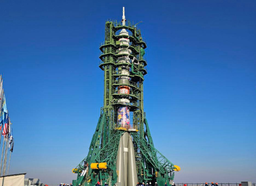
This was supposed to be a routine mission to deliver about three tons of food, fuel, and supplies to the International Space Station, but when Russian cosmonauts opened the hatch of the cargo ship on Saturday, they were in for a surprise — a toxic odor.
When Roscosmos cosmonauts opened the hatch of the “Progress” spacecraft, they smelled an unusual odor and noticed several drops. This prompted the crew to immediately close the “Search” hatch to protect the rest of the Russian segment.
According to the space agency, after an unusual odor was detected aboard the orbital laboratory, air purifiers and pollution sensors monitored the state of the atmosphere. Controllers at the Mission Control Center in Houston concluded that the air quality inside the station was normal.
However, NASA may be underestimating the seriousness of the incident. According to expert Anatoly Zak, the smell was "poisonous," which forced Russian cosmonauts to urgently close the hatch leading to the “Progress” ship, which launched from the Baikonur Cosmodrome in Kazakhstan.
According to ArsTechnica, Russian and American specialists continue to exchange opinions on the situation surrounding “Progress MS-29”.
Earlier, the National Aeronautics and Space Administration and the State Corporation “Roscosmos” quarreled over an air leak on the ISS. Russian engineers believed that the cracks arose due to “high cyclic fatigue”. The American side believed that the reason lies in pressure, mechanical stress, and other factors.
Read materials on the topic:
Russian cargo ship “Progress MS-28” saved the ISS from space debris
Farewell, Earth: Russian cargo ship “Progress MS-29” отправился на МКС
Roscosmos takes control of all Russian satellites — what does this mean