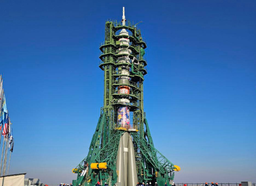
This was announced by the Ministry of Defense on the Day of the Space Forces. On this day, the results of the work of this branch of the military for 2024 were summed up, and their plans were also slightly revealed.

In addition to the usual tasks of the Space Forces — maintaining constant readiness for the use of missile attack warning systems, monitoring outer space, launching and controlling spacecraft of the Russian orbital group, mastering new models of weapons and military equipment entering service with military units of the Space Forces, launching military and dual-purpose spacecraft and intercontinental ballistic missiles — they have other tasks as well.
To re-equip formations and military units of the Space Forces with advanced weapons, more than 50 development and research works are currently underway to create new generation systems and complexes in the coming years. The troops are actively working to put into operation the latest models of weapons, military and special equipment. New generation Voronezh radar stations of the missile attack warning system, created using high factory readiness technology, are on combat duty. Work continues on the creation of new radar stations for the missile attack warning system in the Komi Republic and the Murmansk Region. As part of the implementation of the program to improve and develop the Russian space control system, specialized ground-based space control facilities of a new generation are being created in the Space Forces.
In addition, new generation command and control systems are being actively developed to re-equip individual command and control complexes of the G.S. Titov Main Test Space Center.
In general, according to the Ministry of Defense, since the beginning of 2024, the Space Forces of the Russian Aerospace Forces:
- detected more than 300 launches of foreign and domestic ballistic missiles, space launch vehicles;
- conducted more than 3,000 special operations to monitor changes in the space environment;
- discovered and accepted for tracking over 1,800 space objects;
- monitored the launch of more than 800 spacecraft into orbit;
- provided forecasting and control of the termination of the ballistic existence of over 1,100 space objects and prevented collisions of spacecraft of the Russian orbital group with other space objects. It is noted that «special attention was paid by specialists of the Main Center for Space Situation Intelligence to monitoring the composition and condition of orbital groups of foreign space systems, as well as conducting experiments in orbits with spacecraft of foreign states»;
- conducted 11 launches of spacecraft from the Plesetsk, Vostochny and Baikonur cosmodromes with the launch of 37 spacecraft. Combat crews of the Plesetsk cosmodrome conducted 2 launches of space launch vehicles of the class with 3 military spacecraft.
Also in 2024, the on-duty forces of the ground-based automated control complex of the Space Forces of the Russian Aerospace Forces conducted more than 450 thousand control sessions of spacecraft of the Russian orbital group and more than 120 thousand sessions to ensure control of spacecraft.
Read materials on the topic:
Nuclear-space shield: what is known about the Russian Voronezh radar
Now on home
Герой России Гарнаев: никто из профессионалов о возобновлении производства на КАЗ всерьёз не говорит
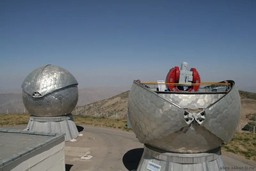
Система отслеживает спутники на высотах до 50 000 км и ведёт за ними наблюдение
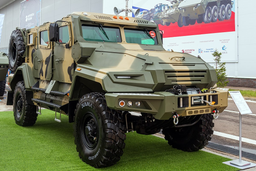
The armored vehicle is equipped with a KamAZ-740.35-400 diesel engine with a power of 400 hp.
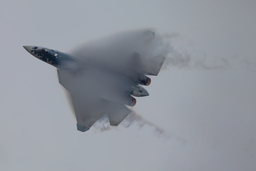
Constant improvements in avionics, weapons and tactical capabilities will make the aircraft a flexible response to future challenges

The exterior of the KamAZ-54901 features fairings on the cab and chassis for fuel economy
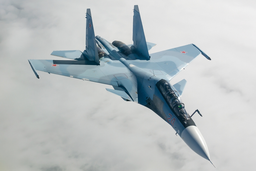
Fighters are in demand both domestically and abroad
Tyazhpromexport and Venezuela Agree on Plant Revival
The company not only completed the state order, but also quickly mastered the production of AK-12K for special forces
Experts have developed a photogrammetric complex with a resolution of less than 1 cm