Residents of Moscow and other regions of Central Russia will be able to see a rare natural phenomenon — the Northern Lights. This will happen on Sunday night, according to Evgeny Tishkovets, a leading specialist at the Fobos weather center.

According to the Laboratory of Solar Astronomy of the IKI RAS, magnetic storms will begin on October 4 and may last up to four days, reaching a level of 2-3 points on a 5-point scale. In addition to the Moscow region, the Northern Lights will be visible to residents of the North-West, Upper Volga, Russian North, as well as parts of Siberia.
Given the expected favorable aerosynoptic situation and luminescence, that is, the glow of the upper atmosphere due to the interaction of the Earth's magnetosphere with charged particles of the solar wind, on the night of October 5-6, the Northern Lights will be visible to Muscovites and residents of the Moscow region.
This rare phenomenon will be available for observation thanks to the weather conditions, which on this night will be favorable for viewing the starry sky.
Earlier www1.ru reported that the strongest magnetic storm has begun on Earth.
Read materials on the topic:
IKI RAS: a strong magnetic storm has ended, but new solar flares are possible
Now on home

Герой России Гарнаев: никто из профессионалов о возобновлении производства на КАЗ всерьёз не говорит
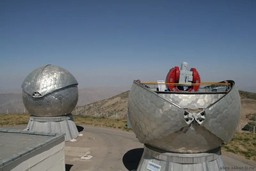
Система отслеживает спутники на высотах до 50 000 км и ведёт за ними наблюдение


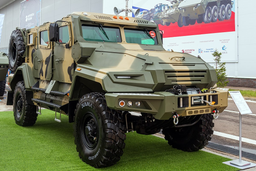
The armored vehicle is equipped with a KamAZ-740.35-400 diesel engine with a power of 400 hp.
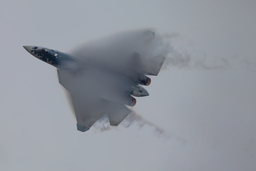
Constant improvements in avionics, weapons and tactical capabilities will make the aircraft a flexible response to future challenges

The exterior of the KamAZ-54901 features fairings on the cab and chassis for fuel economy
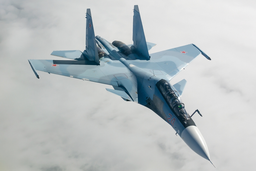
Fighters are in demand both domestically and abroad
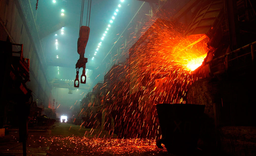
Tyazhpromexport and Venezuela Agree on Plant Revival

The company not only completed the state order, but also quickly mastered the production of AK-12K for special forces
Experts have developed a photogrammetric complex with a resolution of less than 1 cm