Buoy tender vessels like the "Kazarka" maintain floating and coastal navigation signs, monitor the depth of the fairway, and periodically tow barges with a displacement of no more than 400 tons in the inland river network.
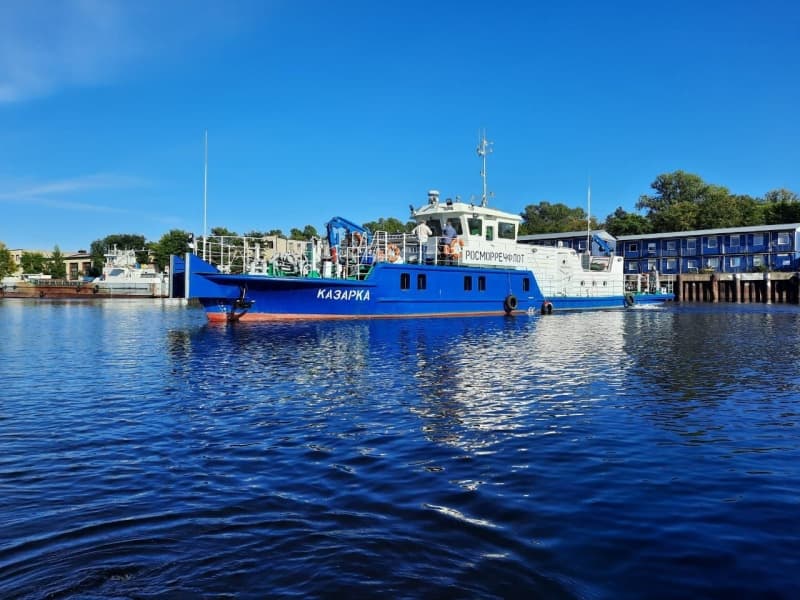
This is a single-hull vessel with a steel hull having beam camber, a forecastle, stern hog, a semi-sunken superstructure, a raised wheelhouse made of aluminum-magnesium alloy, and a bow thruster.
Project 3050.1A vessels are being built by order of FKU "Rechvodput" as part of the renewal of the service fleet; the work is being carried out by OOO "Kingisepp Machine-Building Plant." The buoy tender vessel was developed at the Gorky Central Design Bureau of River Fleet.
Characteristics of Project 3050.1A vessels:
- length overall, m - 26.80;
- width overall, m - 4.20;
- side height at midships H, m - 1.50;
- freeboard height, m - 0.604;
- draft at DWL, m - 1.00;
- main engine power, kW - 1×220;
- calculated speed in calm water, km/h - 20.0;
- crew, people - 6;
- endurance, days - 6.
The motor vessel is equipped with the latest ship power plant control systems, devices for servicing navigation equipment on inland waterways, and modern communication and navigation equipment.
It also has a crane-manipulator with a lifting capacity of 1 ton for servicing navigation signs.
Read materials on the topic:
Court suspends the rights of the Finnish Arctech Helsinki Shipyard OY to the Nevsky Shipyard
Rope taxi to start operating in Moscow and major cities of Russia
Now on home

Start of deliveries scheduled for 2027

Over 51,000 new motorcycles were sold in Russia in 2025

The car will take at least a year to assemble

The application's audience has reached 20 million users

The model will be included in the list of cars for taxis, price - from 2.25 million rubles

All parking lots of the "Administrator of the Moscow Parking Space" are connected to the service

The cars will be supplied to the Moscow Transport Service Directorate
Deliveries to India may begin in 2028
The technology provides automated search for all types of defects in power units
The plane flew 500 km, accelerating to 425 km/h

The plant stated that the information about the termination of purchases for models 6 and 8 is not true
Scientists are using the "Ekran-M" installation