The Central Design Bureau "Rubin" is considering the possibility of using lithium-ion batteries in the power plant of promising non-nuclear submarines. This was announced by the General Director of CDB "Rubin" Igor Vilnit.

Currently, various options for the design of power plants for new submarines are being developed, and lithium-ion batteries are one of the key areas of this work. Vilnit noted that all technical and technological solutions have already been tested, and CDB "Rubin", together with its partners, is on the way to creating standard equipment that can be installed on ships in the future.
The process of developing air-independent power plants (AIP) is extremely complex and knowledge-intensive, Vilnit noted. He cited as an example the Swedish power plant with a Stirling engine, which took about 15 years from the start of design work to implementation on a combat submarine, and the German AIP with an electrochemical generator, the development of which took almost 30 years. In Russia, the creation of air-independent power plants has slowed down somewhat due to the lack of urgent need, since the Russian fleet already has nuclear submarines, where a nuclear reactor can be considered an ideal AIP.
Read materials on the topic:
Russia will produce drones and components under the brands "Rubin" and "Empaero"
Now on home

Герой России Гарнаев: никто из профессионалов о возобновлении производства на КАЗ всерьёз не говорит

Система отслеживает спутники на высотах до 50 000 км и ведёт за ними наблюдение

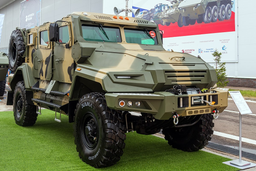
The armored vehicle is equipped with a KamAZ-740.35-400 diesel engine with a power of 400 hp.
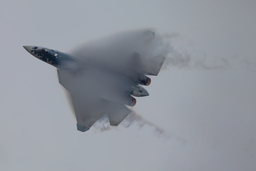
Constant improvements in avionics, weapons and tactical capabilities will make the aircraft a flexible response to future challenges

The exterior of the KamAZ-54901 features fairings on the cab and chassis for fuel economy
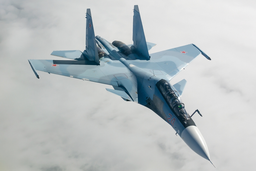
Fighters are in demand both domestically and abroad

Tyazhpromexport and Venezuela Agree on Plant Revival

The company not only completed the state order, but also quickly mastered the production of AK-12K for special forces
Experts have developed a photogrammetric complex with a resolution of less than 1 cm