Russian researchers have created a polymer using porous organic materials. It will allow to detect even low concentrations of mercury and antibiotics in water and other liquids, the Russian Science Foundation (RSF) press service reported.

The new material will speed up the safety control of food, water bodies and soils.
The proposed methods for detecting two hazardous substances - mercury compounds and the antibiotic sulfadiazine - are simple, but highly sensitive, which will allow them to be used to monitor the safety of environmental objects and food.
The new polymer is a luminescent material consisting of metal-organic frameworks (MOFs). They are used as a basis for gas detectors and filters, as well as as "packaging" for hazardous substances.
MOF is capable of absorbing ultraviolet light and transforming it into bright green light. The material contains ions of the rare earth metal terbium and complex organic molecules. The emission power of MOF allows it to be used as a highly sensitive detector of various chemicals.
Studies have shown that the polymer is able to capture even a small concentration (0.12-0.18 micrograms per liter) of antibiotic and mercury in food and water. It is planned to be used as a base for sensors that assess the safety of water and products.
Earlier www1.ru reported that in Mordovia created a super-strong polymer from multilayer packaging waste.
Read related materials:
Biodegradable and eco-friendly: biopolymers based on plant materials developed in Russia
Cleans 60 times better from carbon dioxide: a membrane for reducing CO2 levels created in Russia
A computer model for finding defects in composite materials developed in Russia
Now on home

Start of deliveries scheduled for 2027

Over 51,000 new motorcycles were sold in Russia in 2025

The car will take at least a year to assemble

The application's audience has reached 20 million users

The model will be included in the list of cars for taxis, price - from 2.25 million rubles

All parking lots of the "Administrator of the Moscow Parking Space" are connected to the service

The cars will be supplied to the Moscow Transport Service Directorate

Deliveries to India may begin in 2028

The technology provides automated search for all types of defects in power units

The plane flew 500 km, accelerating to 425 km/h

The plant stated that the information about the termination of purchases for models 6 and 8 is not true
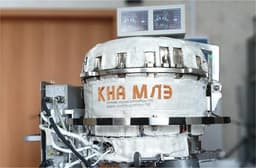
Scientists are using the "Ekran-M" installation