Molniya-1 aircraft-type drones with elements of artificial intelligence were sent to the Russian military a few weeks ago. The Ministry of Defense told how such a drone is used by the marines of the Pacific Fleet.
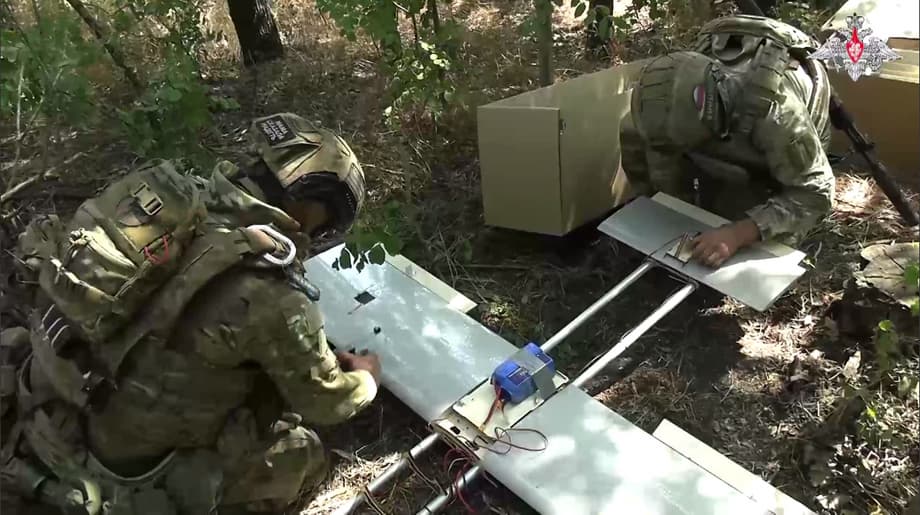
Molniya-1 is a strike drone of an aircraft type with an improved battery. It allows you to strike at the enemy at a distance of up to 30 kilometers. The drone turned out to be very popular: its flight range is longer than that of a kamikaze drone, and it can carry a more impressive ammunition load.
Molniya-1 is used mainly against tanks, armored vehicles, mortars, artillery, pickups and jeeps. A high-explosive fragmentation projectile is used to defeat pickups and jeeps, and a cumulative engineering charge is used for heavier equipment and targets to penetrate armor.
Inside the Molniya-1 is domestic software with elements of artificial intelligence, which helps to successfully overcome radio interference. The drone has an autopilot that turns on when the UAV enters the enemy's electronic warfare zone.
The drone continues to follow the specified course without the support from the ground. After passing through the electronic warfare zone, the autopilot turns off, the operator reconnects to it, and the drone can maneuver until the target is detected and hit.
Earlier, "Первый технический" told about the new Russian UAV "Molniya", which is capable of hitting air defense systems, conducting reconnaissance or electronic warfare, as well as acting as a target designator.
Read materials on the topic:
Secret data is instantly transmitted: PIK MTK operates in the south of Russia
"Deserves attention": the Altai "Tarantula-bird catcher" interested Poland
Now on home

The service contains data on 45,000 fraudulent sites

The state has accelerated the introduction of unmanned solutions, integrating them into the real sector of the economy

Modernized engines may equip the Lada Azimut crossover

The price is 132 billion 265.8 million rubles

The manufacturer plans to strengthen its lineup of light commercial vehicles

The production of carbon fiber was organized in the shortest possible time

Electric vans will speed up the repair of urban transport infrastructure

Countries are working to synchronize regulations in the field of AI

The service's average daily audience is 55 million people

Stable Isomaterial Based on Metakaolin Has a Density Below 300 kg/m³

Re-identification quality improved twofold with new DynaMix method

Russians will be able to find out about debts online