Russian military personnel on the front lines have begun using Molniya strike drones. The drone, developed by the Kronstadt company, is capable of accelerating to 800 km/h and becoming a problem for enemy air defense forces.
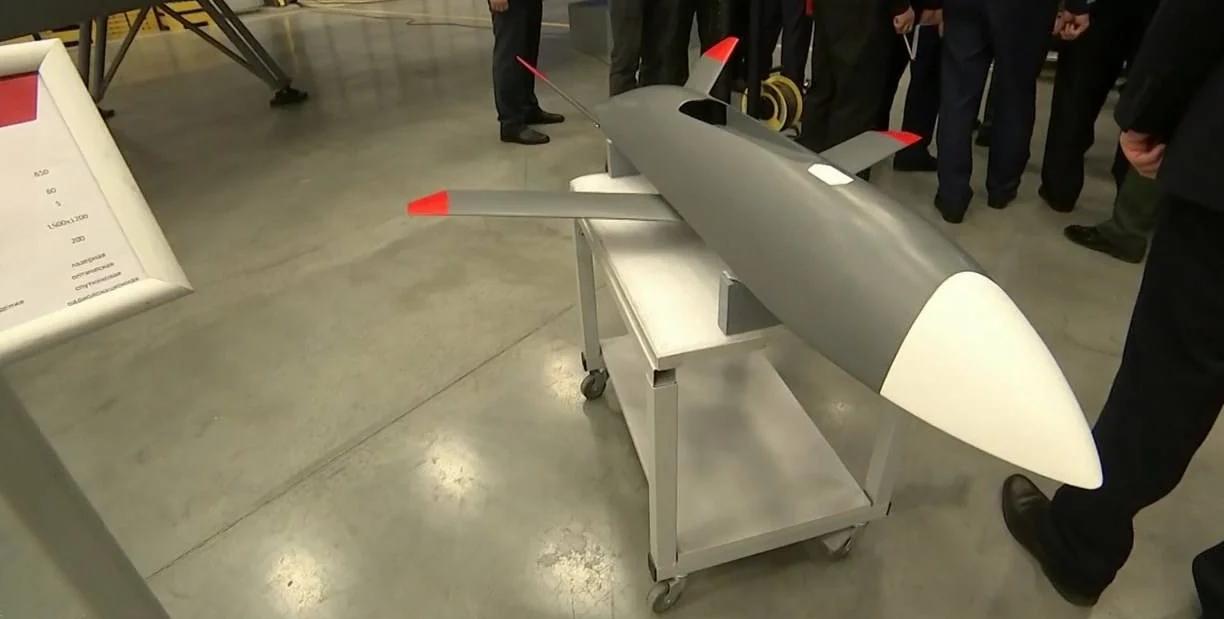
The drone has a wing that folds out in flight and a V-shaped tail. The fuselage of the Molniya has a curved upper surface and an almost flat lower surface.
The design of the nose indicates the use of a radio-transparent fairing. In the central part of the product, there is an air intake recessed into the fuselage. The nozzle is made flat with a V-shaped cut.
According to information in open sources, the drone is launched from a carrier, and the landing method is currently unknown. The Molniya UAV can also conduct reconnaissance or electronic warfare, as well as act as a target designator.
Tactical and technical characteristics of the Molniya UAV:
- Length - 1.5 m
- Wingspan - 1.2 m
- Payload - 5-7 kg
- Engine - turbojet power plant
- Speed - 700-800 km/h
Earlierwww1.ru reported that the Russian Armed Forcescreated a miniature wheeled drone to blow up enemy fortified areas. The platform is capable of delivering a TM-62 mine to the enemy's dugout and blowing it up.
Read materials on the topic:
Shield of the Russian Army: Viking air defense system will reliably close the sky from HIMARS
Return of the Molniya: the Stupinets missile boat will join the Caspian Flotilla
Strength and Power: Russian MiG-29K fighters will be able to carry Kh-59MK2 and Kh-38MTE missiles
Never miss our newsAdd this site to your preferred sources to see us more oftenAdd on Google

















