The general schedule includes not only the station's facilities but also the work of the industry's scientific institutions in supporting the project. It also includes flight tests of a new generation manned transport spacecraft, the creation of launch vehicles, and ground-based space infrastructure. In addition to Yuri Borisov, the document was also signed today by 19 general directors of the main cooperation enterprises.
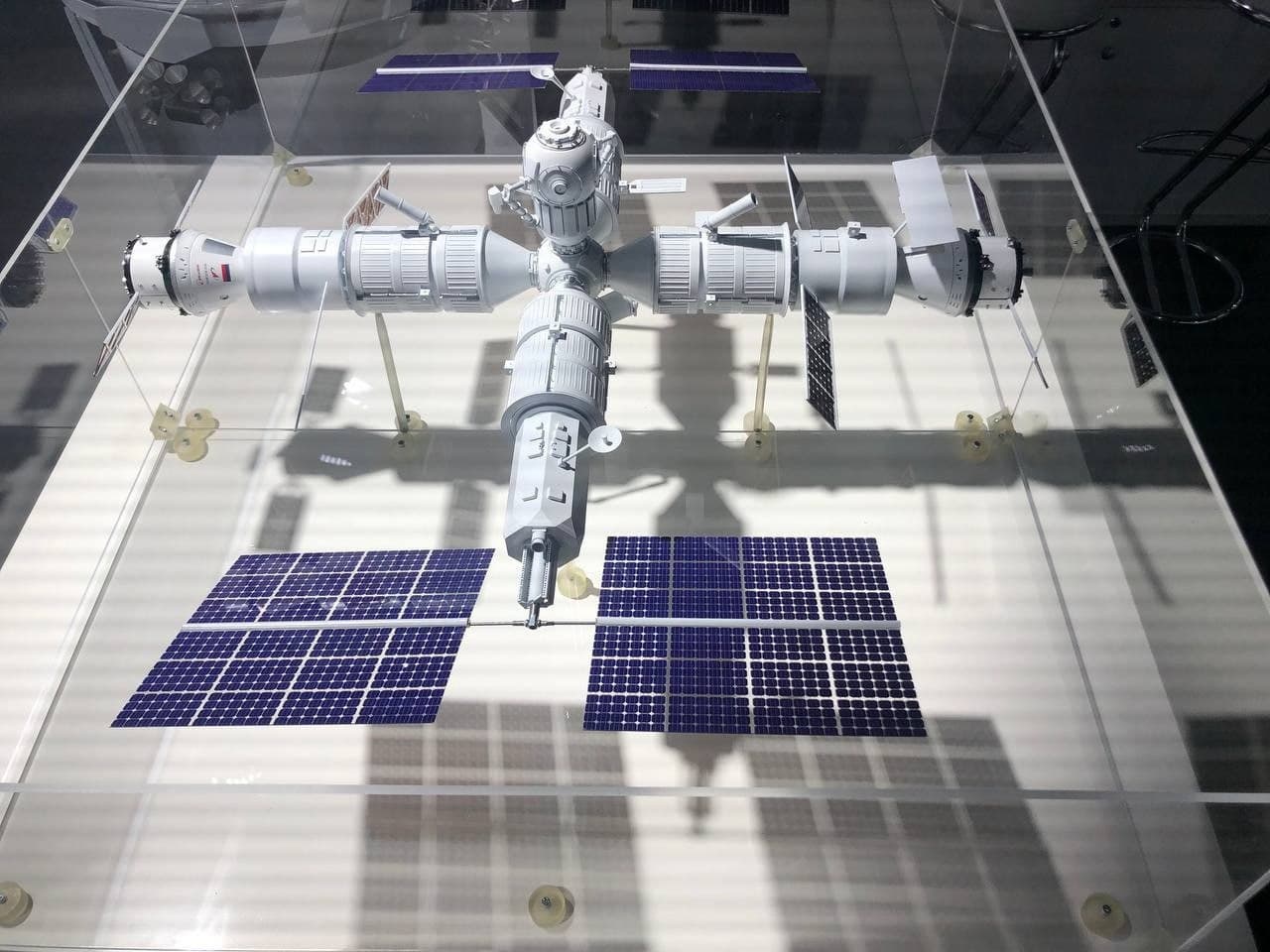
ROS will be built in the following order:
- launch of the scientific and energy module - in 2027;
- creation of the station's core from four modules launched into orbit: scientific and energy (NEM-ROS), universal nodal (UUM), gateway (SHM), and basic (BM) - by 2030;
- expansion of the station by docking two target modules - from 2031 to 2033.
Roscosmos also noted that state contracts were signed today for the execution of development work on the creation of ROS and a space complex with a manned transport spacecraft and the Angara heavy-class launch vehicle at the Vostochny Cosmodrome.
Earlier in early June, it became known that the Russian spacecraft "Orel," which will play a significant role in transporting cosmonauts and cargo to the ROS, is alreadypreparing for production. A promising efficient battery has been developed for it, which is more efficient than SpaceX's foreign counterparts. The energy storageis designed for at least 4 flights into space, with recharging after each of them.
Read related materials:
Russian space security system "Milky Way": what is known about it
Russia is launching the first network of private remote sensing satellites "Stilsat" into orbit
Russia can speed up data transfer from satellites hundreds of times