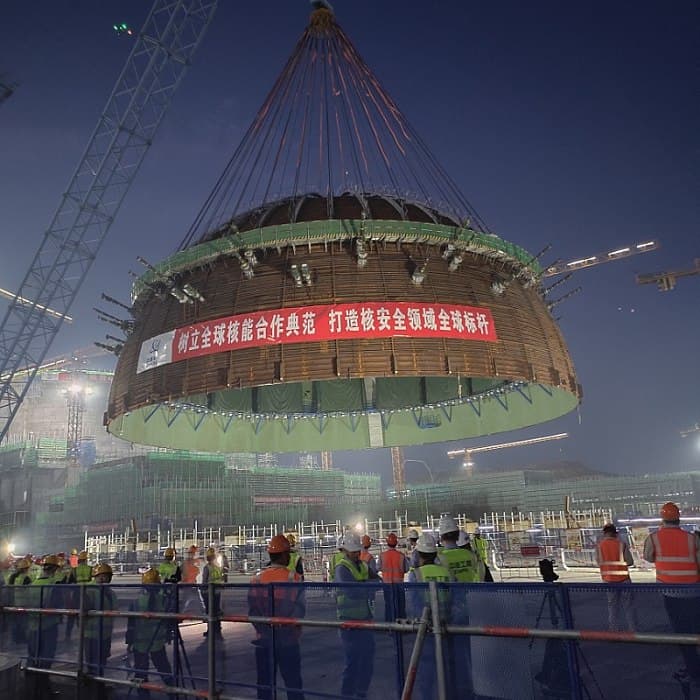
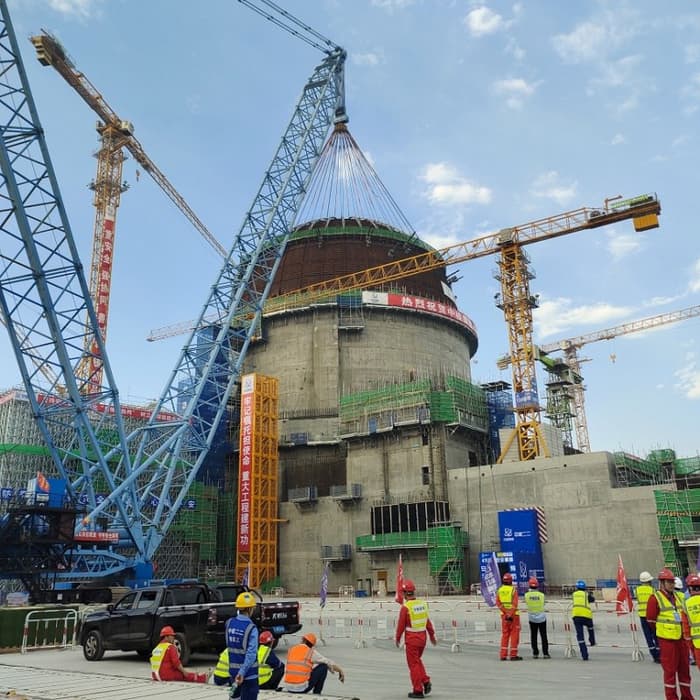
The 740-ton dome was lifted and installed in one stage on the reactor building of power unit No. 4 of the Xudapu NPP (Huludao City, Liaoning Province) in China. The nuclear facility is being built with the participation of the Engineering Division of Rosatom State Corporation. Previously, during the construction of a Russian-designed NPP, the dome installation took place in two stages.
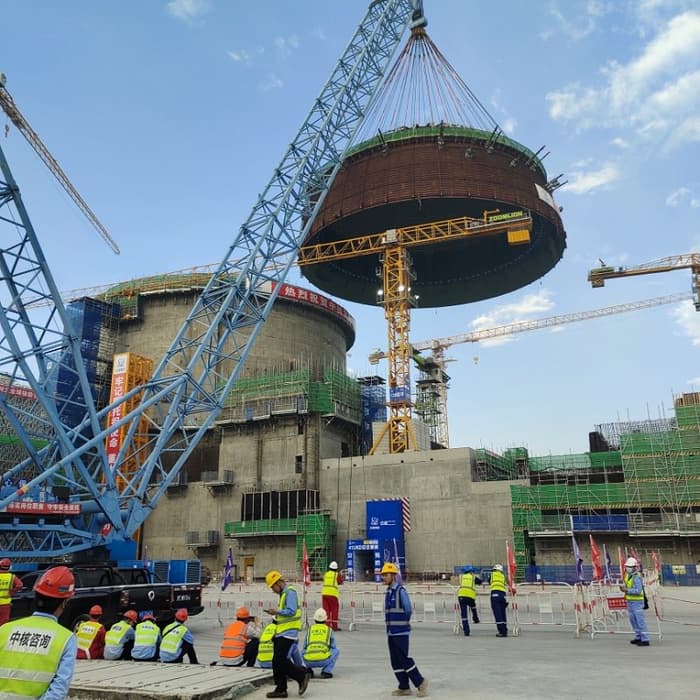
The single-stage lifting technology optimizes the process and reduces the time of work. The dome, assembled on the ground, was lifted by a crane and placed on the reactor building. Ahead, unit No. 4 is waiting for the installation of the reactor vessel.
A polar crane was also installed at the construction site. After the completion of concrete works inside and outside the dome part of the reactor building, the crane will be needed for the installation of large-sized equipment.
Xudapu NPP is a new project of Rosatom and Chinese CNNC in the field of nuclear energy. In 2019, the parties signed contracts for the construction of power units No. 3 and No. 4 of the Xudapu NPP with VVER-1200 reactors. Russia will also supply nuclear fuel to China. The commissioning of power units is scheduled for 2027-2028.
Read also on the topic:
Largest project of Russia and India: Rosatom sent pipeline fittings for the Kudankulam NPP
Now on home

Герой России Гарнаев: никто из профессионалов о возобновлении производства на КАЗ всерьёз не говорит
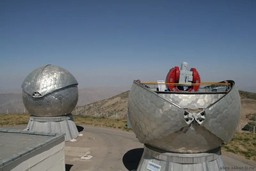
Система отслеживает спутники на высотах до 50 000 км и ведёт за ними наблюдение


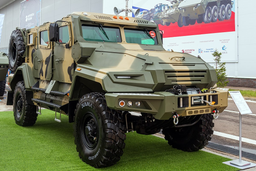
The armored vehicle is equipped with a KamAZ-740.35-400 diesel engine with a power of 400 hp.
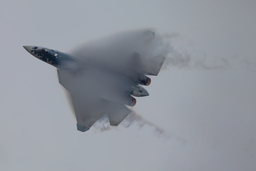
Constant improvements in avionics, weapons and tactical capabilities will make the aircraft a flexible response to future challenges

The exterior of the KamAZ-54901 features fairings on the cab and chassis for fuel economy
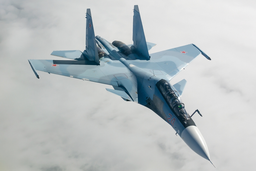
Fighters are in demand both domestically and abroad
Tyazhpromexport and Venezuela Agree on Plant Revival

The company not only completed the state order, but also quickly mastered the production of AK-12K for special forces
Experts have developed a photogrammetric complex with a resolution of less than 1 cm