Russian Angara family launch vehicles will receive new fairings in 2024. Rostec announced the imminent manufacture of these components for five rockets by its subsidiary ONPP Tekhnologiya named after A.G. Romashin.
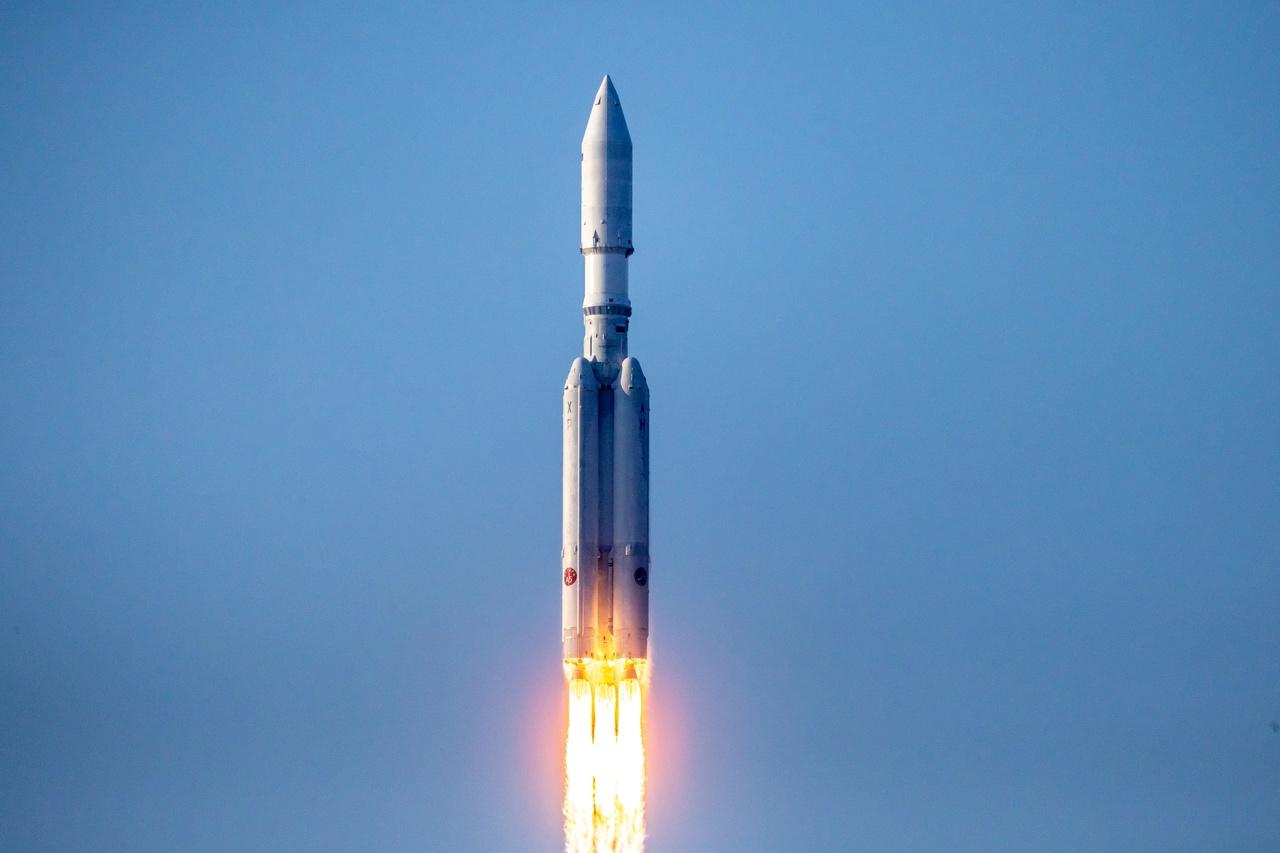
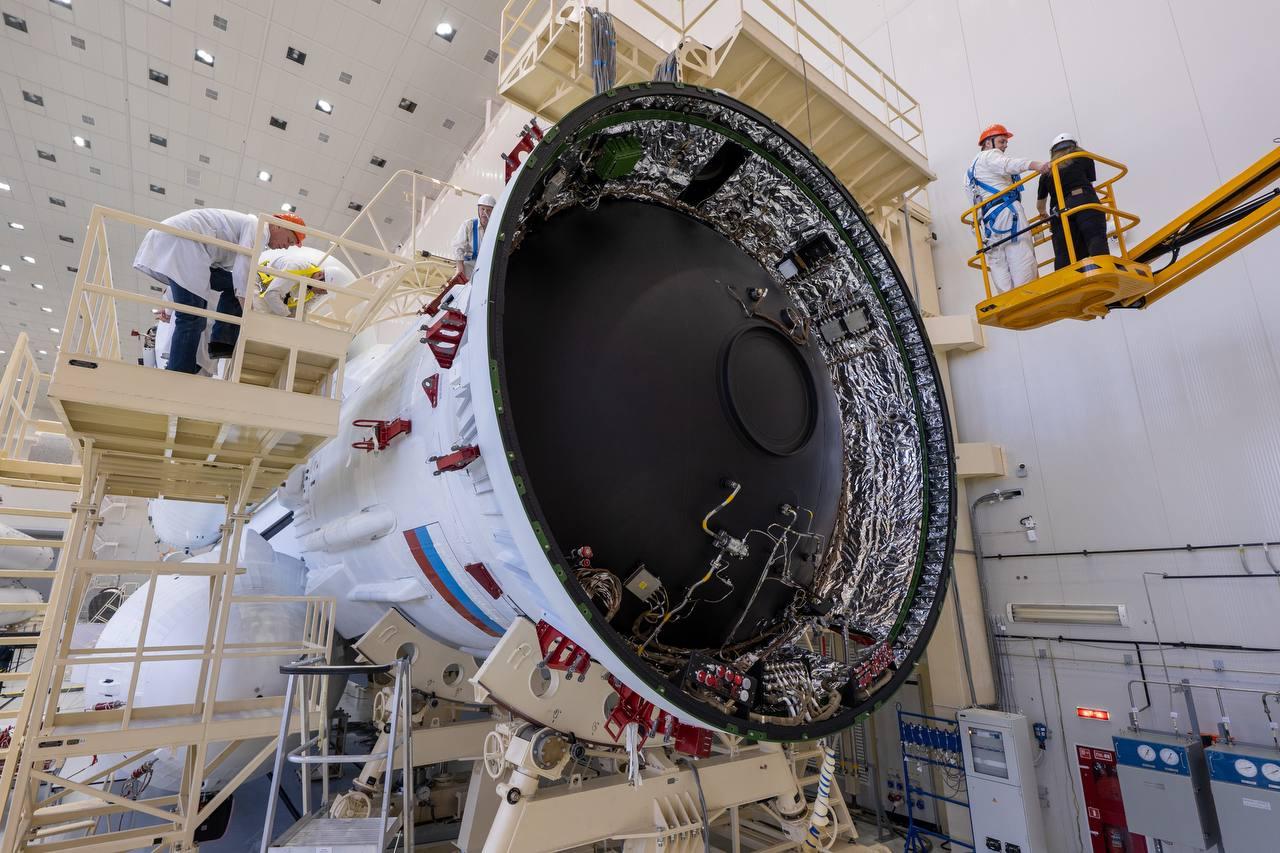
Fairings are ultra-durable structures. They withstand extreme loads and protect the rocket's payload during flight through the atmosphere. For example, a fairing can withstand sudden temperature changes of up to more than 700 degrees Celsius.
Weighing just over a ton, the protective composite body of the fairing reaches the height of a five-story building.
The products have a height of up to 17 meters and a diameter of almost four and a half meters. At the same time, the structure is very light – it weighs 1100 kg. This has reduced the mass of the space rocket and increased the payload. In total, in 2024, Tekhnologiya will produce five sets for two Angara-A5 launch vehicles and three Angara-1.2.
Each fairing consists of several structural elements – shells. These are high-tech products made of two layers of composites, between which there is a honeycomb aluminum filler. A set for the Angara-A5 modification consists of eight shells, for the Angara-1.2 version – of six.
Angara Rockets
This is a family of Russian modular launch vehicles with environmentally friendly oxygen-kerosene engines. The main developer and manufacturer of the rockets is the M.V. Khrunichev State Research and Production Space Center (part of Roscosmos State Corporation).
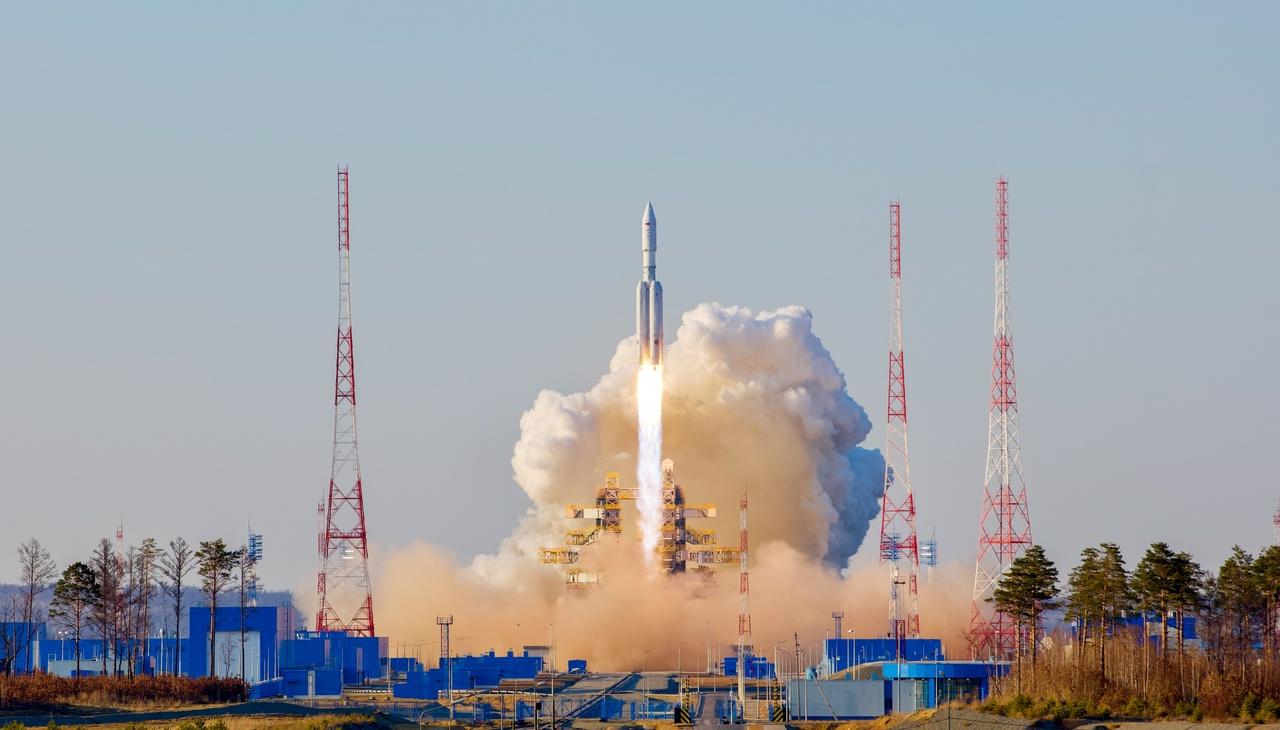
The rockets are to become Russia's main space trucks, replacing the environmentally and morally obsolete Proton and Soyuz — the renewal of Russia's fleet of launch vehicles is planned for 2028-2029.
The Angara family will also help build the Russian Orbital Station and launch manned spacecraft to it. The rockets will even help Russia engage in the exploration of the Moon, Mars, and Venus.
The role of Angara in interplanetary flights was stated in an interview with the Zvezda TV channel by Anatoly Petrukovich, Director of the Space Research Institute of the Russian Academy of Sciences.
Angara is the future of Russian cosmonautics. Replacing Proton, which was made in the 60s, is a heavy rocket that puts about 20 tons of cargo into near-Earth orbit. This weight is needed to, for example, launch a large astronomical observatory, or a landing module on the Moon, or return soil from the Moon, fly to Venus, to Mars.
The management of Roscosmos plans to build about eight heavy Angara-A5 rockets plus a certain number of light Angara-1.2 rockets per year in the coming years.
The Angara family varies in configuration and in the ability to put different masses of payload into orbit:
- prospective — Angara-A5V — up to 38 tons;
- light — Angara-1.2 — from 2.2 tons;
- heavy — Angara-A5 — 24-24.5 tons.
The launch of the first Angara-A5 took place from Vostochny the day before, April 11, on the third attempt. According to the head of Roscosmos State Corporation Yuri Borisov, this is normal and there is no need to worry: the Amur space rocket complex, which includes Angara-A5, is only beginning its tests, and it is better to identify and remove all the nuances now.
This launch was also a debut for the rocket construction program, for the Vostochny cosmodrome, which for the first time organized the launch of a heavy rocket from a new launch complex, and for the rocket's upper stage Orion.
The successful launch became a gift for Cosmonautics Day, which is celebrated in Russia on April 12. In the world, it is also known as the International Day of Human Space Flight. On this day, April 12, 1961, the world's first manned spacecraft-satellite was launched into Earth orbit in the USSR, on board of which was the world's first cosmonaut Yuri Gagarin.
The editors of "Pervyi Tekhnicheskiy" congratulate everyone involved in the conquest and exploration of space, as well as simply everyone who, like us, is in love with space, on Cosmonautics Day. We wish you new discoveries and achievements, successful implementation of plans and a worthy reward for their implementation!
Read materials on the topic:
Never miss our newsAdd this site to your preferred sources to see us more oftenAdd on Google