This Tuesday, February 5, cosmonaut Oleg Kononenko set a new world record for time spent in space, surpassing his compatriot Gennady Padalka. According to data from Roscosmos, as of 11:30:08 Moscow time, Kononenko had spent a total of 879 days, 11 hours, 29 minutes, and 48 seconds in space.

Gennady Padalka, who made five spaceflights, held the previous record with 878 days. However, Kononenko plans to increase his flight time and reach 1,000 days in space by June 5, 2024.
This record-breaking flight is the fifth for Oleg Kononenko, who joined the annual expedition to the International Space Station (ISS). Together with his colleague Nikolai Chub, they flew to the station aboard the Soyuz MS-24 along with American astronaut Loral O'Hara.
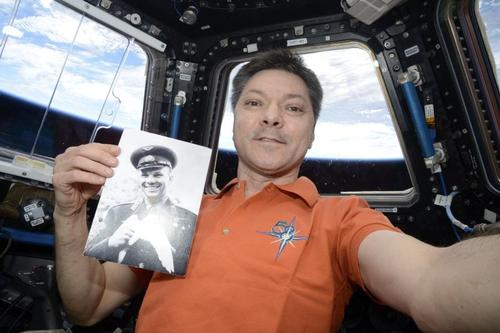
The annual flight presents enormous challenges for cosmonauts, such as weightlessness, radiation, and prolonged absence of gravity. It is expected that after the completion of the expedition in September 2024, Oleg Kononenko's total flight time will be 1,110 days, making him the first person to have spent so long in space.
It is important to note that Kononenko has also contributed to science by conducting a unique experiment in space. He became the first person to use a bioprinter to create a living organ - the thyroid gland of a mouse. This technology is of global importance as it opens up new opportunities for studying cosmic radiation.
The practical application of this technology lies in the creation of sentinel organs, sensitive to radiation, which can be used to study the effects of radiation in space. This data is critical for planning long space flights, building lunar bases, and creating planetary settlements.
Recently, the newly minted record holder shared plans to conduct the first ever in the history of space research,a unique experiment using 4D bioprinting aboard the ISS. In March, Konenko is going to start printing tubular organs in zero gravity.
Never miss our newsAdd this site to your preferred sources to see us more oftenAdd on Google