Translated with AI from the Russian original.
Details have emerged in Russia about how Russian long-range aviation will develop until 2030-2040. The veil of secrecy has been lifted over the project of a new bomber from PJSC Tupolev, which is tentatively called PAK DA, that is, a promising aviation complex for long-range aviation.
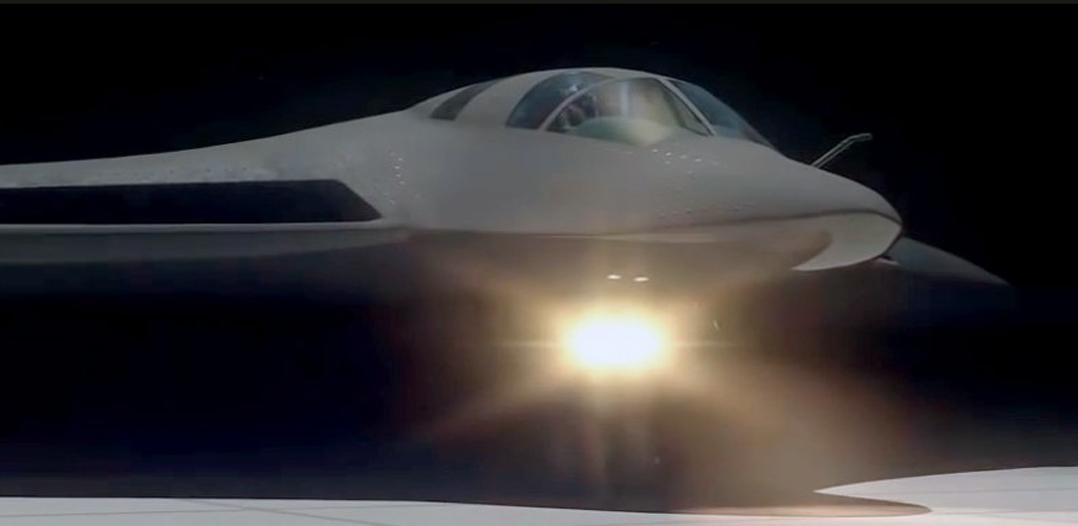
It will work on both ground targets and objects of various sizes in the air. The first aircraft will be assembled as early as 2024-2025, and the bomber could be launched into mass production by 2027-2030.
The subsonic PAK DA will have a take-off weight of about 145 tons, of which at least thirty tons will be payload.
The aircraft uses the "flying wing" aerodynamic configuration, which contributes to flights with a large payload over a long range and attacks from different angles.
In addition, it will be less visible to radars and will be able to use cruise and advanced hypersonic missiles without entering the air defense zone of a potential enemy.
Strategic cruise missiles with artificial intelligence will themselves determine how, where and along what trajectory to fly. Interference with radar and infrared guidance systems of the enemy will be created by a complex of electronic equipment.
There are no other details yet. However, PJSC Tupolev's patented design of a device for installing a jet gas turbine engine air intake on an aircraft made according to the "flying wing" scheme was found in the public domain on the Web.
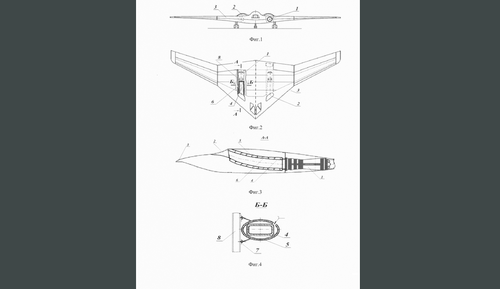
Nevertheless, it was not officially mentioned that promising jet gas turbine engines would be used in the creation of PAK DA.
Never miss our newsAdd this site to your preferred sources to see us more oftenAdd on Google

















