Specialists from NPO "Androidnaya Tekhnika" (Magnitogorsk), with the support of the cross-industry fund Alpha Robotics Venture, presented a centaur robot at the exhibition site of the conference "Manned Space Flights" in Star City, Moscow Region.
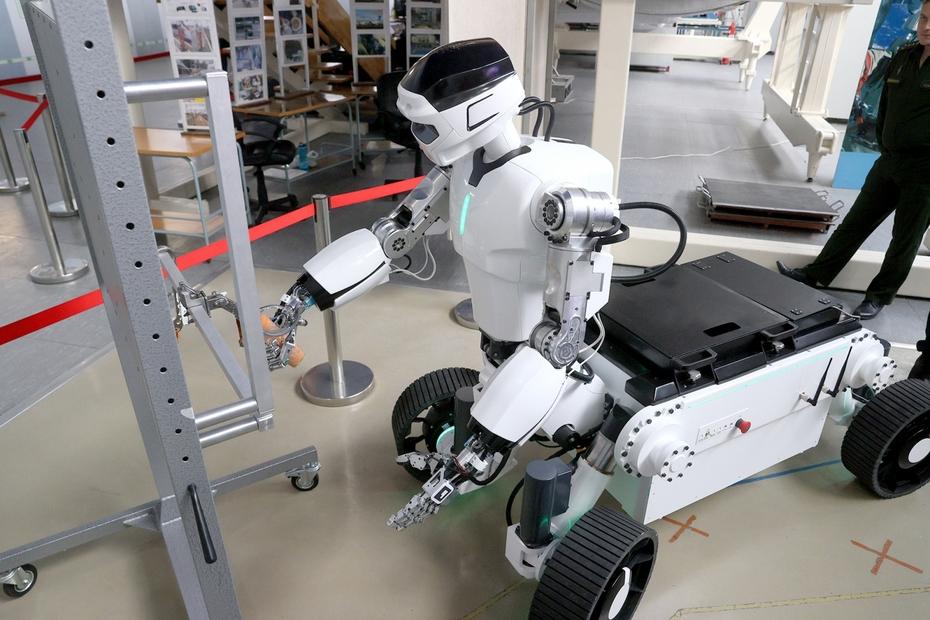
The purpose of the robot is to assist astronauts in participating in the Lunar program. The centaur consists of three parts: an anthropomorphic part, a wheeled platform, and a drone. Each of them can be set in motion separately from each other.
The centaur in space can be controlled from Earth using a VR headset (virtual reality headset) and an exoskeleton. The operator sees the image transmitted by the robot and can imitate actions, which the android then reproduces.
NPO "Androidnaya Tekhnika" is one of the leaders in the robotics cluster. Among the implemented projects are Fedor, launched on the ISS, an anthropomorphic rescue robot for working in emergency situations, the "Marker" robotic platform (used by Russian military personnel), and the "Canyon" project (an automatic manipulator for performing tasks in areas with increased radiation).
It was previously reported that the VDNKh exhibition in Moscow showcased the "Ardi" robot, which can talk and imitate human emotions.
Never miss our newsAdd this site to your preferred sources to see us more oftenAdd on Google

















