Russian cosmonauts Oleg Kononenko and Nikolai Chub successfully completed a multi-hour spacewalk. The work was broadcast online on Roscosmos' social networks.
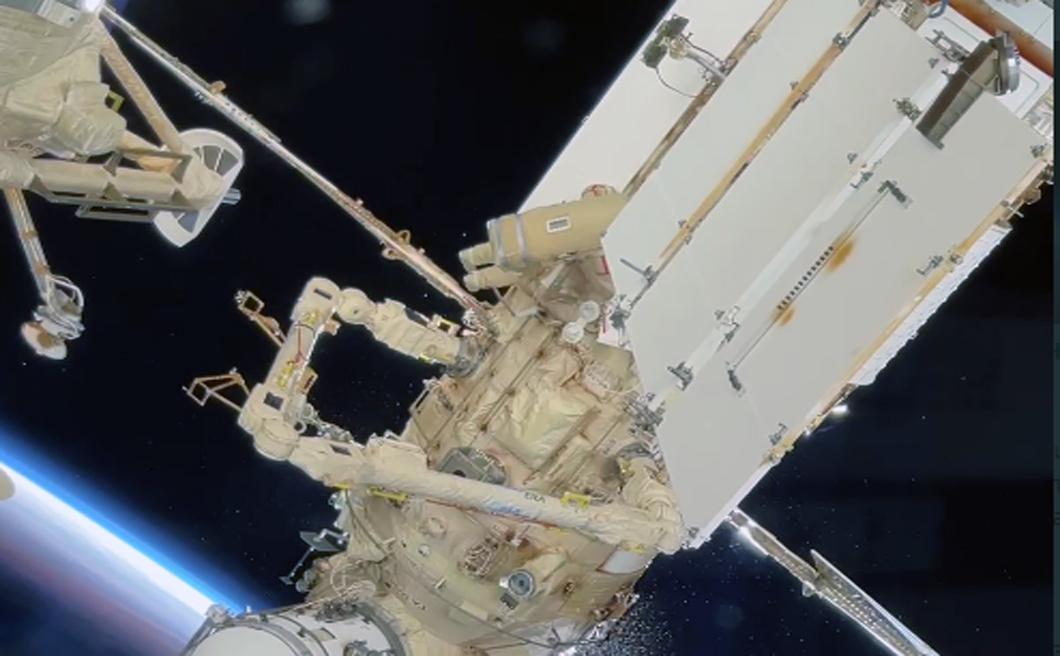
In 7 hours and 41 minutes, the cosmonauts inspected and photographed the site of the recent accident on the Russian Nauka module, and disconnected an additional heat exchanger from the external circuits of the module's thermal control system.
They also took out a radar for observing the Earth's surface from Poisk, connected it to an adapter, and mounted it on the UFP-2 passive fixation device on Nauka.
After that, Chub and Kononenko solemnly launched the Parus-MSTU student nanosatellite.
All work was carried out without incident. Kononenko and Chub became the first inhabitants of the ISS to go into outer space after the accident on Nauka. A coolant leak from the external radiator circuit and an investigation into the causes of the accident forced the National Aeronautics and Space Administration (NASA) to prohibit astronauts from going into space until the end of the year.
Never miss our newsAdd this site to your preferred sources to see us more oftenAdd on Google