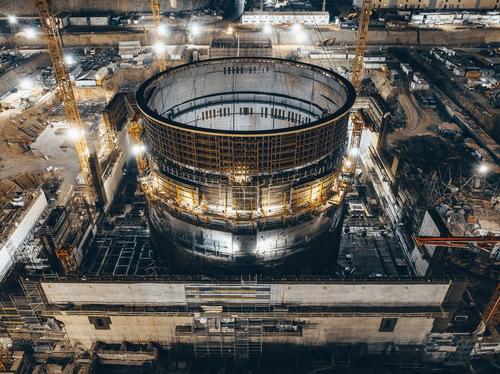
The Central Design and Technological Institute (JSC "CPTI", part of one of the divisions of the Rosatom State Corporation - note by www1.ru editors) has begun supplying equipment for nuclear fuel reloading for power unit No. 1 of the Akkuyu nuclear power plant (NPP), located in Mersin, Turkey. The project is under construction.
A rail track for a seismic-resistant reloading machine, which is necessary to ensure the loading of fuel into the reactor and the replacement of spent fuel, has been delivered to the nuclear facility. The length of the rails exceeds 26 m, and the width exceeds 8 m.
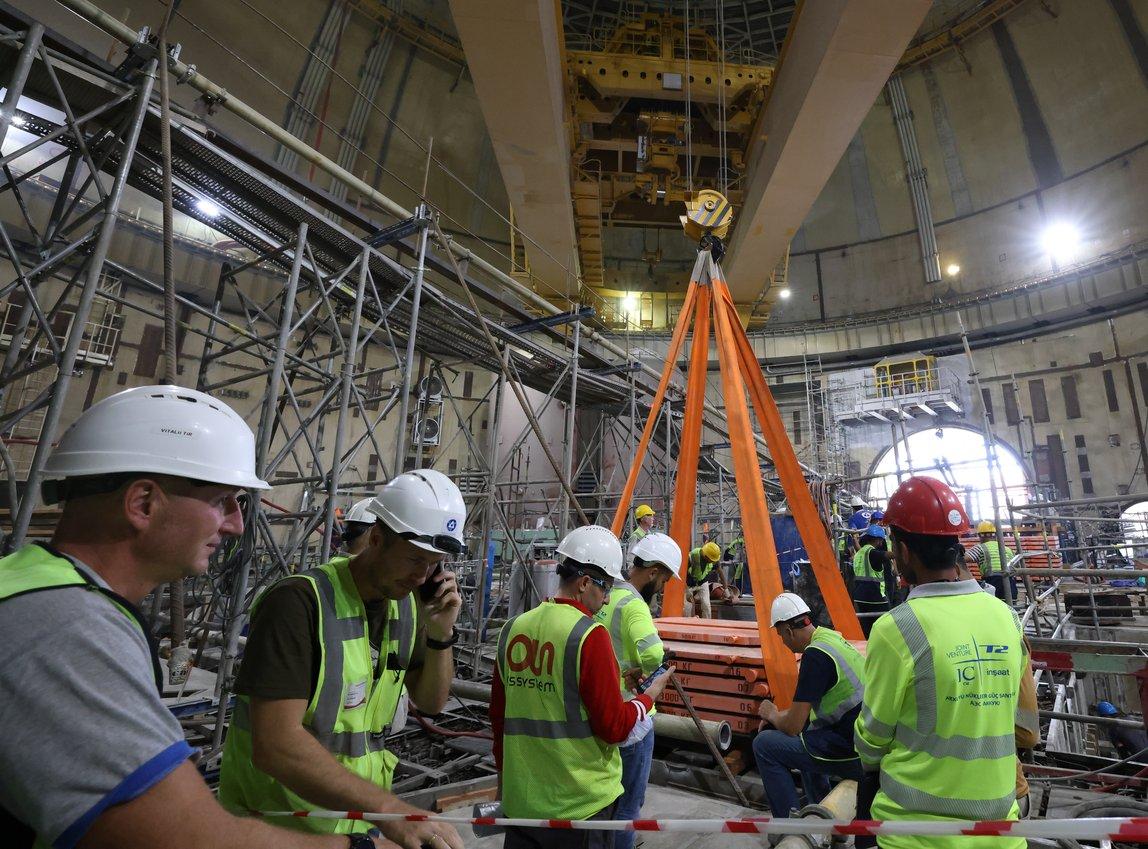
The rails are designed in such a way as to exclude the movement of the reloading machine even during an earthquake. The operation of the reloading machine requires special accuracy, in particular, the slope of the rail track should not exceed 0.15 mm per 1,000 mm of length.
Earlier, the first circular bridge crane with a lifting capacity of 390 tons was put into operation at Akkuyu. The crane will carry out lifting and transport operations, including the delivery of nuclear fuel and the transportation of equipment.
The construction site is regularly visited by representatives of Rosatom and the Ministry of Energy of Turkey. The progress of the work is monitored at the state level.
Never miss our newsAdd this site to your preferred sources to see us more oftenAdd on Google

















