Physicists at the Ural Federal University (UrFU) have developed a new structural form of nanocarbon, the university's press service reported. We are talking about quantum dots [a fragment of a conductor or semiconductor - note www1.ru] with 0D, 2D and 3D properties.
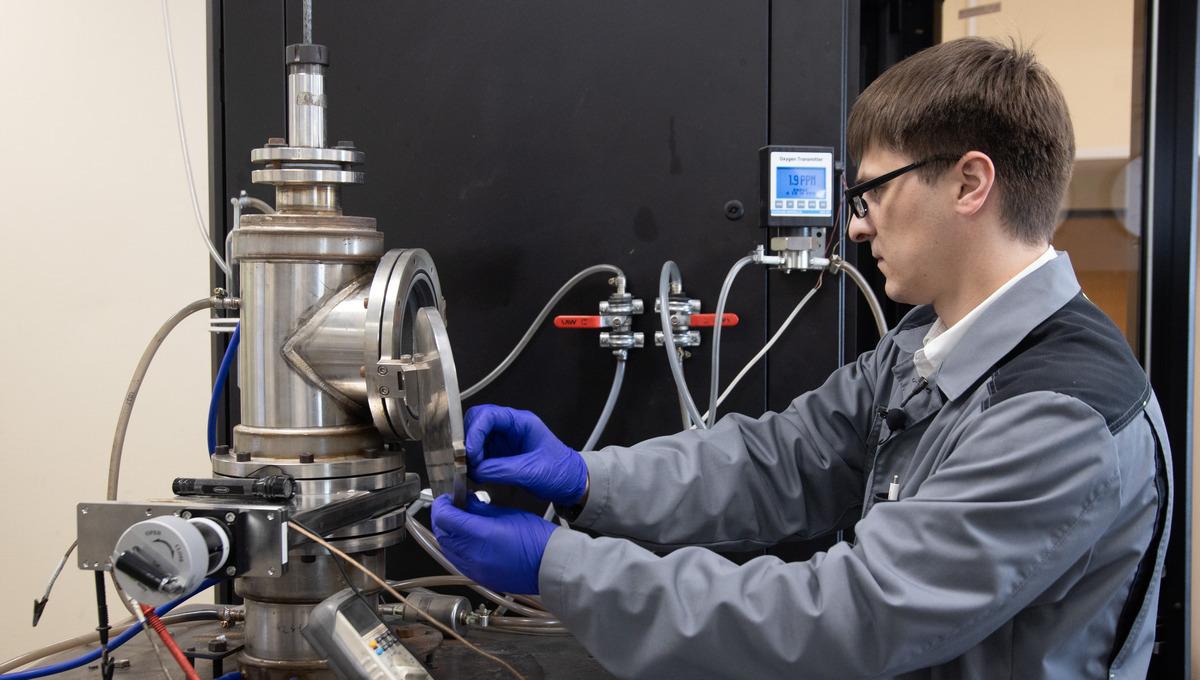
As explained by UrFU Professor Anatoly Zatsepin, scientists took single-layer and multi-layer graphene nanotubes and used laser ablation technology to obtain carbon quantum dots with a three-dimensional bond. According to him, this is an extremely unusual effect for graphene-based nanoparticles [a two-dimensional allotropic modification of carbon - note www1.ru].
The university noted that the nanoparticles combine the properties of 2D structures, 0D structures and diamond-like 3D structures. They can be used to produce new types of nanomaterials, in the production of electronic components, sensors. The created nanoparticles are also relevant for space technology, biomedicine, and quantum technologies, the UrFU press service summarized.
Earlier it was reported that Skoltech researchers received a patent for a sensor based on nanoparticles. It is expected that its use will reduce the cost of production of composites.
Never miss our newsAdd this site to your preferred sources to see us more oftenAdd on Google

















