Specialists of JSC "Scientific Research Institute of Precision Instruments" (NII TP, part of Roscosmos) have created a new method to improve the accuracy and reliability of measurements when docking spacecraft - it will eliminate manual docking in situations where the spacecraft's automation refuses to "catch" the space station.
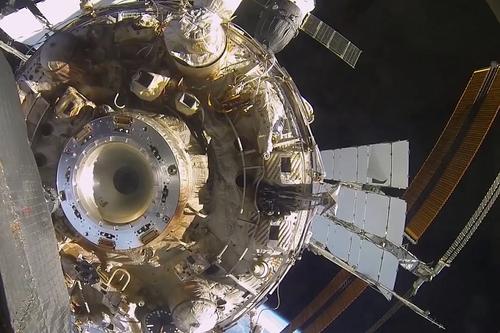
The problem is that when the Kurs mutual measurement system used on the ISS is operating, a large number of signal reflections are generated from elements of various station structures (from various modules, batteries, farms, etc.), which distorts the parameters measured during docking, and in such situations, docking has to be carried out manually.
"The essence lies in the method of forming a matrix model of spatio-temporal signals reflected from an observed multi-point target, without knowing the statistics of their distribution. This model allows for digital processing of the totality of received signals and significantly suppresses reflected signals, thereby increasing the accuracy of measurements," said Sergey Medvedev, Chief Designer of radio engineering mutual measurement systems at NII TP.
Never miss our newsAdd this site to your preferred sources to see us more oftenAdd on Google