Translated with AI from the Russian original.
Russia is actively preparing for the country's first-ever jump from the lower layer of the stratosphere. It will be performed by Nicolas Oxman, who will embark on a free flight from a height of 13,000 meters.
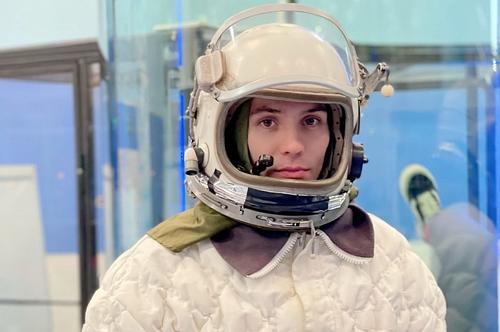
Here's how the stratonaut describes the idea himself: "Our space startup is engaged in the production and launch of stratostats to altitudes of up to 40,000 meters, which can boldly be called 'near space'. In early 2022, the idea came to me, as a co-founder of the company, to launch not an unmanned payload into the stratosphere, but a human! Finding someone willing to take on such a position is not easy, so I decided to make myself the test subject. The task was non-trivial – to prepare me and the equipment from scratch in a record short time (1.5 years), then launch to a height of 13,000 meters (the lower edge of the stratosphere) and safely return using a 'wing' type parachute, covering most of the distance to the ground in freefall."
The parachute will only open at an altitude of about 3 km, before that the stratonaut will descend at a vertical speed of about 500 km/h. Nicolas Oxman is currently actively training in a wind tunnel.
"The most difficult moment will be at the very beginning, because at the moment of separation you have no air to rely on, and most likely you will experience weightlessness in the first 5–10 seconds. At this moment, you cannot steer your body in any way. Most likely, you will be spinning. And one of the important stages of preparation for this jump is precisely flying in a wind tunnel, because if you do not have the skill of freefall, you can fall into the so-called chaotic fall, when you do not understand what is happening, you are spinning very strongly," said Nicolas Oxman.
Never miss our newsAdd this site to your preferred sources to see us more oftenAdd on Google

















