Can microorganisms withstand conditions on an asteroid? Russian scientists want to test this during Apophis' close approach to Earth in April 2029. MSU is considering sending a small space module with biological samples to the celestial body. Vladislav Osedlo, Deputy Director for Scientific Work at the Scientific Research Institute of Nuclear Physics of MSU, revealed the details.
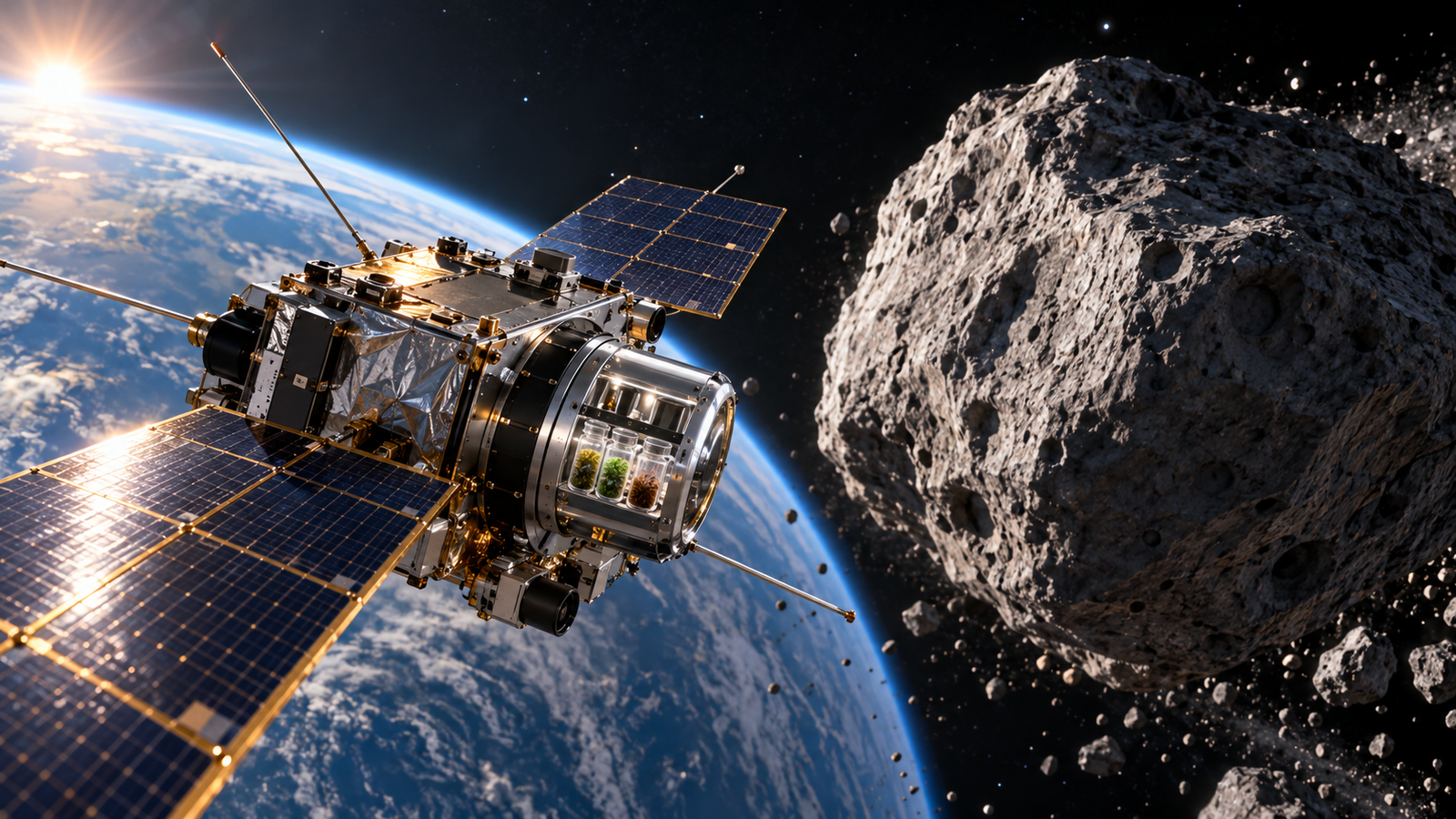
Researchers want to find out how biological samples tolerate vacuum, sharp temperature changes, solar and galactic cosmic radiation. For this, a variant with a sealed experimental cell is being considered, in which microorganisms, spores, or other biological objects will be placed.
Scientists also intend to assess how the viability and biological characteristics of the samples will change after exposure to the space environment. Preparing the experiment will require the joint work of specialists in space physics, astrophysics, biology, and medicine.
MSU already has experience in biological research in space. In December 2025, the satellite "NIIYAF MGU-80" ("Scorpion") was sent into orbit, equipped, among other things, with equipment for studying the influence of space conditions on living organisms. This experience can help in preparing a more complex mission to the asteroid.
Apophis was discovered in 2004
The average diameter of the asteroid is about 340–350 meters. On April 13, 2029, Apophis will pass approximately 32 thousand km from the Earth's surface. This will allow scientists to study the celestial body in detail and the changes that may occur under the influence of Earth's gravity.
The initiator of the Russian mission was Lomonosov Moscow State University. The rector of the university, Viktor Sadovnichy, previously noted the importance of the project for studying asteroids and predicting larger-scale space threats.
Read more on the topic:
Never miss our newsAdd this site to your preferred sources to see us more oftenAdd on Google