The Cordiant holding developed Gislaved One W winter tires for passenger cars and crossovers. The model was created by specialists from the Intyre scientific and technical center using experience accumulated in the tire industry, including working with Continental and Bridgestone technologies. Production is planned at enterprises in Kaluga and Ulyanovsk. Gislaved is a brand of Swedish origin, which, after Continental left the Russian market, came under the management of a Russian company. Now the tires have been tested in operation.
What changed in the design
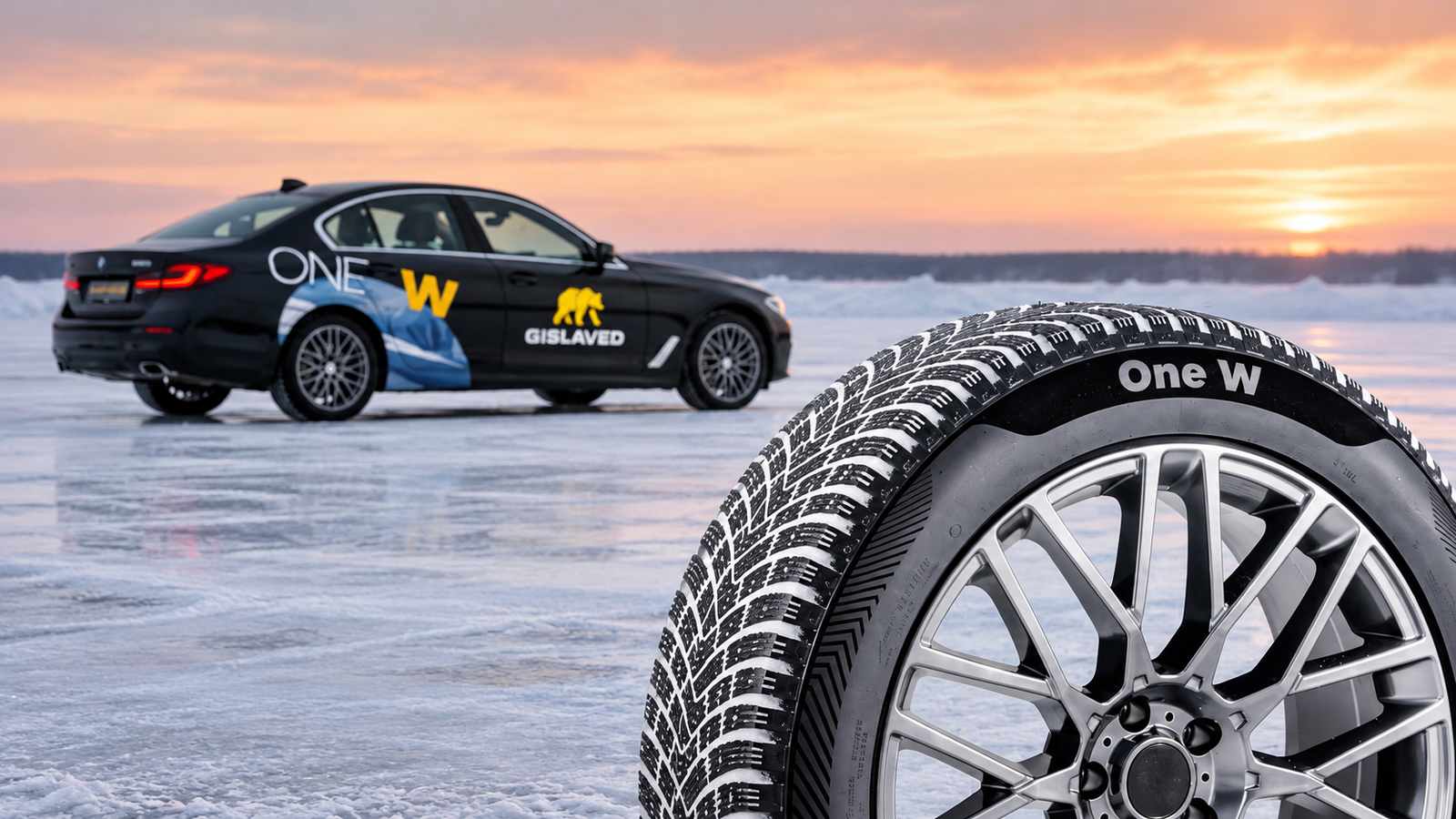
One of the features of Gislaved One W was the tread pattern. Wide grooves help to drain water and slush from under the wheels. The central strip, about four centimeters wide, was almost not equipped with studs, but it had many small cuts in the rubber — sipes. They help the tire maintain grip on the road.
The central part of the tread with a small number of studs is designed for driving on asphalt, while the side sections with studs help maintain grip on snow and ice. This distribution should also reduce noise when driving on hard surfaces.
Four types of polymers and silicon dioxide, also known as silica, were used for the rubber compound. According to the manufacturer, the composition is designed to operate at temperatures from minus 40℃ to plus 5℃. Before choosing the final version, the developers tested about 50 compositions: four of them reached road tests.
How many studs were installed in the tread
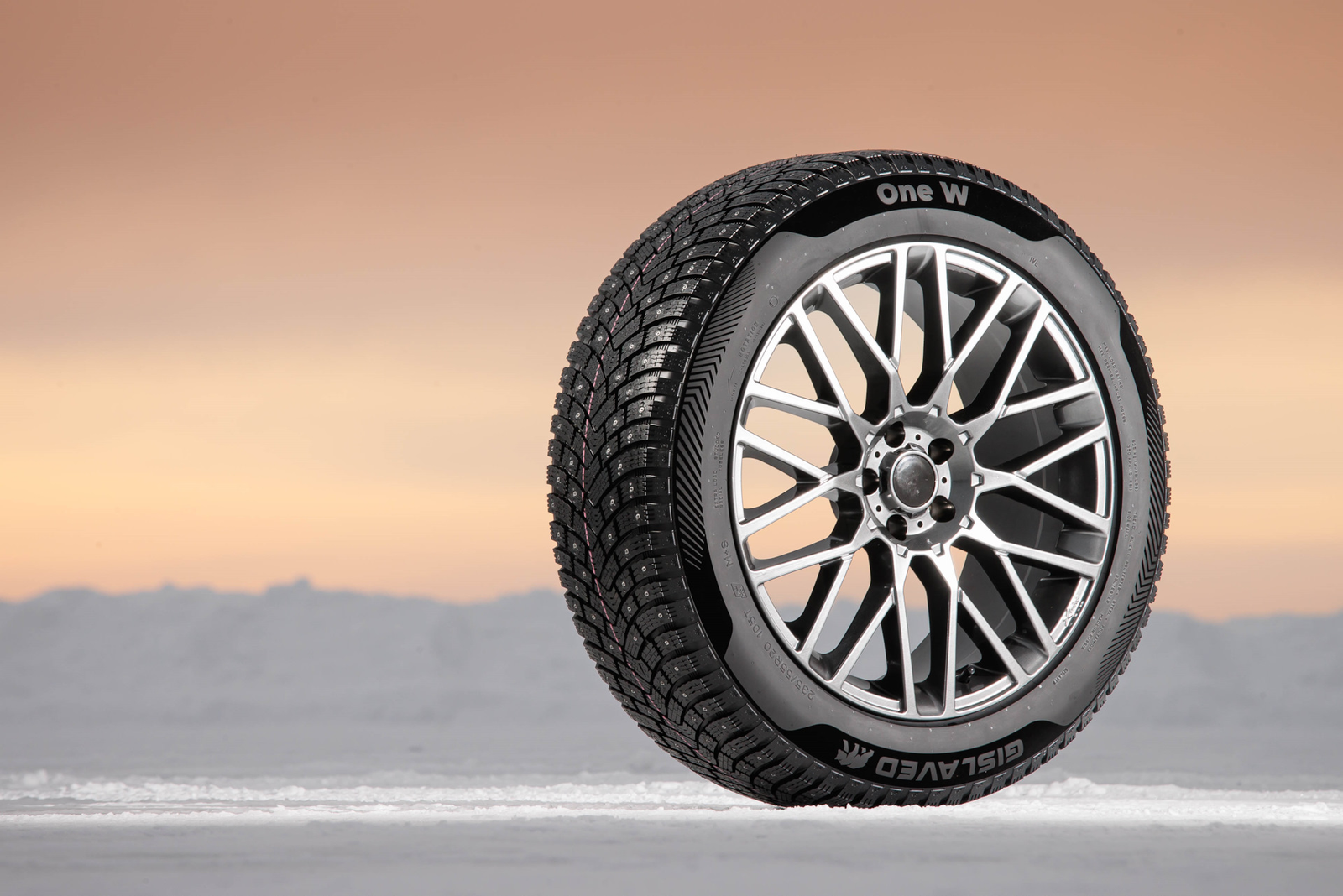
The Gislaved One W tread has about 110 studs per meter of length. Depending on the size, one tire receives from 216 to 286 studs, arranged in 18 rows.
The body of each stud is made of aluminum, and the insert that directly contacts the ice is made of tungsten carbide. The mass of one stud is about 0.75 grams, and the protrusion above the tread surface is approximately one millimeter. 16–17 studs can be simultaneously in contact with the road.
According to Cordiant, in its own comparative tests, the new model showed an 18% better result on ice during acceleration and a 24% better result during braking compared to Continental IceContact 3. On snow, the braking distance, according to the same tests, decreased by about 3%, and the acceleration characteristics were almost identical.
How the tires performed on ice
Journalists tested Gislaved One W on a frozen lake. BMW 5 Series and BMW X5 were used for the runs, and in separate exercises, the new tires were compared with Pirelli Ice Zero 2 and Ikon Autograph Ice 10.
When braking from a speed of 50 km/h, Gislaved One W and Ikon Autograph Ice 10 showed similar results. Pirelli Ice Zero 2 had a longer braking distance, but the conditions of the runs varied: cars repeatedly drove over the same section of ice, which could lead to different grip.
In other exercises, journalists evaluated only Gislaved One W, so it is not possible to directly compare the behavior of all three models based on these results.
According to the impressions of the test authors, the tires behaved predictably on icy asphalt, packed snow, and snowy roads. In turns, the car maintained a clear reaction to the driver's actions. The noise from the studs remained audible but was perceived as acceptable. In the BMW X5, it was less noticeable than in the BMW 5 Series.
What other tires are produced in Russia
In addition to Gislaved One W, other studded winter tires are produced in Russia. For example, the Ikon Tyres plant in Vsevolozhsk produces Ikon Autograph Ice 10, and KAMA TYRES enterprises in Nizhnekamsk produce Viatti Nordico 2 and KAMA ALGA. The Cordiant holding's lineup includes the Snow Cross 2 model, which is produced, in particular, at the Yaroslavl Tire Plant.
Other tire enterprises operate in Omsk, Voronezh, Kirov, and Lipetsk Oblast. In Volzhsky, there is the Voltyre-Prom plant, specializing mainly in tires for agricultural and special equipment.
Read more on the topic:
Never miss our newsAdd this site to your preferred sources to see us more oftenAdd on Google