Translated with AI from the Russian original.
Kuban State Technological University has patented an asynchronous electric motor with a dual squirrel-cage rotor that automatically brakes after power is cut off.
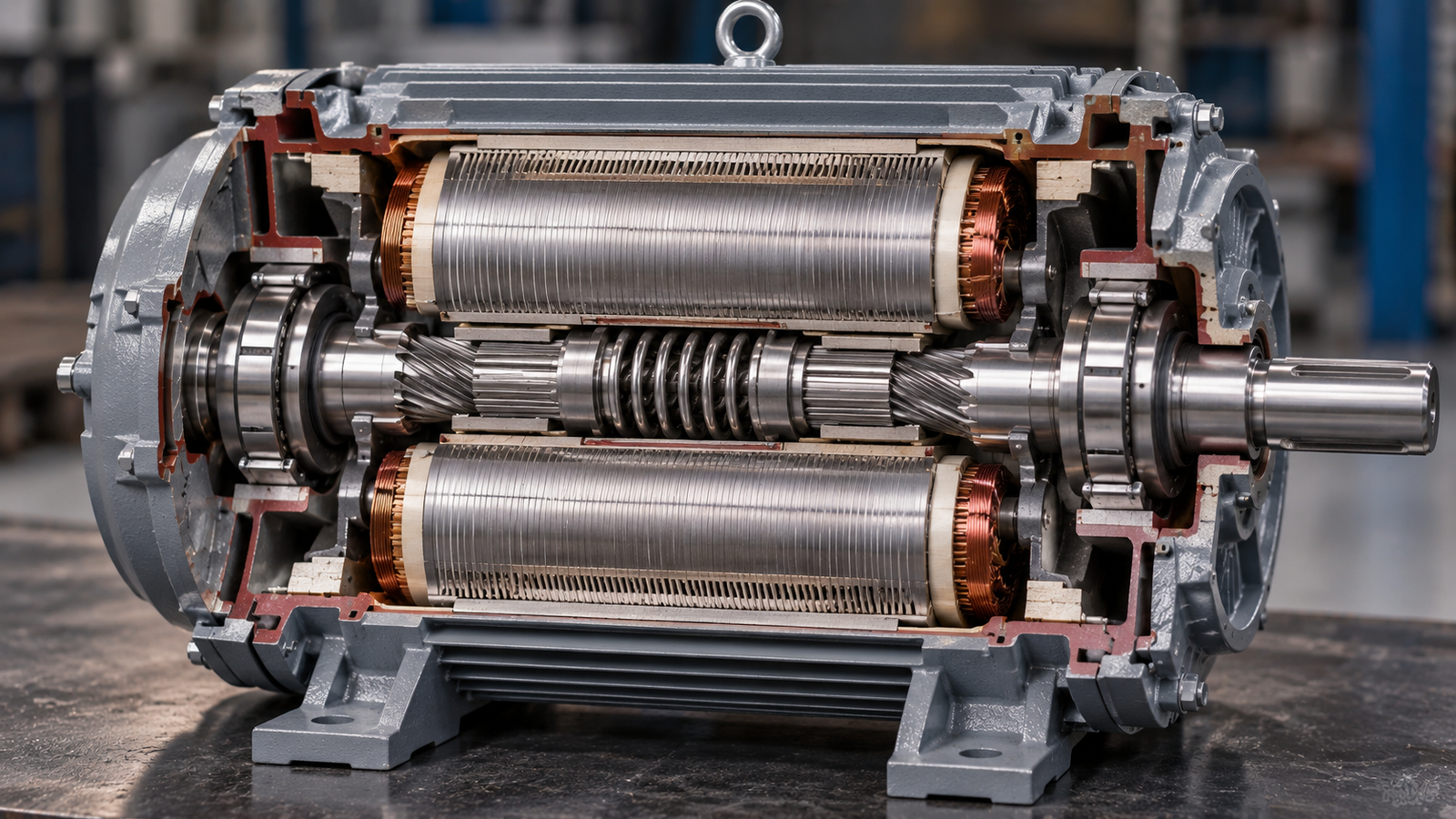
The motor is designed for conveyor line drives where a rotating mechanism needs to be stopped quickly after power is cut off. Its rotor consists of two core packages that can move along the shaft. When voltage is applied, electromagnetic force shifts these parts towards each other, simultaneously compressing the brake spring and releasing the rotor. After power is cut off, the electromagnetic field weakens, the spring returns the rotor packages to their original position, and conical hardened plates come into contact with the brake pads, stopping the rotor and the drive mechanism due to friction.
One of the developers' tasks was to eliminate sparking that occurred in the prototype design. In that design, the two parts of the squirrel-cage rotor could come into contact with their internal short-circuiting rings during start-up and shutdown, causing an electrical discharge between them.
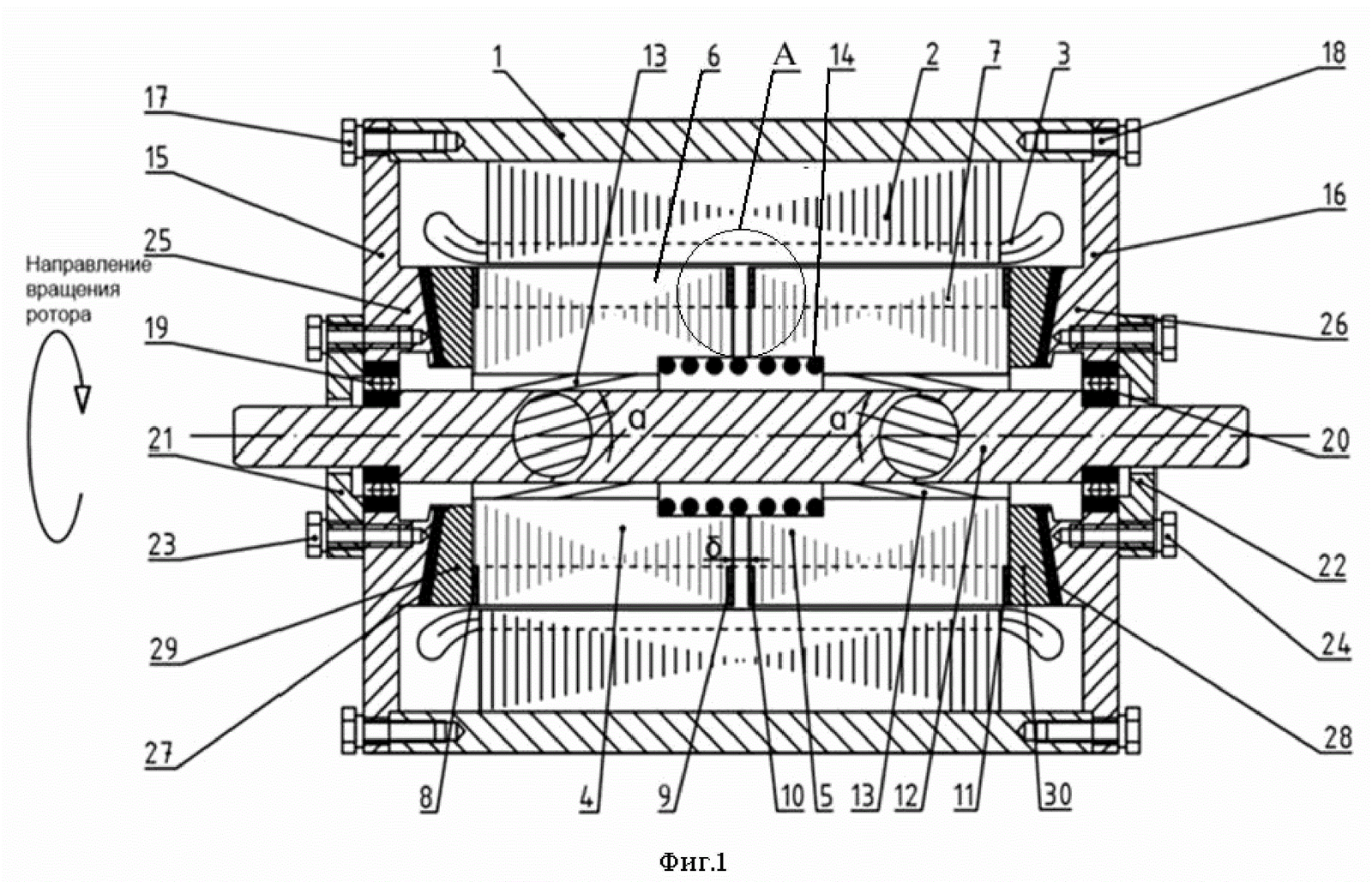
The patent states that this limited the applicability of such a design in explosive atmospheres. In the new version, thin-film washers made of dielectric material are attached to the internal contacting end surfaces of the core packages. Their thickness, according to the description, can range from fractions of a nanometer to several microns. According to the authors' calculations, the presence of washers should not affect the operating characteristics of the motor.
The design of the squirrel-cage winding has also changed. The bars located in the rotor slots are installed with a skew relative to the axis of rotation, and the magnitude of the skew should not exceed one rotor tooth pitch. The authors indicate that this solution should reduce torque dips and peaks during motor start-up and operation, as well as reduce noise and vibration levels.
What physics says
The principle of operation of the motor remains typical for an asynchronous electric machine: the rotating magnetic field of the stator creates currents in the squirrel-cage rotor, which generates torque.
The peculiarity of the development lies in the use of the electromagnetic axial force generated during operation to move the two parts of the rotor along the shaft. When power is applied, the core packages converge and compress the brake spring, releasing the rotor. After power is cut off, the axial holding force decreases, the spring moves the packages back, and the conical plates are pressed against the brake pads.
As a result, power disconnection initiates a mechanical braking process without a separate electromagnet to engage the brake. The additional axial force during the movement of the packages along the spline connections is used to increase braking efficiency and positioning accuracy.
Read more on the topic:
Never miss our newsAdd this site to your preferred sources to see us more oftenAdd on Google

















