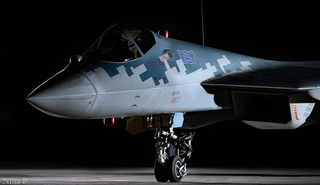
Russia's Su-75 Checkmate is currently in the prototype construction phase, and its first flight is expected after the completion of necessary work and preparation of the aircraft for testing. This was stated by Alexey Bogatyrev, head of the Safir analytical center, on the Zvezda TV channel.
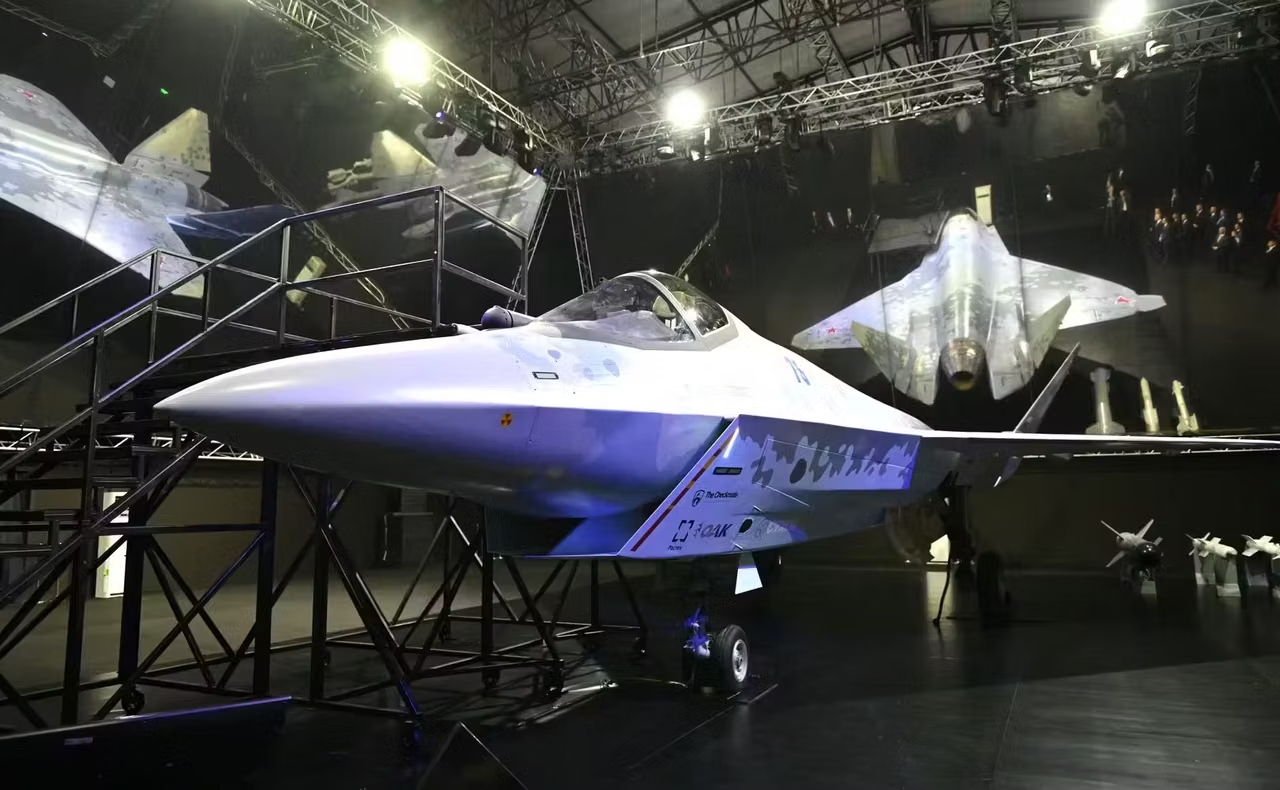
Bogatyrev noted that both aircraft have a single-engine design, but he considers their approaches to creation and purpose to be different. In his assessment, the American F-35 was primarily created as an element of a large information system, while the Russian Checkmate should focus on a combination of lower weight, speed, flight altitude, and maneuverability.
According to the specialist, the Su-75 concept envisions a single-engine fighter that should offer potential customers an alternative option for such an aircraft. In his interpretation, the F-35 emphasizes stealth and network-centricity: the aircraft acts as part of an information and communication system, exchanging data with other members of the combat group. The Su-75, on the contrary, should represent a different approach — a lighter aircraft with high flight characteristics.
Our fighter — it's lighter, it's faster, it flies higher, it's more maneuverable and shows crazy things — conceptually and at the level of technical proposals.
This is what Bogatyrev considers the difference between the two engineering schools. For the F-35, the combination of stealth, an onboard computing system, and interaction with other assets is decisive, while for the Checkmate — the platform itself and its flight capabilities.
OAK specifies a single-engine design for the Checkmate, a maximum speed of up to Mach 1.8, a range of up to 2900 km without external fuel tanks, and a combat load of up to 7400 kg.
OAK also states the possibility of accommodating up to five air-to-air missiles in internal compartments while maintaining a stealth configuration. These parameters are projected values and must be confirmed by tests of the actual aircraft.
Earlier, “Pervyy Tekhnicheskiy” reported that a scenario for the use of its unmanned version in combination with a two-seat Su-57 and unmanned aerial vehicles was proposed for the Su-75. According to the authors' idea, the combination of stealth, automation, and task distribution among several platforms should expand the capabilities of a mixed group
Read more on the topic:
Never miss our newsAdd this site to your preferred sources to see us more oftenAdd on Google