A protective coating for industrial equipment based on an epoxy composition with added fluoroplast particles has been developed at Perm Polytechnic University (PNRPU). According to the university, the new composition can increase equipment lifespan by 15–20% when operating under conditions of increased abrasive and chemical loads. The coating is designed to protect parts of crushers, mills, conveyors, and pipelines that come into contact with ore and aggressive salt solutions.
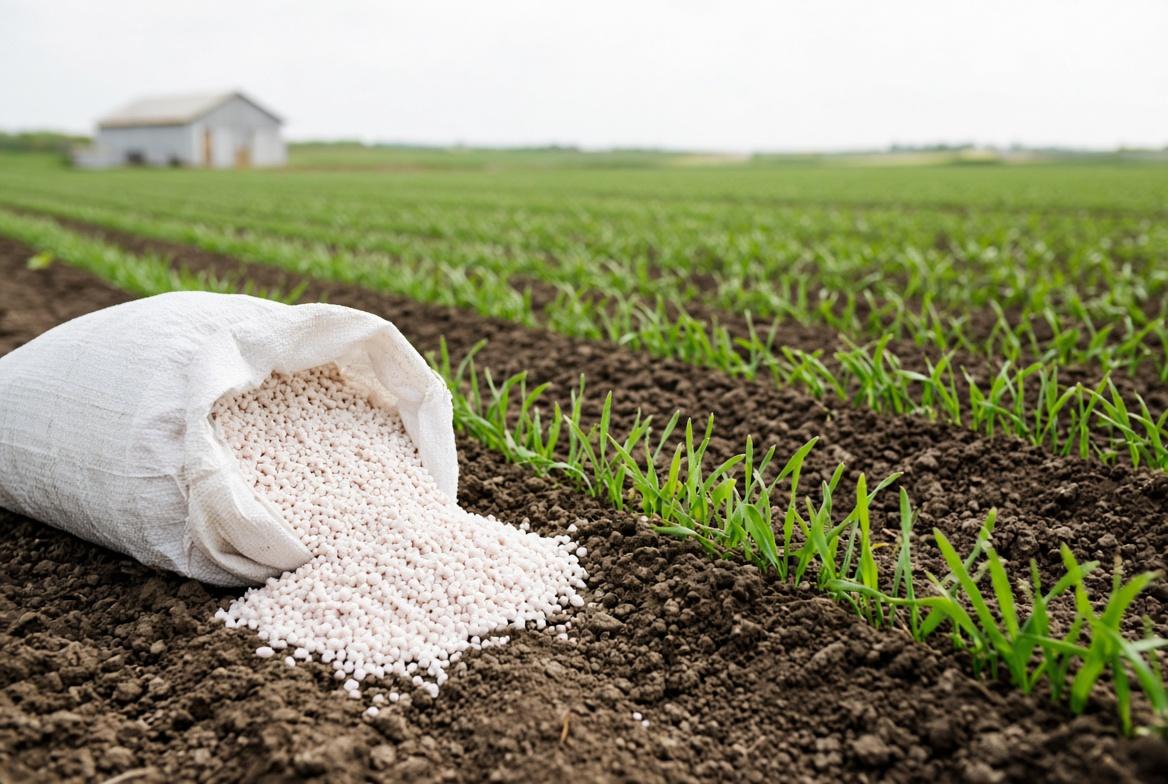
In 2025, Russia produced 65.4 million tons of mineral fertilizers. At the same time, the average price of potash fertilizers in December was 14,171 rubles per ton — 22% more than a year earlier. PNRPU attributes part of the producers' costs to equipment repair, which operates in an aggressive environment.
During mineral processing, equipment constantly comes into contact with abrasive ore and salt solutions. Ore abrades metal surfaces, and salt contributes to their destruction. Therefore, parts of crushers, mills, conveyors, and pipelines require additional protection.
Epoxy enamels are usually used for this purpose. PNRPU researchers decided to add fluoroplast to such a composition — a material with low friction and high chemical resistance. Its particle size was about 1 micron. For comparison, the university cites the particle size of ordinary wheat flour — from 10 to 50 microns.
The result was a composition in which the epoxy base is responsible for adhesion to metal, and fluoroplast is intended to increase the coating's resistance to wear and the effects of chemically active environments.
Scientists compared three options: conventional epoxy enamel, a composition with a liquid fluoroorganic polymer, and the new option with fluoroplast
Samples were tested for adhesion to metal, water absorption, resistance to hot salt solution, salt spray, and abrasion by sylvinite ore, which is processed at potash enterprises.
During the abrasion test, the new composition lost 0.015% of its mass. According to PNRPU, this is 1.5 times less than the indicator of the original enamel and almost twice less than the result of the composition with an alternative modifier. When exposed to hot salt solution, only the fluoroplast coating showed no cracks, bubbles, or delamination. It also showed the best result in terms of adhesion strength to metal.
According to Olga Nisina, Associate Professor of the Department of Chemical Technology and Ecology at the Berezniki branch of PNRPU, experimental studies were conducted under conditions close to production. She estimates a possible increase in equipment lifespan of 15–20%. However, this refers to experimental studies, not a confirmed long-term operational resource of the coating at an industrial enterprise.
The development can be useful for equipment operating with aggressive environments and abrasive materials, including in petrochemistry, mining, mineral processing, and the chemical industry.
Read more on the topic:
Never miss our newsAdd this site to your preferred sources to see us more oftenAdd on Google