At Altai enterprises, good groats are now checked by Russian-made photo separators before packaging. The machines examine each grain and automatically separate what needs to be saved from impurities and defects. The equipment evaluates color, shape, geometry, texture, and other external features, while artificial intelligence systems can consider them simultaneously.
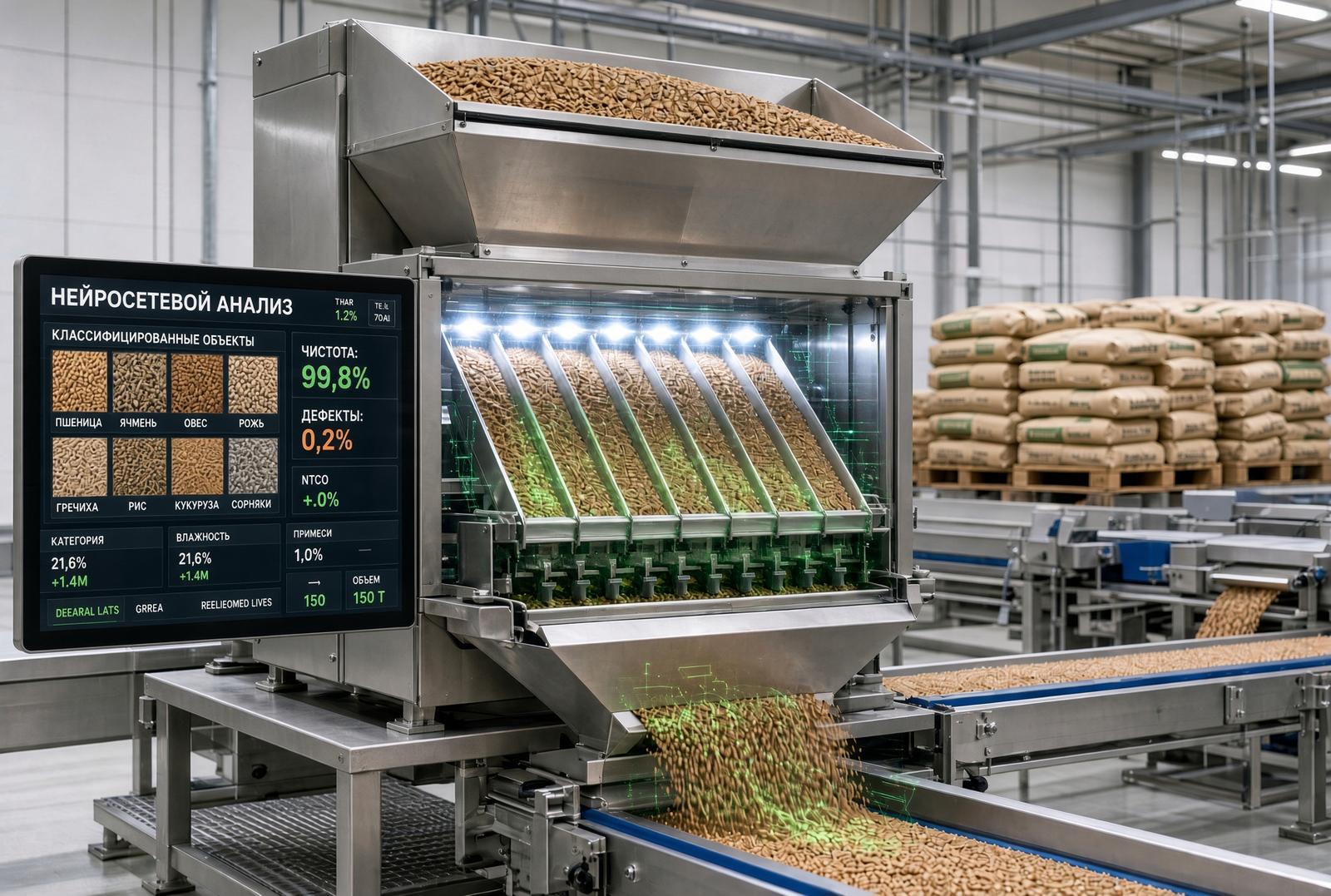
The Altai company "SiSort" has developed photo separators that check groats at enterprises before packaging and automatically separate good grains from impurities and defects. Samples are photographed, images are marked as suitable and unsuitable, then the neural network is trained and test runs are conducted. Full calibration can take up to several days, and one person can perform all the work.
Tons of material are not needed for setup. According to Evgeny Galkin, chief engineer of "SiSort", several thousand seeds are enough.
Choosing a ready-made program, changing settings, and additional neural network training are different operations. If the enterprise works with a familiar product, the operator selects a saved program with a few clicks and checks a new batch.
If the raw material characteristics or purity requirements have changed, the settings are adjusted. New training is required when new types of impurities or defects appear. Therefore, it is first determined what to remove, what product to save, and what quality needs to be achieved.
The economic effect is primarily due to a reduction in rejects and an increase in the value of raw materials. For one company, after installing a photo separator, rejects decreased from 5 to 2%, and processing speed doubled. The AI model also helped increase productivity by 30%, according to the report.
In another case, rain spoiled part of the raw material, but after removing moldy and damaged grains with the help of AI, the products were sold at a normal price. Without such processing, the entire batch would have had to be sold significantly cheaper.
The technology was first introduced to the Russian market in 2023: students are also involved in setting it up
Third-year students of AltGTU, Ivan Rudnev and Yan Vrona, participated in creating a program for sorting buckwheat from impurities during their internship. Under the guidance of engineer Mikhail Yatsenko, they processed and marked about 1500 images in one day. The program was created for a specific customer task, after which it was used in production.
For buckwheat, according to Ivan Rudnev, the aberration mode, in which raw materials are sorted in the blue spectrum, proved to be the most effective. The AI takes into account a combination of features.
Read more on the topic:
Never miss our newsAdd this site to your preferred sources to see us more oftenAdd on Google

















