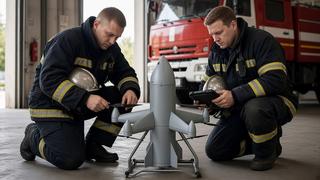
Military personnel named the ability to operate behind obstacles as one of the key advantages of the Knyaz Vandal Novgorodsky (KVN) fiber-optic FPV drone. The device can pass through forest belts and enter enclosed spaces, including houses, dugouts, and pillboxes, without losing connection with the operator. The features of the drone were described in an article by the "Krasnaya Zvezda" publication.
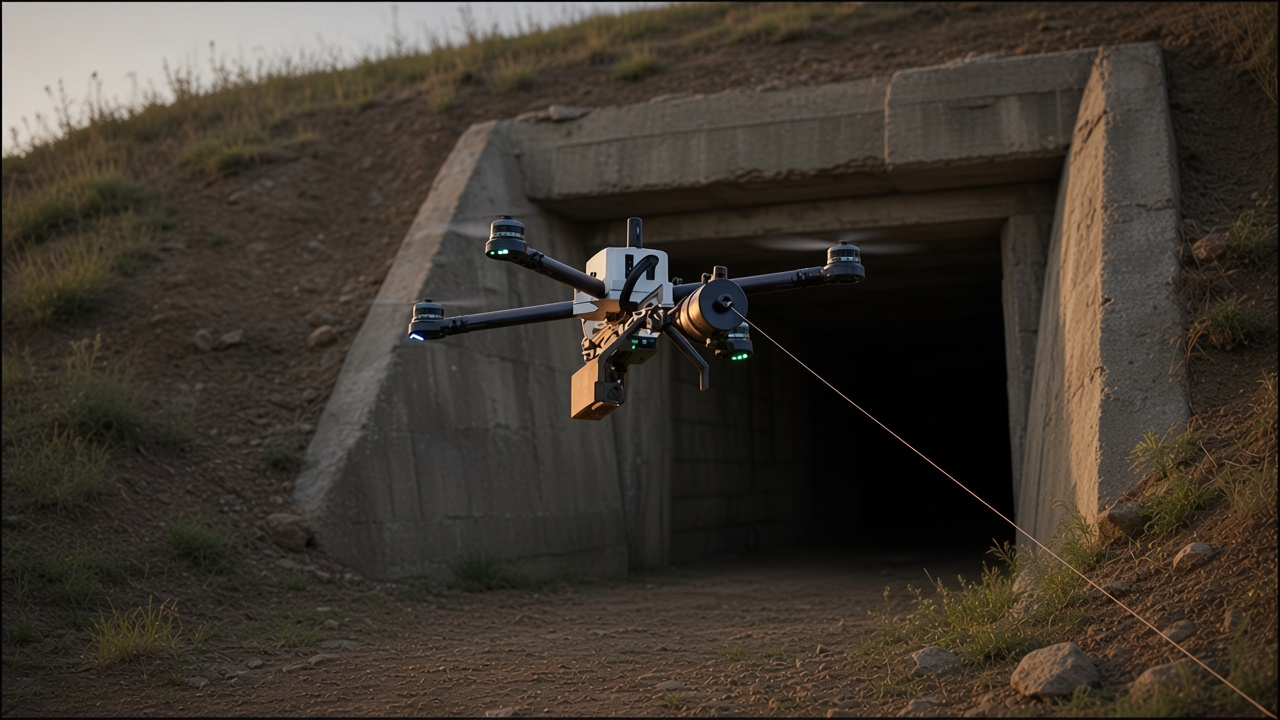
The KVN develops speeds of up to 70 km/h, and the operator receives high-quality images. However, control is not via radio channel, but through a fiber-optic cable, so obstacles on the route do not lead to the loss of communication typical for radio-controlled FPVs.
This gives the device an unusual capability: it can continue moving in places where the radio signal weakens or disappears. According to military personnel, the KVN passes through forest belts better, and when entering an enclosed space, it maintains the control channel, as it is physically connected to the operator by a cable.
According to the military, this scheme also has a downside – the fiber-optic cable remains a physical limitation for flight. However, developers get a stable control line that does not depend on radio signal propagation, which determines the main difference between KVN and classic radio-controlled FPV drones.
Read more on the topic:
Never miss our newsAdd this site to your preferred sources to see us more oftenAdd on Google