For the first time in Russia, a stable 5G connection was established between a ground station and an unmanned aerial vehicle in the stratosphere. The platform was at an altitude of 17 km and transmitted 2K video to Earth for over 80 minutes. This was reported by the Foundation for Advanced Studies (FPI).
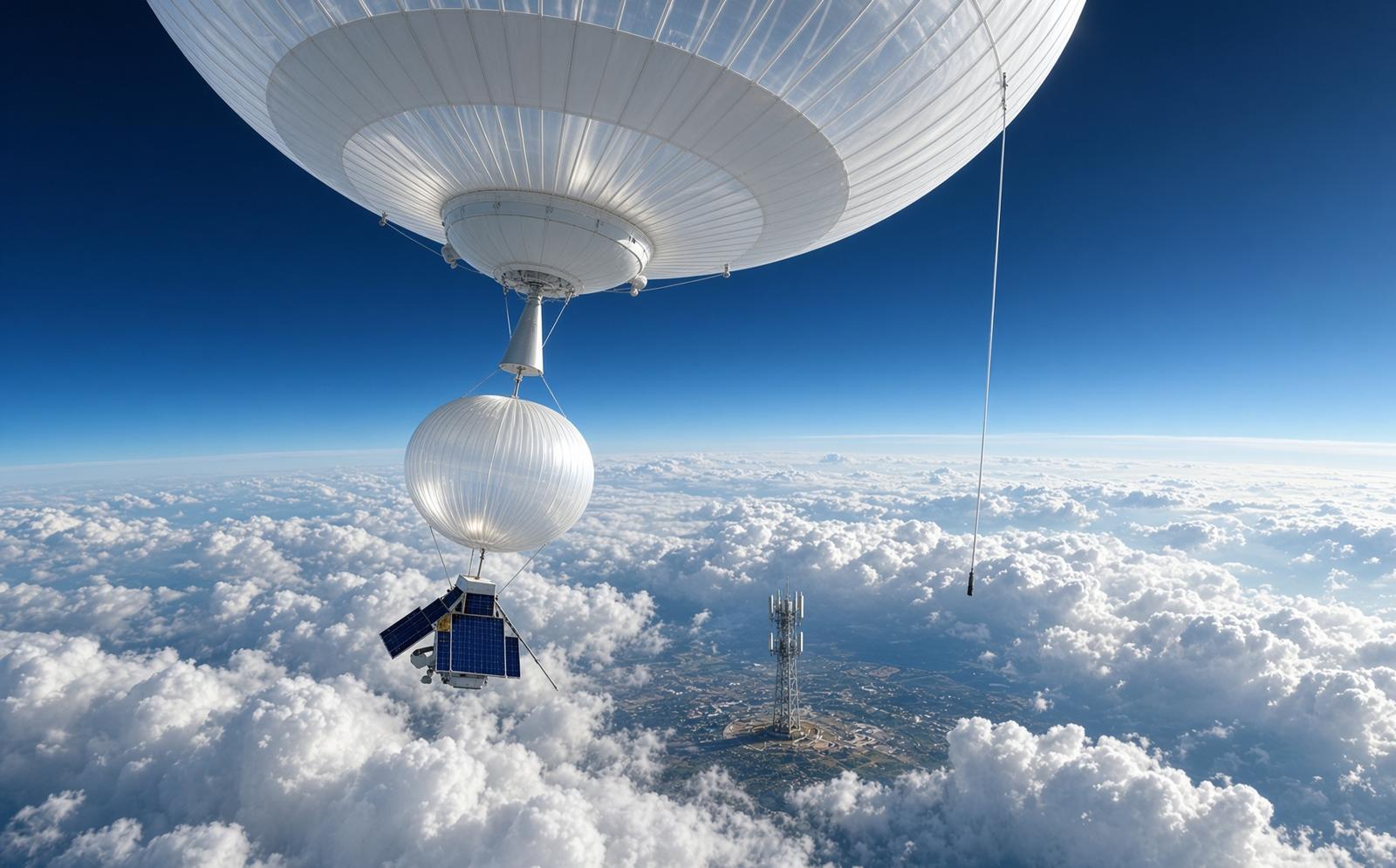
The test took place on September 3, 2026, as part of the "Barrage" project. The unmanned stratostat remained within the coverage area of the ground communication point throughout the flight, and video streaming continued during the flight.
The FPI believes that the experiment confirmed the possibility of creating hybrid mobile networks where stratospheric devices act as a kind of pseudo-satellites. Unlike satellites, such platforms do not go into orbit but remain in the atmosphere at an altitude of approximately 20 km. Therefore, they are much closer to users and ground infrastructure.
The project also involves testing the 5G NTN standard – Non-Terrestrial Networks, i.e., communication networks with non-terrestrial platforms. It is intended to be used not only for transmitting user data but also for controlling unmanned aerial vehicles located in the stratosphere.
The project is based on the unmanned stratostat "Barrage-1", which was first launched in February 2026. The device is designed to operate at an altitude of up to 20 km and can carry up to 100 kg of payload, including telecommunications equipment.
In the future, such platforms are planned to be used where building a dense network of terrestrial base stations is difficult or economically unfeasible. The FPI previously named Siberia and the Far East among potential territories. The idea is that stratospheric devices will be able to occupy an intermediate position between conventional cellular towers and satellite communications. Being high above the ground, they will be able to cover a large area, but at the same time remain much closer to the planet's surface than orbital satellites.
Read more on the topic:
Never miss our newsAdd this site to your preferred sources to see us more oftenAdd on Google