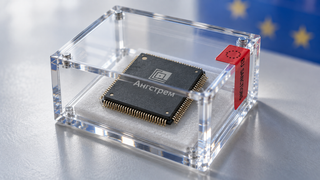
Developers from SFB Lab, together with the Moscow State University Quantum Technology Center, have devised a way to protect quantum keys from photodetector blinding attacks. The method was described in the scientific journal Physical Review Applied, and the development itself was secured with a Russian patent.
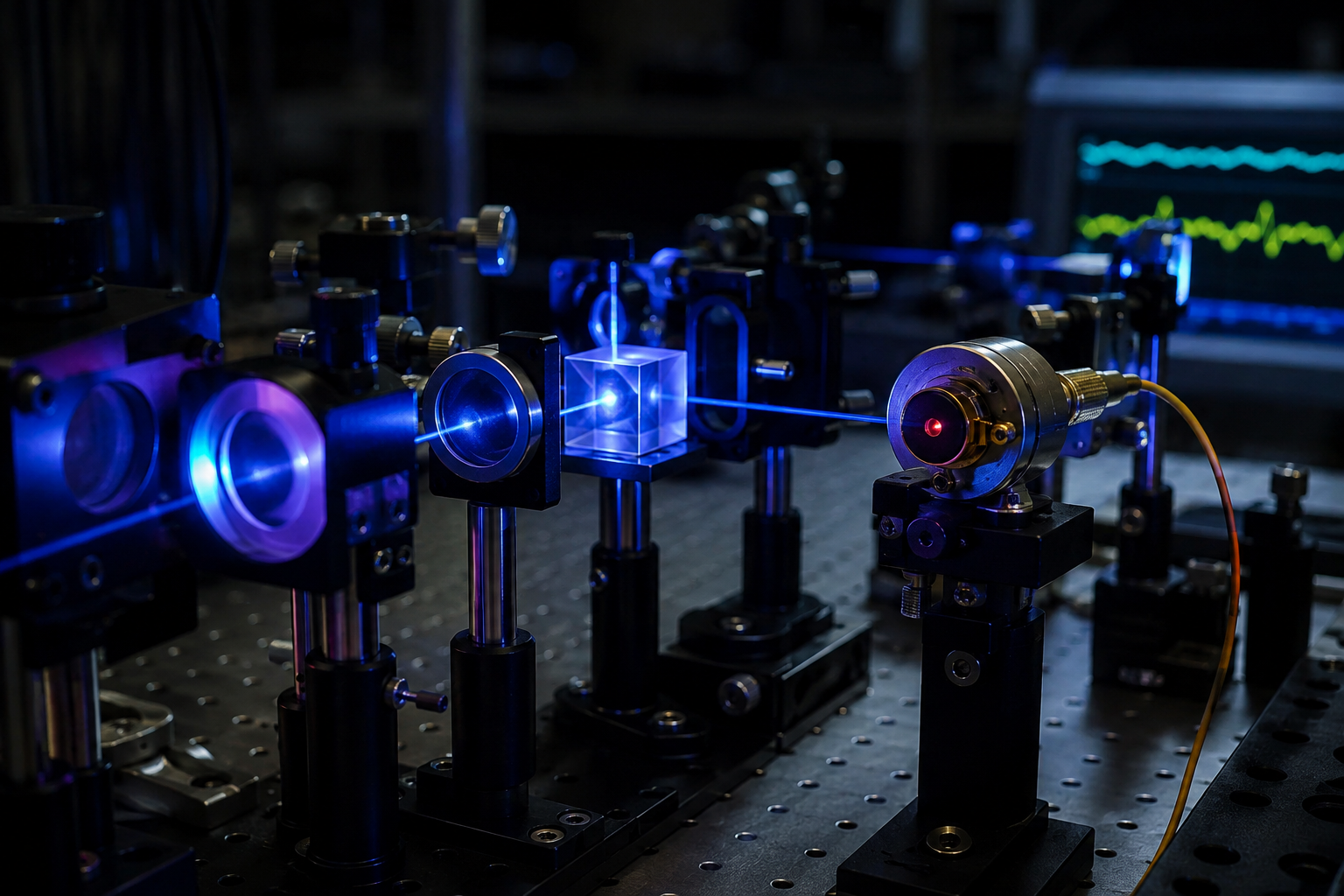
A quantum key is a secret code formed from photons, which are the smallest particles of light. These particles are registered by special devices — single-photon detectors, a kind of "traps" that record each incoming photon and convert it into a key bit.
Fraudsters tried to exploit this loophole. Attackers affect the detectors with optical radiation, which takes the device out of normal operation. The detector stops registering photons independently and enters a state where the registration results are controlled by the attacking party. This created risks that an outsider could gain access to the key, and the substitution could go unnoticed for a long time.
The authors of the study proposed a new protection mechanism and made the detector's sensitivity unpredictable. During operation, it constantly and randomly changes. To "blind" the detector, a hacker needs to precisely select the light intensity. But it changes in the detector every second, and it is impossible to guess it.
A failure in such cases signals an alarm, and the system understands that someone tried to interfere with the channel. By counting incidents, it calculates how many key bits the attacker could have obtained and discards only those bits. The entire key remains in place and continues to work. The method has already been tested on a standard serial detector.
We have already reported on the research by the same participants — the Moscow State University Quantum Technology Center and SFB Lab. Earlier, they presented a new quantum key distribution protocol that is resistant to quantum state imposition attacks and does not require additional calibration — including for use in satellite communication systems.
In parallel, other Russian scientific groups are working on related tasks: researchers from NUST MISIS and HSE developed a machine learning-based algorithm for predicting errors and dynamic correction in quantum key distribution — this increases transmission reliability even in the presence of noise in fiber-optic lines. The practical application of quantum cryptography goes beyond laboratories: back in early 2024, a detailed article was published on how Russia and China exchanged messages via quantum satellite communication for the first time and why the satellite channel is fundamentally important for scaling such networks.
Read more on the topic:
Never miss our newsAdd this site to your preferred sources to see us more oftenAdd on Google