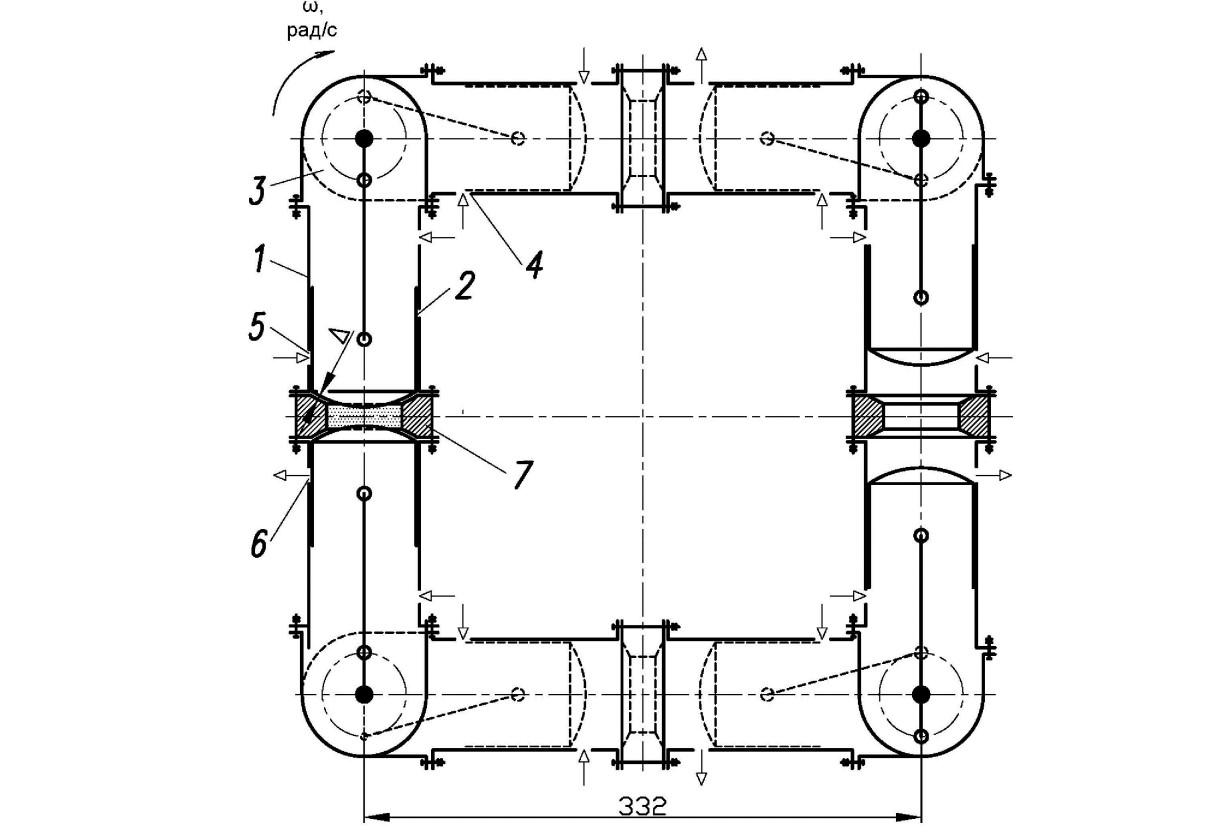
Specialists from Yaroslav the Wise Novgorod State University (NovSU) have developed a design for a four-shaft two-stroke engine with oppositely moving pistons. The power unit is based on four composite cylinders connected by crankcases and shafts.
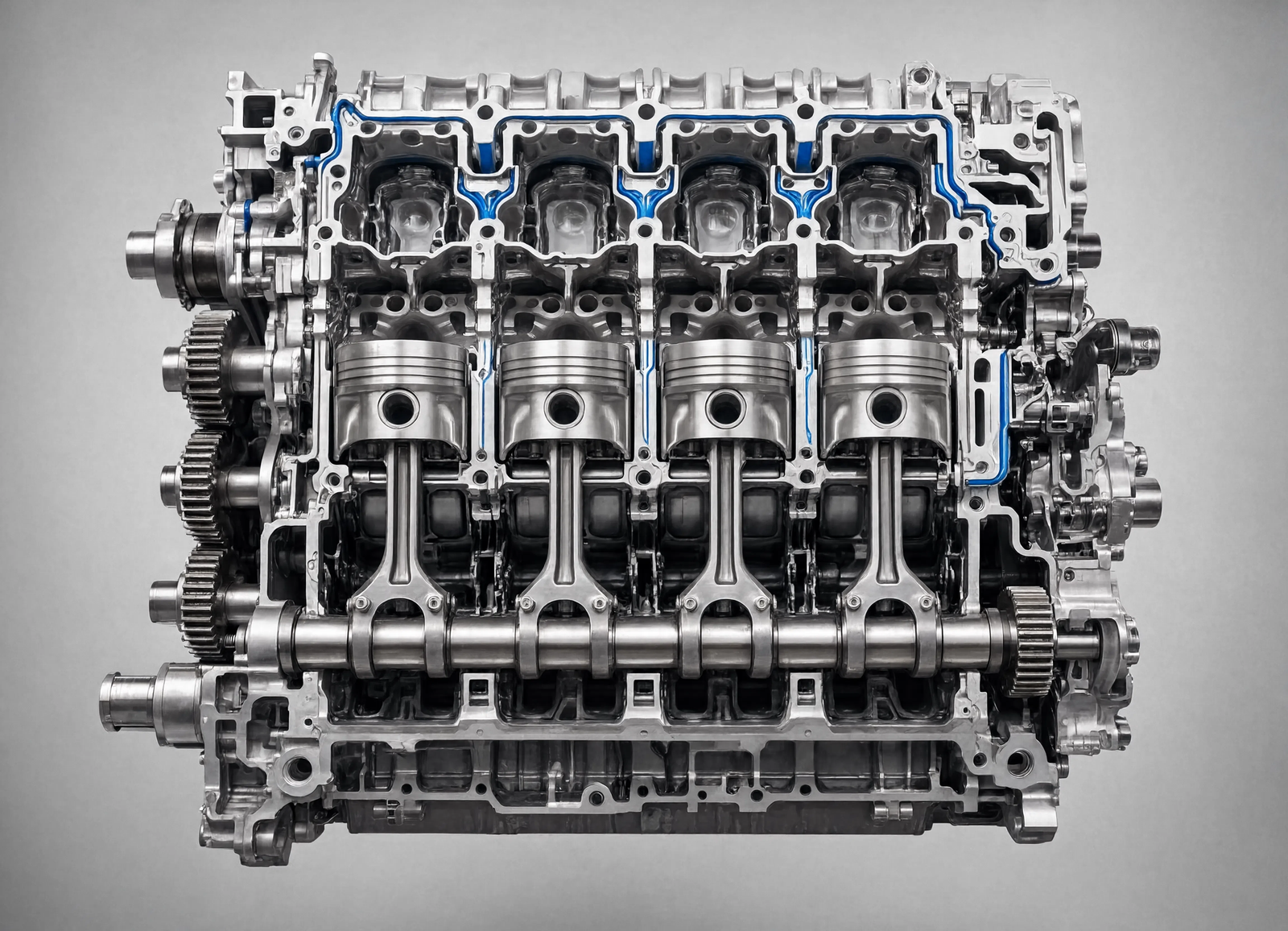
In each cylinder, the pistons move towards each other. This solution allows combining a compact layout with the high specific power of a two-stroke operating cycle.
The combustion chamber was made in the form of an insert structure with spherical displacers, and its profile in longitudinal section is described as a projection of a hyperboloid. This shape should maintain an intense vortex of fresh charge before ignition.
The specialists presented a calculated version of an engine with a working volume of 1.207 liters. At an average effective pressure of 0.6 MPa and a rotational speed of 5000 rpm, the calculated effective power is 60.4 kW, or 82.1 hp.
At the same time, the two-stroke cycle is capable of producing higher specific power compared to four-stroke engines.
The opposed-piston scheme involves placing two pistons in one cylinder: they move towards each other and meet in the center, forming a combustion chamber without a traditional cylinder head. This principle was used in aircraft and tank engines of the mid-20th century – in particular, in the Soviet 5TD diesel engine and the British Junkers Jumo 205.
The main advantage of the scheme is high specific power in a two-stroke operating cycle: each cylinder performs a power stroke twice as often as in a four-stroke engine. The absence of a cylinder head simplifies the design and reduces heat losses through it. However, organizing gas exchange and lubrication in a two-stroke scheme remains a technically challenging task.
Russian designers regularly propose new variations of this principle. Previously, a Rostov engineer developed a two-stroke opposed-piston engine running on liquid ammonia with pre-chamber ignition and corona discharge. Regardless of the fuel and ignition method, the authors of such projects, as a rule, point to the approximation of the combustion process to an isochoric regime as a key factor in increasing efficiency. The Novgorod development is distinguished by its four-shaft layout and the original hyperboloid shape of the combustion chamber, designed to intensify the swirling motion of the charge.
Read more on the topic:
Never miss our newsAdd this site to your preferred sources to see us more oftenAdd on Google