Translated with AI from the Russian original.
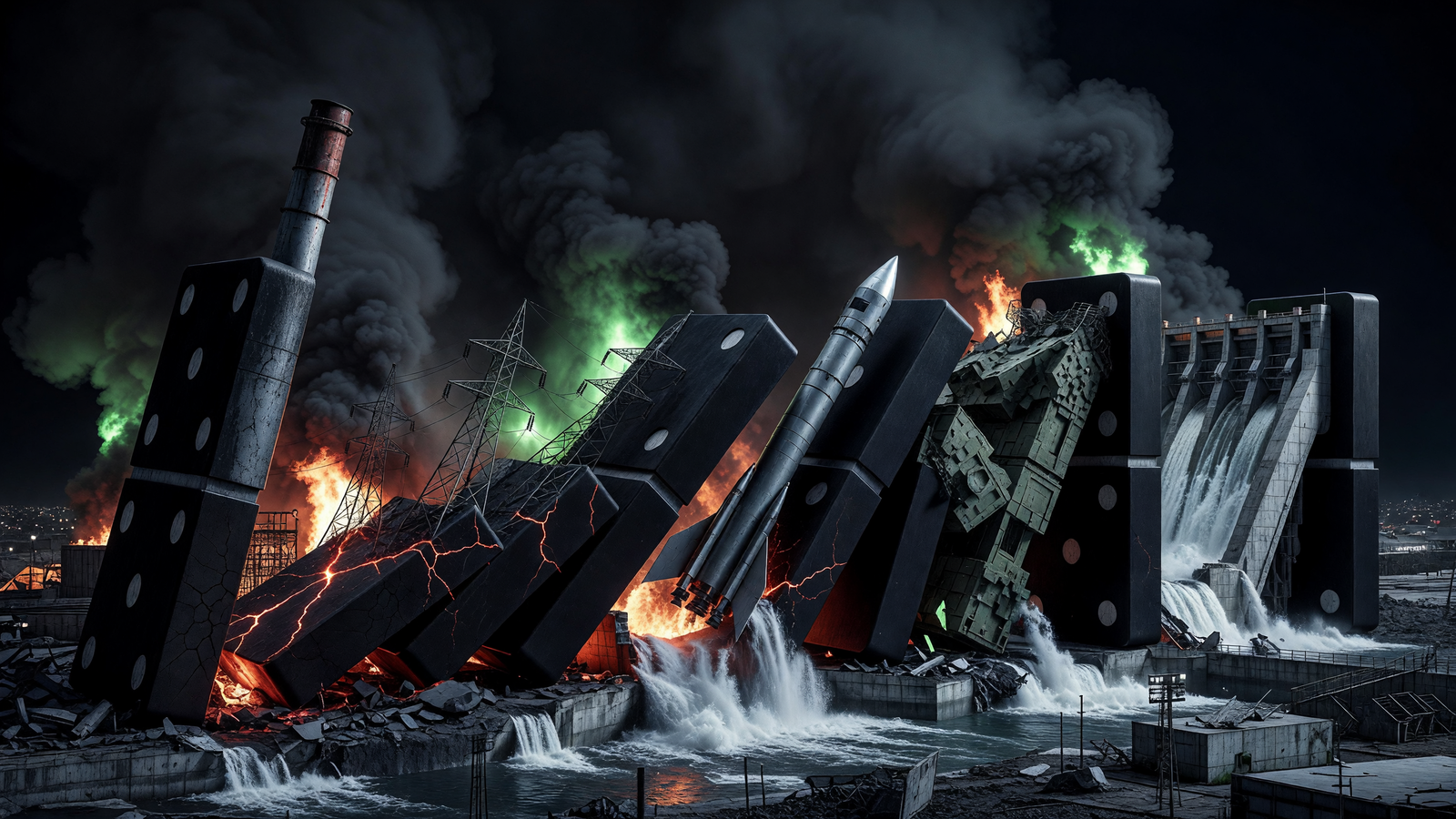
Russia may face a new type of emergency that was previously impossible to predict. The reason is the increasingly close connection between different technologies and critical systems. This was stated by the head of the Russian Ministry of Emergency Situations, Alexander Kurenkov. According to him, in the future, the main threat may not be individual accidents, but situations that will develop according to the “domino effect” principle.
One technical failure can affect entire industries
Due to the intertwining of various spheres, new vulnerabilities of the technosphere — the area where humans interact with technologies and infrastructure — are emerging, explained the head of the Ministry of Emergency Situations.
Modern trends in the development of industrial, energy, and civil infrastructure facilities are characterized by a high level of their concentration, large-scale implementation of automated control systems, and the formation of end-to-end inter-industry connections.
Such emergencies can extend far beyond a single facility or department and become inter-industry. Their elimination will require joint work of various services and organizations, Kurenkov added.
According to him, it is precisely such complex scenarios that can pose the greatest danger in the long term.
Falling rocket parts can lead to fires and contamination of territories
One of the threats remains the risks associated with space activities and launch vehicle launches.
The operation of the Baikonur Cosmodrome and rocket flight paths require special responsibility from emergency services. When rockets launch, there is a danger of falling separated stage parts.
This can lead to chemical contamination of areas with highly toxic rocket fuel components, as well as cause large landscape and forest fires.
The proximity of fall areas to settlements and agricultural territories creates additional danger. Therefore, rapid monitoring of the situation and prompt deployment of forces to eliminate the consequences are required.
Military warehouses — a high-risk zone
Another serious challenge for the Ministry of Emergency Situations is potential man-made accidents at military property storage facilities and arsenals. Large ammunition depots and military facilities in the CSTO countries remain sources of increased risk.
In the event of explosions or fires, the consequences can affect civilian infrastructure within a radius of several kilometers.
For rescuers, the main task in such situations is the rapid evacuation of a large number of people from the danger zone, the organization of temporary accommodation, medical assistance, and psychological support for the population.
Floods and fires remain the main threats
At the same time, traditional emergencies are not disappearing. Alexander Kurenkov specifically pointed out the continuing danger of large floods and fires.
He named the possible flooding of large territories due to critical overfilling of reservoirs, including in Kazakhstan, as one of the serious risks.
A breach or overflow of protective dams can lead to the flooding of dozens of settlements, the destruction of transport routes, power lines, and infrastructure facilities. In addition, such events can cause not only humanitarian problems but also epidemiological consequences.
Due to increased droughts and high temperatures, there is a risk of large-scale landscape fires. Such fires have ceased to be a problem for only one country and are increasingly becoming cross-border.
Read more on the topic:
Never miss our newsAdd this site to your preferred sources to see us more oftenAdd on Google

















