Russia must respond to attempts to pressure its maritime transport carefully but decisively, President Vladimir Putin said at a meeting with commanders of Russian fleets. The discussion touched upon cases of tanker detentions and other attempts to influence the commercial fleet, which Moscow views as pressure on the country's maritime infrastructure.
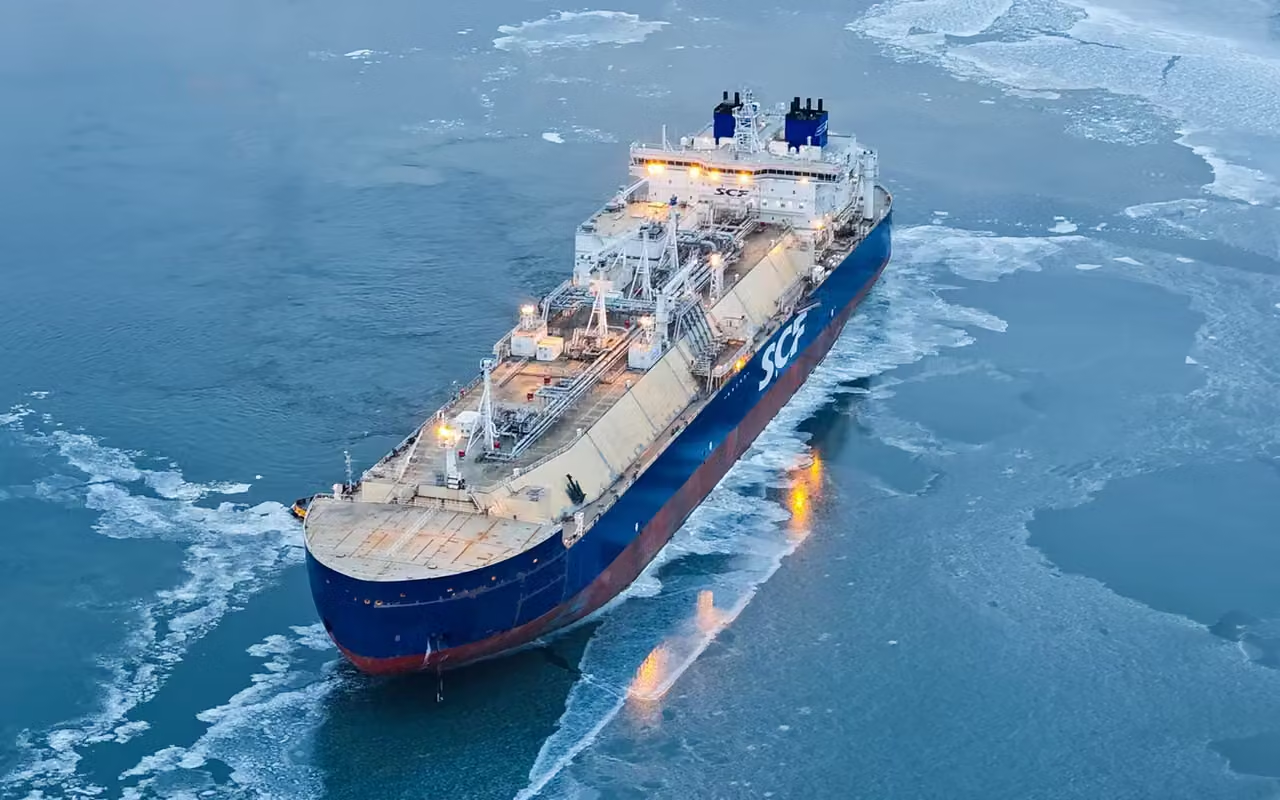
According to the head of state, actions to protect vessels must comply with international maritime law, yet be effective. Putin noted that the situation requires an approach similar to measures against piracy.
In such cases, one must act carefully, within the framework of international maritime law, but decisively – just as one should fight piracy and pirates.
Lawyers note that a vessel's status is primarily determined by its flag state. If a ship is registered in another country, its protection on the high seas depends on the norms of international law and the actions of the state under whose jurisdiction it falls. In the case of vessels under the Russian flag, Moscow has more opportunities for their escort and protection.
At the same time, the protection of vessels directly depends on their status. Most tankers associated with Russian supplies sail under foreign flags, and changing a vessel's affiliation cannot be done by simply raising a new flag at sea – it requires official re-registration and a change of jurisdiction.
Earlier, the European Union discussed new mechanisms for dealing with cargo from detained vessels, including the possibility of disposing of oil and other goods from sanctioned tankers. These measures became part of broader pressure on Russian maritime supplies.
Consequently, the issue is not only about ensuring the safety of specific vessels but also about maintaining the stability of maritime routes through which a significant portion of Russia's export supplies is carried out.
Read more on the topic:
Never miss our newsAdd this site to your preferred sources to see us more oftenAdd on Google