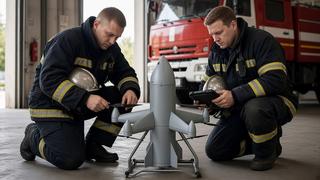
At the Chelyabinsk-Glavny sorting station, the pilot operation of the first uncoupling robot on the Russian Railways network has been completed. The automated complex, developed by JSC "NIIAS" together with Russian robot manufacturers, performed more than 6.5 thousand uncoupling operations.
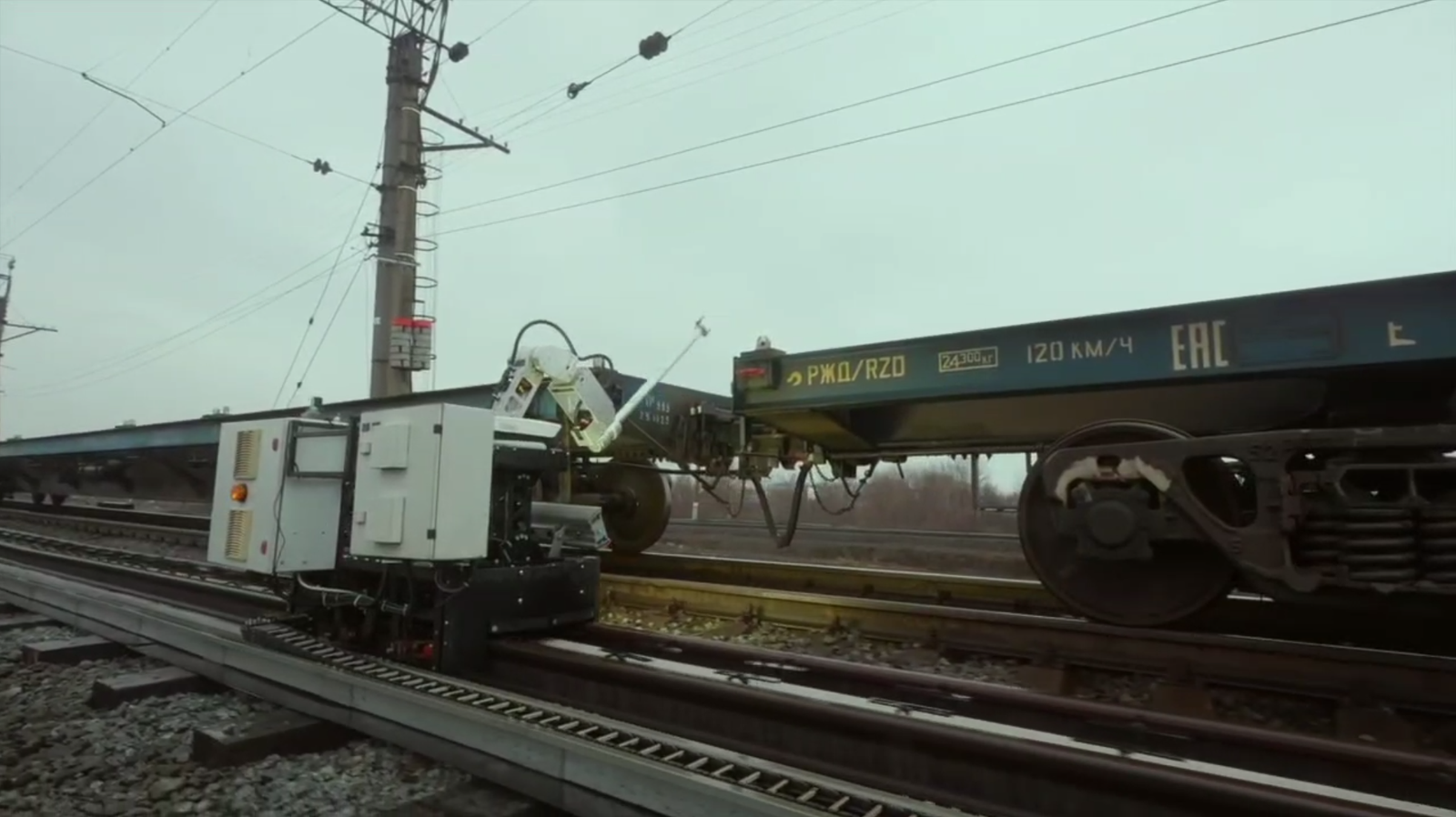
The robot is installed on a mobile platform that moves along a special rail structure along the sorting track. The device synchronizes with the moving train and performs uncoupling at a shunting speed of up to 10 km/h — twice as fast as with manual operation, where the average speed is about 5 km/h.
The complex is fully integrated into the station's technological process. It operates using a technical vision system and machine learning, which allow the robot to "see" the automatic coupler and precisely actuate the uncoupling drive. The developers also created a mathematical model of platform movement, which allows for the maximum number of uncouplings in the minimum time.
Automation of uncoupling increases safety by eliminating the risk of human injury between moving wagons, and increases the station's processing capacity. The robot is capable of operating at any time of day and in any weather. The technology is planned to be scaled to other railway network facilities, including the Inskaya (Novosibirsk Oblast), Kinel (Samara Oblast), Vkhodnaya (Omsk Oblast) and Maxim Gorky (Volgograd Oblast) stations.
Read more on the topic:
Never miss our newsAdd this site to your preferred sources to see us more oftenAdd on Google


![Growth Point: After 5G Launch, Mobile Internet in Russia Accelerated by 20%","subtitle":"TelecomDaily recorded an upload speed increase of 19.7%, and download speed of almost 14%","announce":""}[]}],](https://media.ixbt.site/fit-in/320x/ixbt-data/1727896/ai-image-nvgq0a0v5cjnyxwoc8xpelva.webp)