The National Center for Physics and Mathematics (NCPM) is developing alternative methods for extracting energy from the microcosm, in addition to traditional nuclear energy, Academician of the Russian Academy of Sciences Alexander Sergeev said at the session of the V Congress of Young Scientists.
Sergeev recalled that the principle of nuclear fission, which started nuclear energy for military and peaceful purposes, was first demonstrated in the late 1930s.
According to him, over the past 90 years, scientists have made significant progress in studying the structure of matter and the interactions of elementary particles, which opens up the possibility for new, more efficient ways of generating energy.
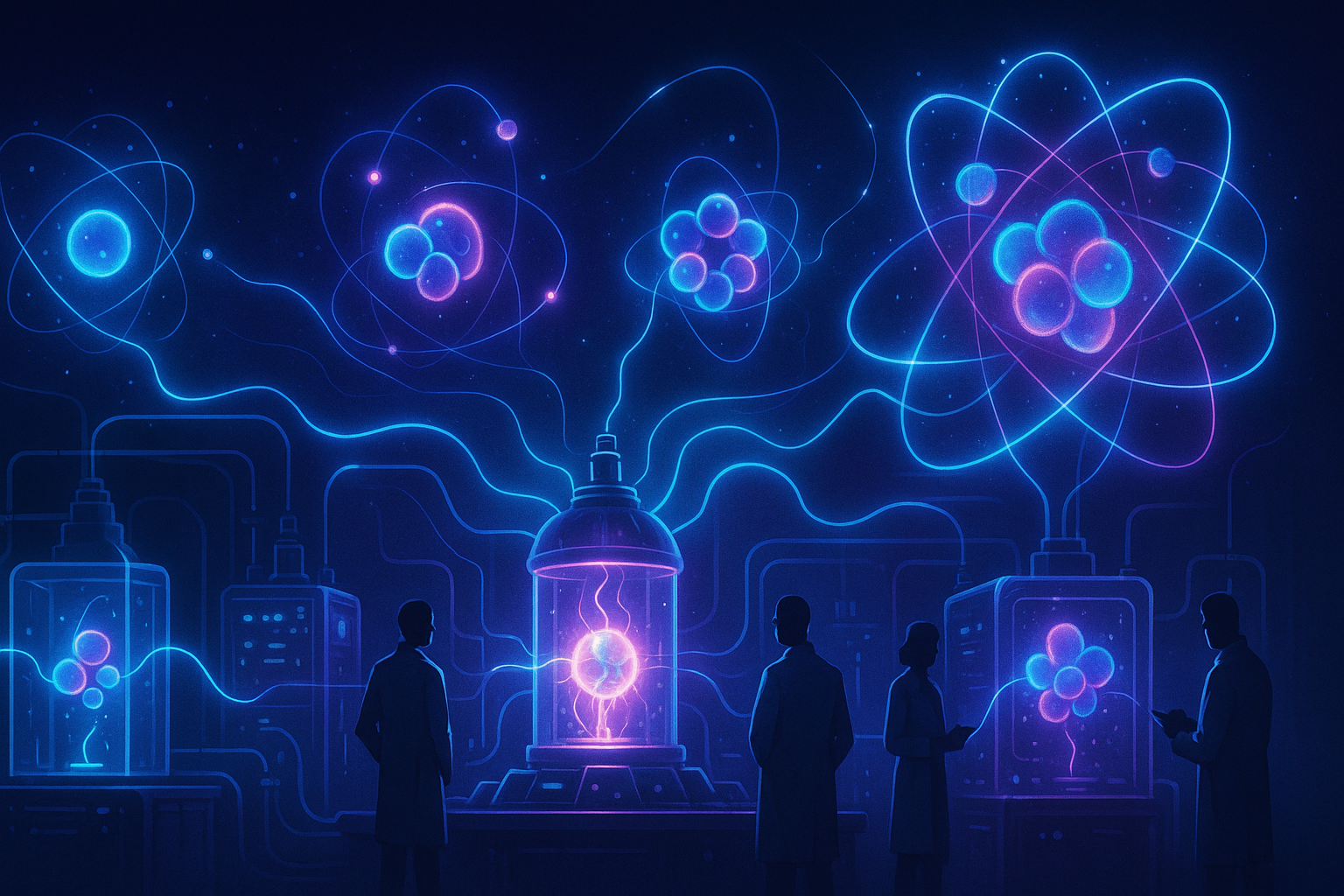
The academician explained that the mass of a neutron significantly exceeds the sum of the masses of the quarks that make it up - 940 megaelectronvolts versus 12 megaelectronvolts. This makes it possible to ask whether it is possible to extract the energy difference from nucleons in the same way as nuclear fission.
He also noted that vacuum is not an empty space, but consists of virtual particles and antiparticles, and the NCPM installations will allow experiments to study these phenomena.
Read more materials on the topic:
- Neutrinos and their mysteries: a method for finding \"new physics\" in cosmic glow has been discovered for scientists from MIPT
- Distant guest: a gamma quantum of record power was registered by Russian scientists
- Scientists in Krasnoyarsk have developed gold nanoparticles for cancer treatment
Never miss our newsAdd this site to your preferred sources to see us more oftenAdd on Google