Translated with AI from the Russian original.
Scientists at the Solar Astronomy Laboratory of the Space Research Institute of the Russian Academy of Sciences have recorded a rare large-scale active region on the Sun - region 4246, which literally went to the far side of the star "in smoke and flames." This zone was extremely energetic and managed to generate over a hundred flares, including 25 strong events of class M.
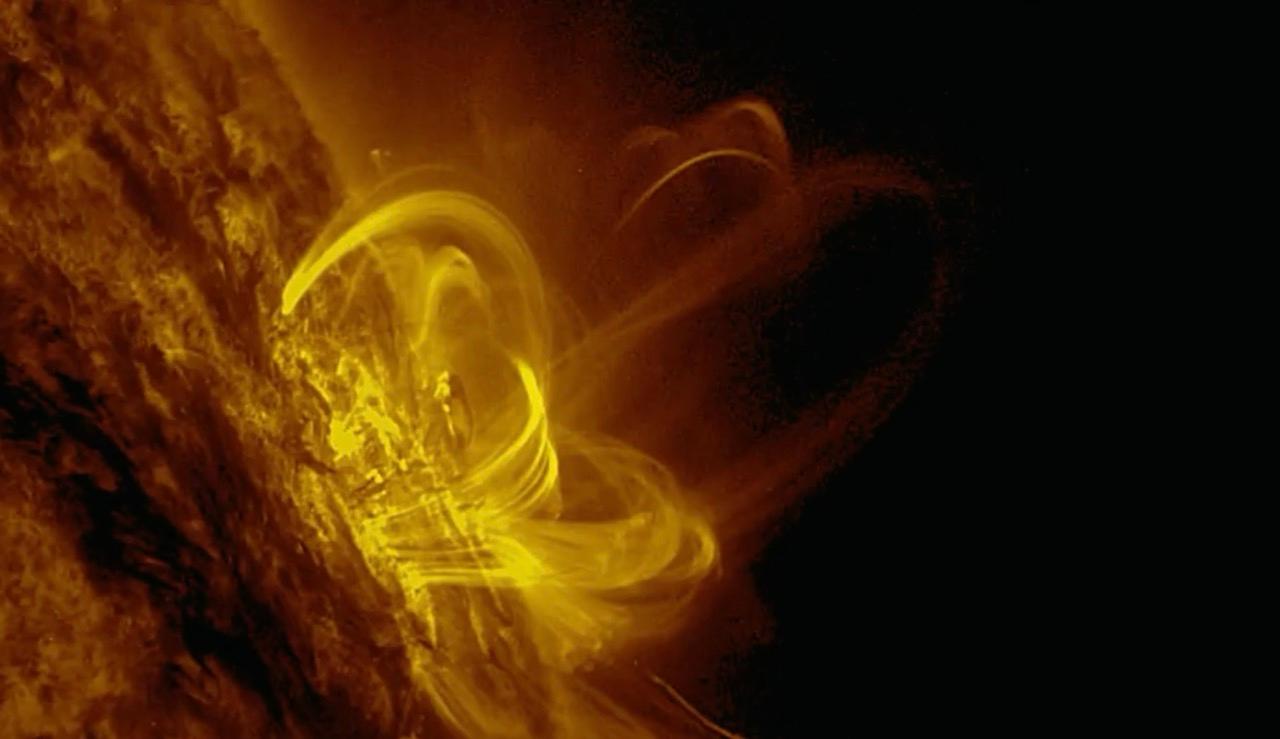
According to data from the Space Research Institute of the Russian Academy of Sciences, large plasma ejections began from the region on October 15, some of which formed in the direction of the Earth's orbital plane. However, by this time, the active center was already leaving the Sun-Earth line, so only the very first ejections could potentially be dangerous for our planet. Subsequent flares occurred at a safe distance.
On October 18 alone, five class M flares were recorded in region 4246 - powerful enough to cause magnetic storms if they were directed at Earth.
"The energy of this region is colossal, it is even difficult to quantify," the researchers note. Explosions are still ongoing there, but they do not pose a threat to our planet.
Active regions on the Sun are clusters of magnetic fields where energy accumulates and is suddenly released in the form of flares and coronal mass ejections. These phenomena can disrupt radio communications, affect the operation of satellites, and even cause power outages if directed at Earth.
Read more materials on the topic:
- The third magnetic storm of October has begun on Earth
- The Sun destroyed two comets in a few hours: astronomers recorded a rare cosmic phenomenon
- Earth has entered a stream of solar wind from a large coronal hole
Never miss our newsAdd this site to your preferred sources to see us more oftenAdd on Google

















