Translated with AI from the Russian original.
Kirov Plant "Mayak" (part of the Kalashnikov concern) is modernizing the thermal production area. The company commissioned 2 shaft furnaces, and completed commissioning works on 2 more vacuum furnaces. This was reported by the press service of the concern.
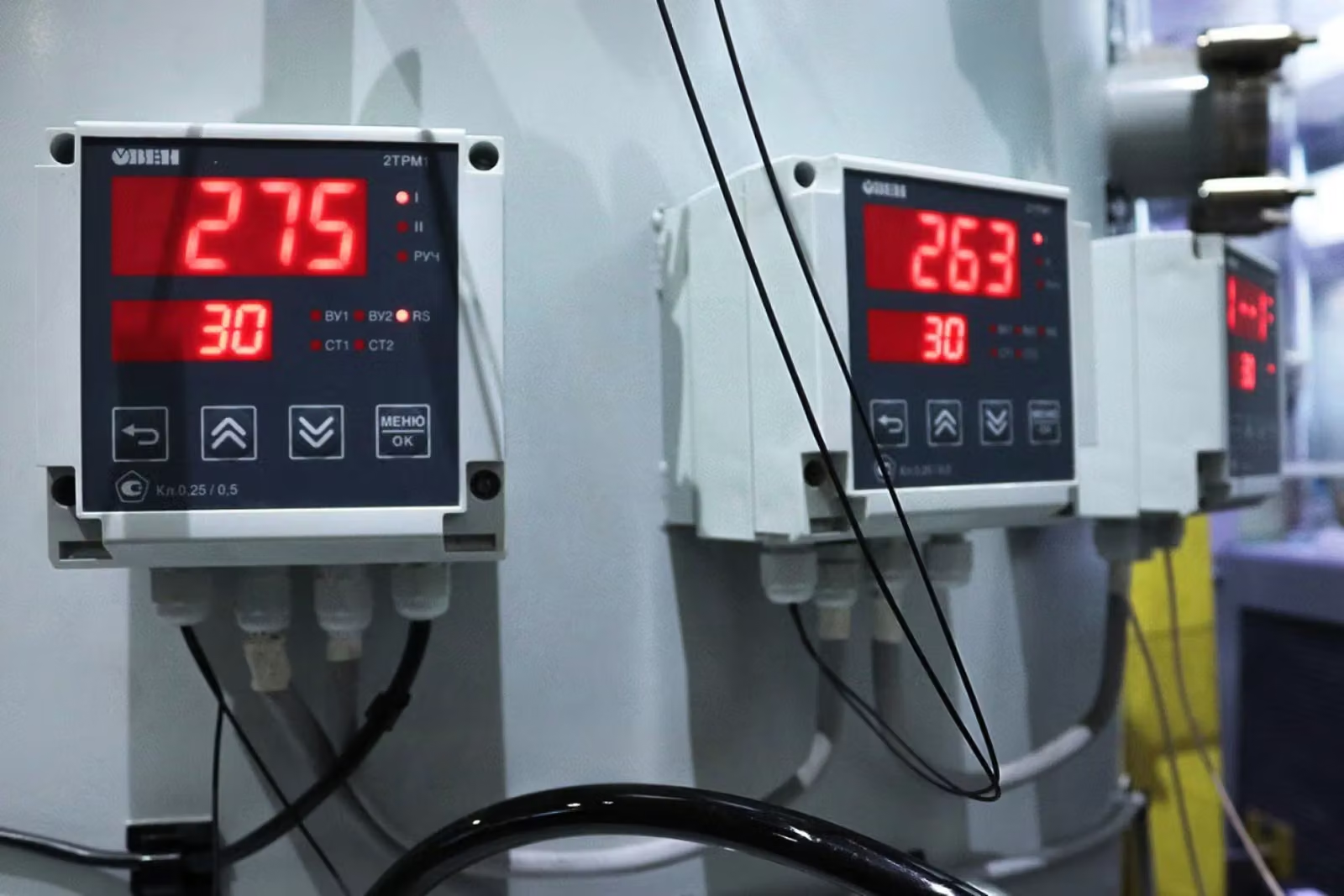
The plant's employees heat-treated parts for tool production in shaft furnaces, and parts made of high-alloy stainless steel grades in vacuum furnaces. The processed components do not require subsequent cleaning.
How do vacuum and shaft furnaces work?
Heat treatment is the process of heating and cooling a metal or alloy. When heated, it is calcined to the desired temperature, then kept in a heated state for some time. Thus, heat is evenly distributed throughout the metal, improving its physical and mechanical properties.
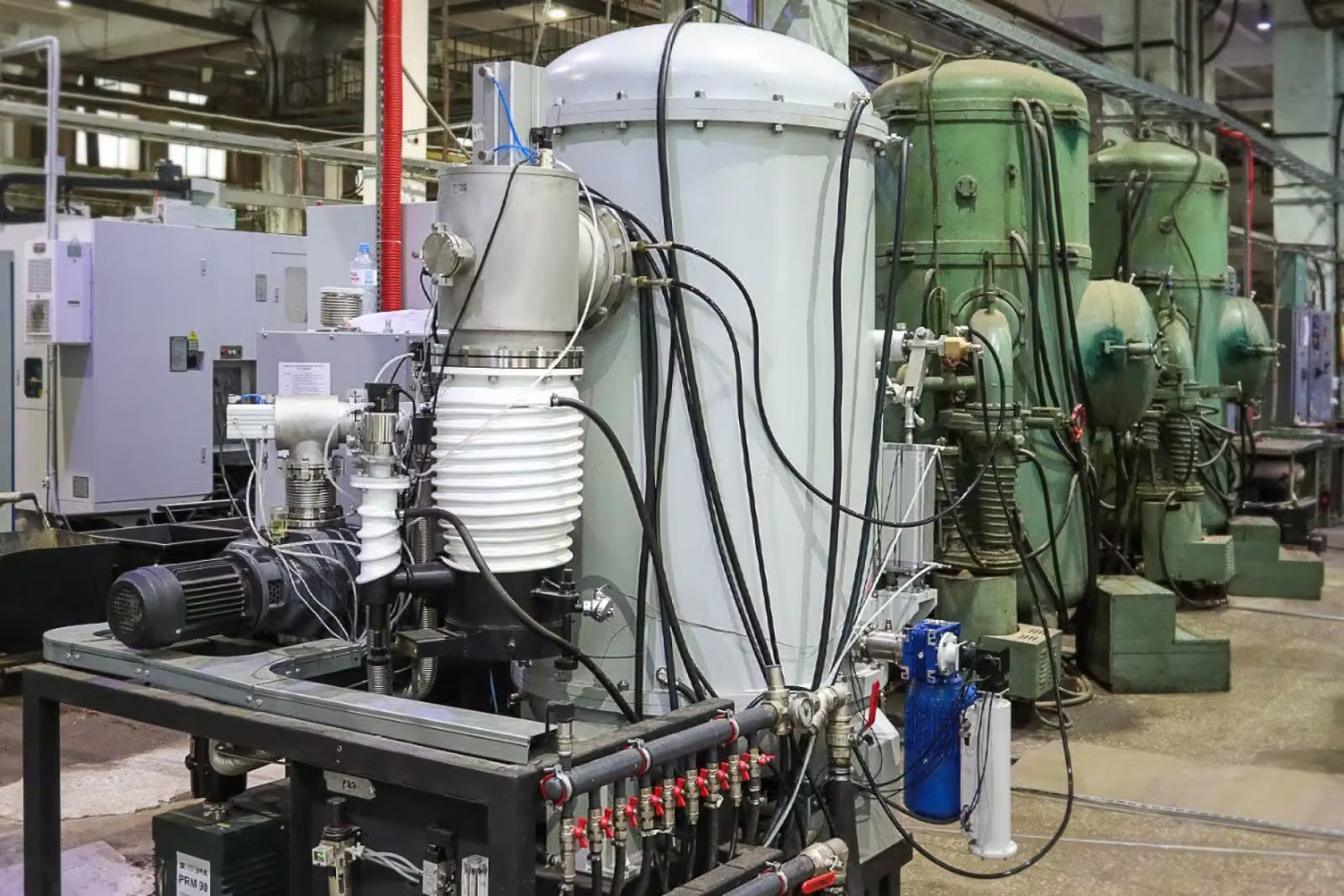
Shaft furnaces operate on the principle of countercurrent, when the material passes through the zones of drying, heating, firing and cooling, being washed by a countercurrent of gas. In vacuum furnaces, parts are processed in a vacuum in order to prevent undesirable chemical reactions such as oxidation and nitriding.
The press service of the concern stated that the new furnaces will soon reach their design capacity. This will allow "Mayak" to increase the volume of parts processing.
Kirov Plant "Mayak" serially produces civilian and military products, including a launching installation for the completion of the 9M113 Konkurs-M and 9K111 Fagot ATGM systems. These systems have already proven their effectiveness in real combat operations.
Read also on the topic:
- The developer of the remote control for the 9M113 Konkurs-M ATGM received instruments for quality control of products
- A unique robotic winding machine will be put into operation at the Kirov Plant "Mayak"
- The developer of the remote control for the 9M113 Konkurs-M ATGM is expanding production
Never miss our newsAdd this site to your preferred sources to see us more oftenAdd on Google

















