Russian engineers have developed the "Tet" remote communication laying system. It is a drone for the rapid deployment of a secure communication line up to 20 km. It is based on a fiber optic cable, which the drone unwinds in flight.
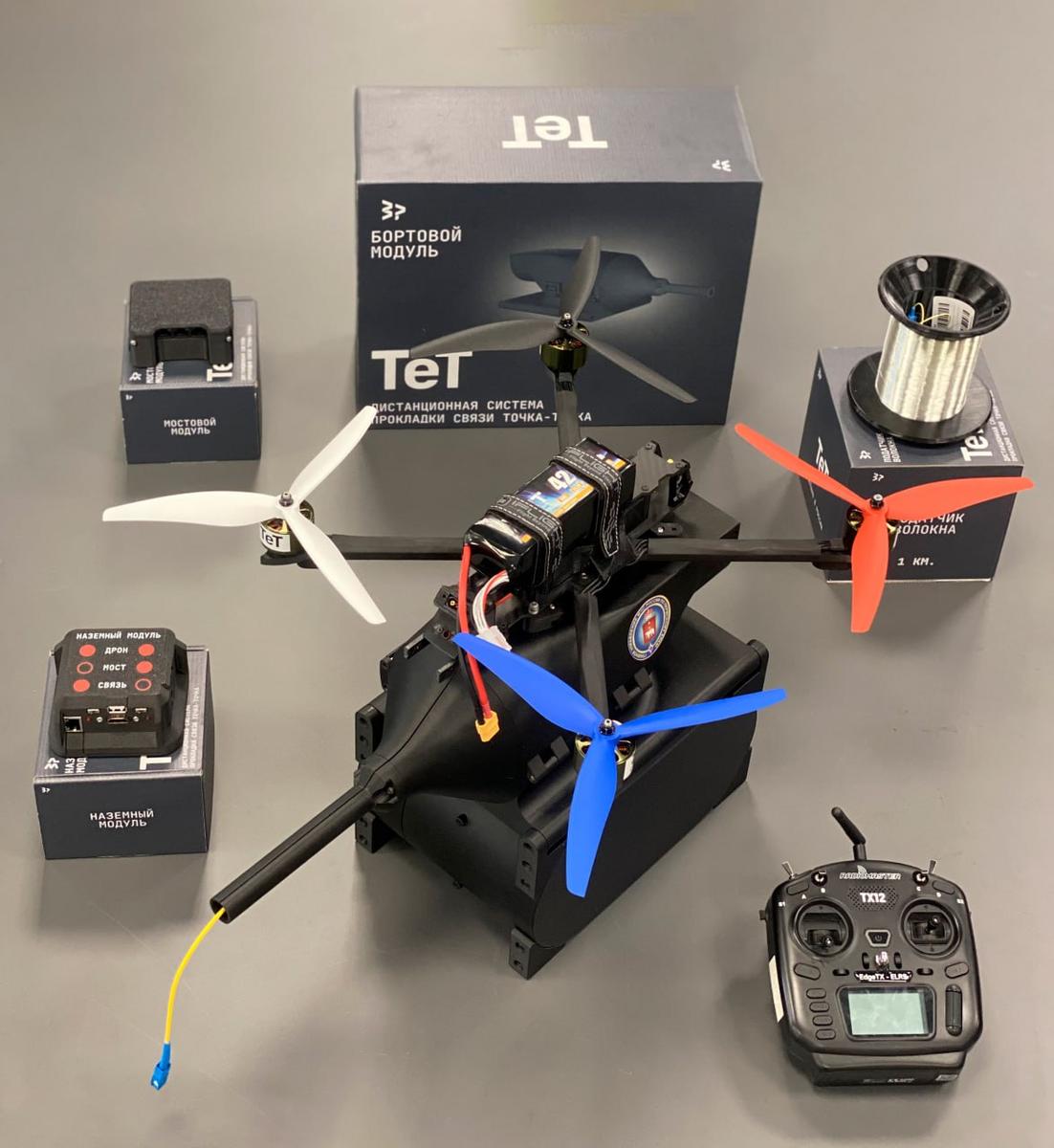
"Tet" has a multi-rotor design, guaranteeing maneuverability and reliability in flight. Fiber optics provide stable, noise-immune transmission at speeds up to 1 GB/s.
UAV application area:
- operation in conditions of electromagnetic interference
- participation in EMERCOM operations, during emergency work
Application: electromagnetic interference, special operations, emergencies, emergency work, lack of infrastructure. Control is carried out from a ground station via an optical channel with the possibility of connecting a satellite terminal or router.
Features of the UAV:
- The absence of a radio signal eliminates interception and interference
- Final communication node: Ethernet, Wi-Fi, IP-telephony, connection of a mobile phone and satellite
The package includes receiving/feeding modules, fiber optic feeder, bridge module
Read also on the topic:
Mother Ship-Relay and Scout: RD12 Drone Developed by Valkyria Design Bureau
Robot "Molot" traveled 10 kilometers on roads and rough terrain during tests in the troops
Never miss our newsAdd this site to your preferred sources to see us more oftenAdd on Google

















