Translated with AI from the Russian original.
Dmitry Muravyov, a master's student at Novosibirsk State University (NSU), has developed an open system for monitoring and diagnosing lithium-ion batteries. The development includes a hardware module and a web service and is already available to manufacturers and service companies.
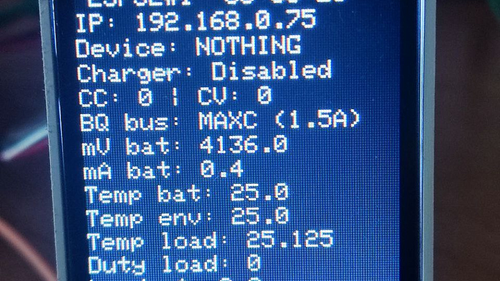
The system allows testing batteries according to various scenarios, recording their performance indicators. The results are saved in a database for subsequent analysis. As the developer explained, the goal of the project is to increase the safety of devices using such batteries.
The hardware part of the device is assembled from widely available components. It allows you to set charging and discharging profiles, record operating parameters and transmit data via Wi-Fi to a web service or write to an SD card. The system software is written in Python and is publicly available on the GitHub platform, which allows users to modify it independently.
Batteries are an integral part of many computing devices, and monitoring their condition is necessary both at the production stage and in research tasks at the design stage. We saw that there was a shortage of affordable open source solutions on the market, so the emergence of such a tool is an important step.
The development was created on the basis of the YADRO Laboratory at NSU with consultations from employees of the partner company. According to the scientific supervisor of the project, existing analogues often have limitations, such as low measurement accuracy and closed software.
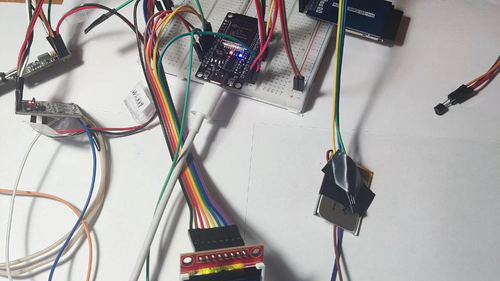
Currently, the project is at the stage of a minimum viable product (MVP). The system is already working and allows testing with a voltage of up to 4.6 V and a maximum current of up to 1.6 A. One of the Novosibirsk enterprises has already assembled a similar device for its own needs.
Read more materials on the topic:
Cybervillage is already here: agrodrone rental service created at Kazan State Agrarian University
Never miss our newsAdd this site to your preferred sources to see us more oftenAdd on Google

















