Scientists from the St. Petersburg Federal Research Center of the Russian Academy of Sciences (SPC RAS) have developed an artificial intelligence system MASAI, capable of recognizing human emotions from video, audio, and text. The recognition accuracy reaches 80%, which exceeds the performance of existing analogues.
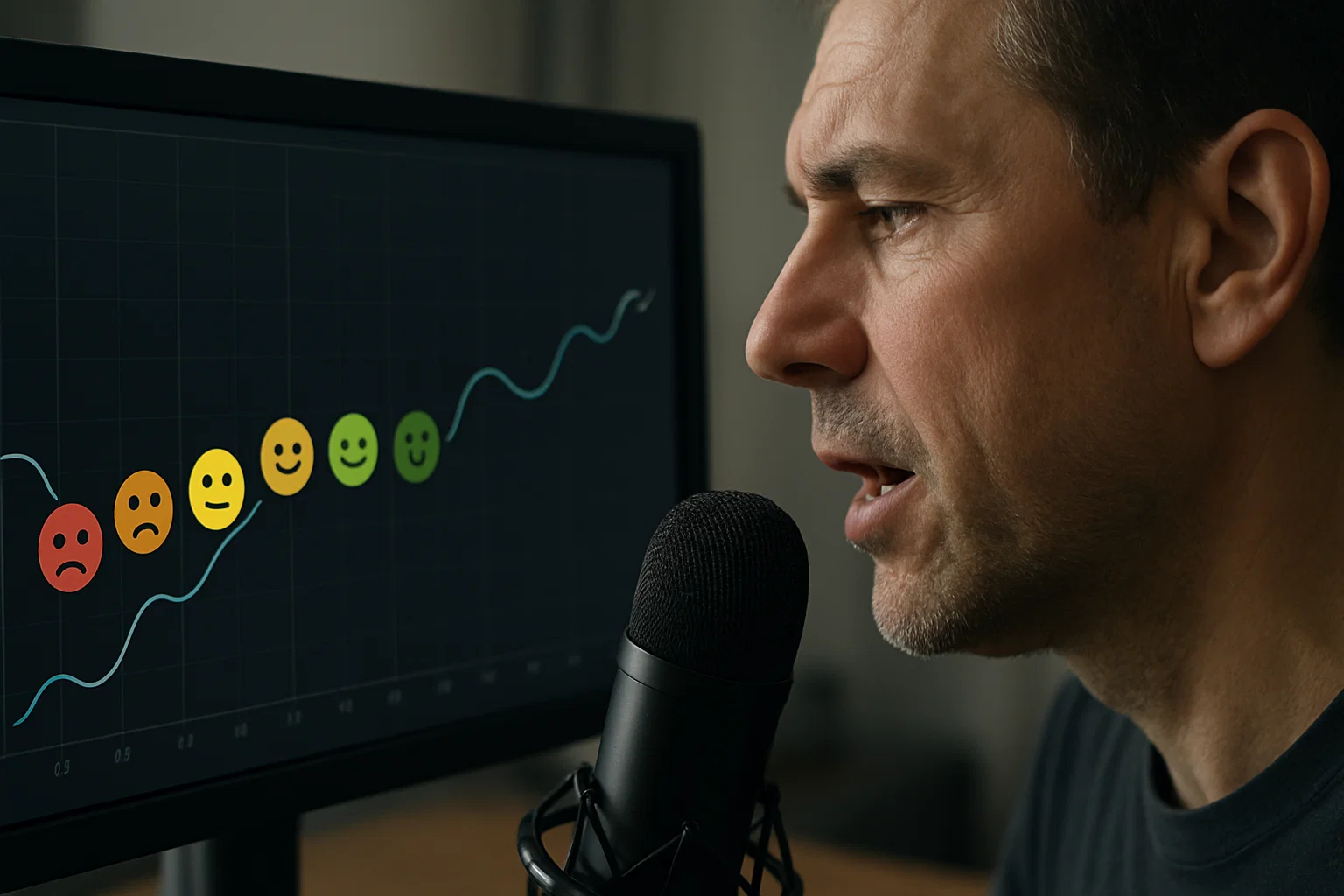
The system analyzes facial expressions, speech, and text data to determine seven basic emotions: joy, sadness, fear, disgust, surprise, anger, and calmness. In addition, the program performs sentiment analysis, determining a person's positive, negative, or neutral attitude towards an event. MASAI can work with pre-recorded materials as well as in real time, including in noisy or poorly lit conditions.
The development is based on a group of several neural networks trained on multilingual databases with information about people of different ages, genders, and from different countries. Some of the data in Russian was provided by young actors from theater universities.
According to Alexey Karpov, Head of the Laboratory of Speech and Multimodal Interfaces at the St. Petersburg Federal Research Center of the Russian Academy of Sciences, the system can be integrated into digital assistants, for example, in call centers for emergency or psychological assistance services, in order to more accurately assess a person's condition.
The MASAI system can be integrated into various types of digital assistants that are now used in many areas of human life. For example, in telephone ambulance services or psychological support, where emotional artificial intelligence will allow for a more effective response to human needs.
The development is supported by a grant from the Russian Science Foundation (RSF).
Read more materials on the topic:
Testers are invited: RuStore launched the ability to install applications before their publication
More AI - more convenient shopping: Yandex has updated "Lavka"
Never miss our newsAdd this site to your preferred sources to see us more oftenAdd on Google