Russian scientists have created new steel grades with improved properties for nuclear reactor vessels and other nuclear power facilities. The development was carried out by specialists from MIPT and VNIIA named after Dukhov using an artificial intelligence system.
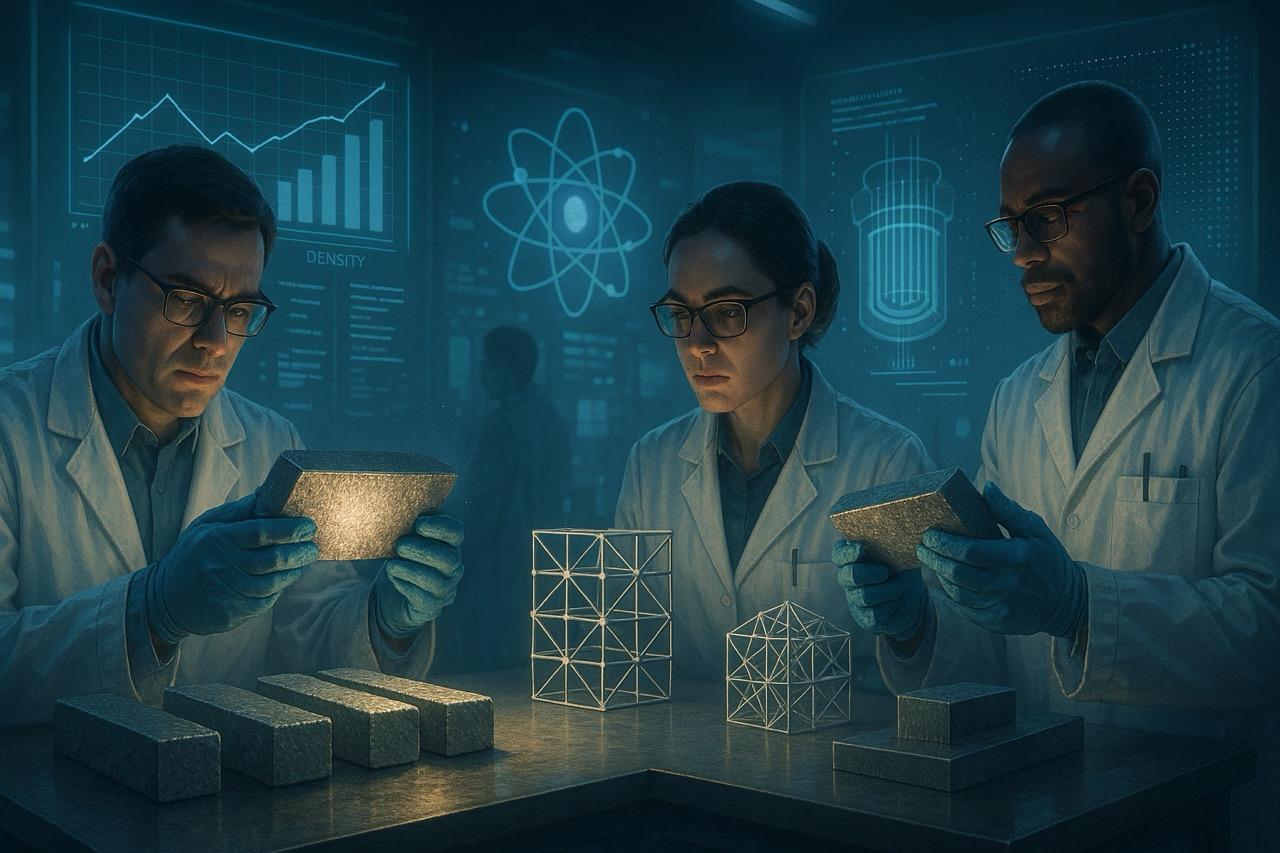
The project included a full cycle - from collecting the database and training algorithms to experimentally verifying the resulting alloys. Researchers note that alloyed steels with chromium, nickel, molybdenum, and vanadium are typically used for nuclear power plant elements, providing high strength and stability in extreme conditions.
The developed AI system models new steel variants by combining and modifying their composition. The database included 294 grades and over 4,000 sets of characteristics and heat treatment parameters. The algorithm takes into account microstructural parameters, which increases the accuracy of calculations.
As a result, the program proposed five new compositions that surpass existing analogues in terms of long-term strength, impact toughness, and yield strength. Tests have confirmed the potential of these steels for creating more reliable nuclear reactor vessels.
Read also on the topic:
High-strength aluminum-based alloy developed in Moscow
Russian scientists were able to significantly improve the characteristics of nickelide titanium
Maintains properties at temperatures from -70℃ to +100℃: shape memory alloy created in Tomsk
Never miss our newsAdd this site to your preferred sources to see us more oftenAdd on Google